Liu Honghong, Feng Siqin, Tang Muyun, Tian Ran, Zhang Shuyang
Department of Cardiology, Peking Union Medical College Hospital, Chinese Academy of Medical Sciences & Peking Union Medical College, 100730 Beijing, China.
State Key Laboratory of Complex Severe and Rare Diseases, Peking Union Medical College Hospital, Chinese Academy of Medical Sciences & Peking Union Medical College, 100730 Beijing, China.
Rev Cardiovasc Med. 2024 Nov 7;25(11):395. doi: 10.31083/j.rcm2511395. eCollection 2024 Nov.
Coronary thrombosis events continue to be the leading cause of morbidity and mortality worldwide. Recently, emerging evidence has highlighted the role of gut microbiota in cardiovascular disease, but few studies have systematically investigated the gut microbiota variation associated with atherothrombosis.
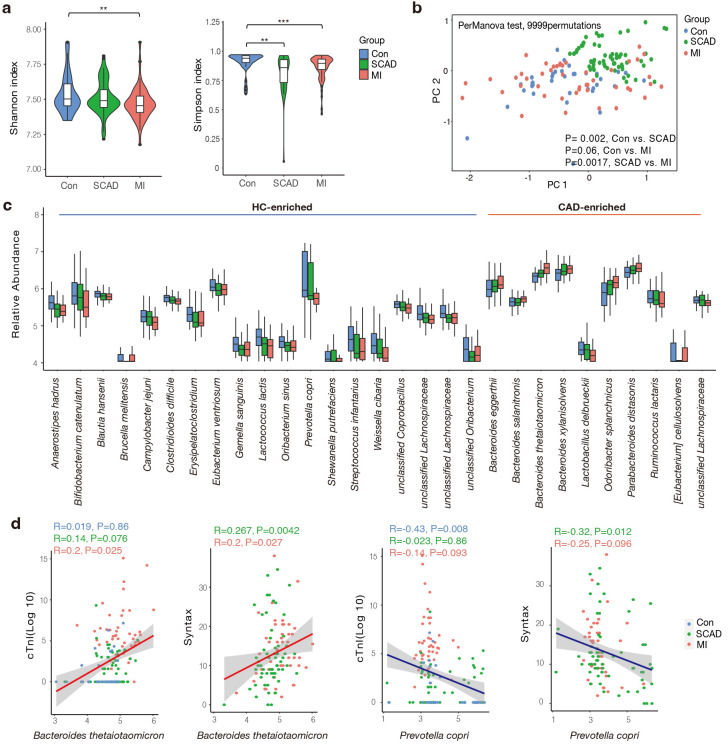
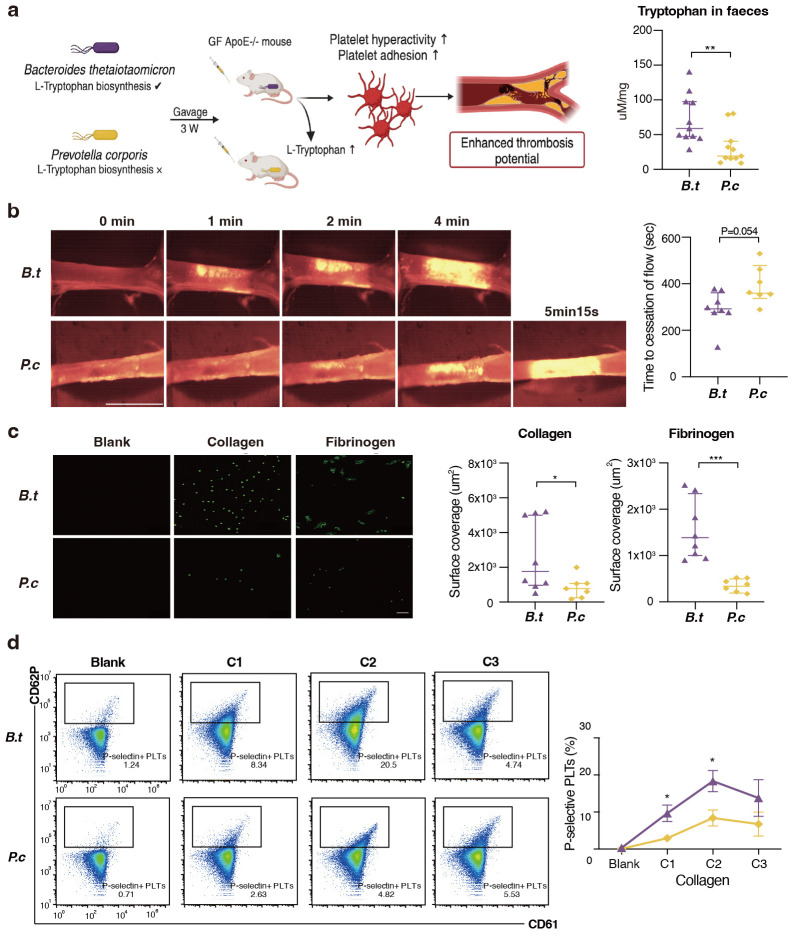
We conducted multi-omics analysis (metagenomics sequencing and serum metabolomics) on 146 subjects from Peking Union Medical College Hospital-Coronary Artery Disease (PUMCH-CAD) cohort. We analyzed the key strains and metabolic pathways related to coronary artery disease (CAD) development, explored the bacterial functional pathway which contributes to atherothrombosis at strain level in depth. Single strain colonization procedures on germ free mice demonstrated the promotion of platelet activation and thrombotic phenotypes of the disordered gut microbiota.
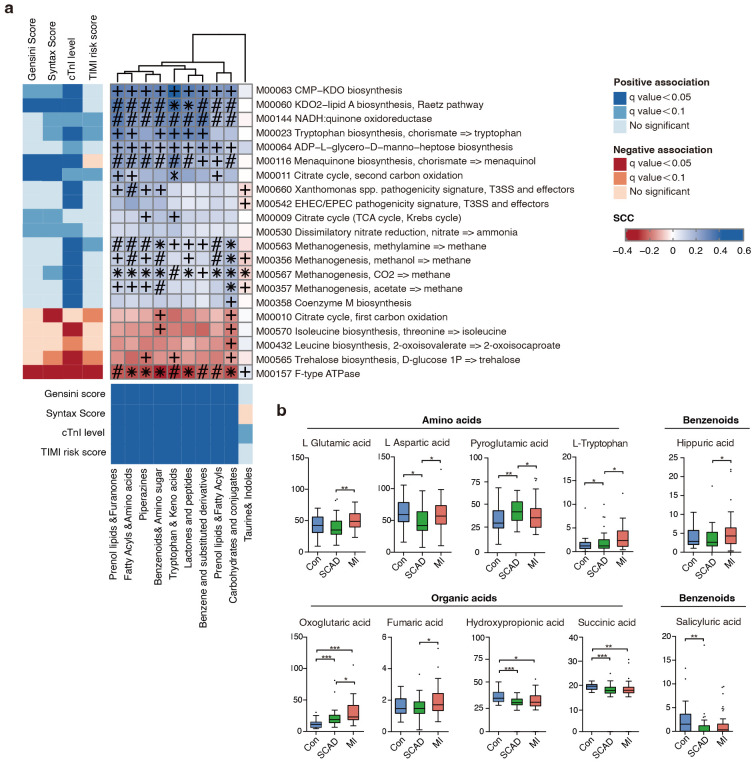
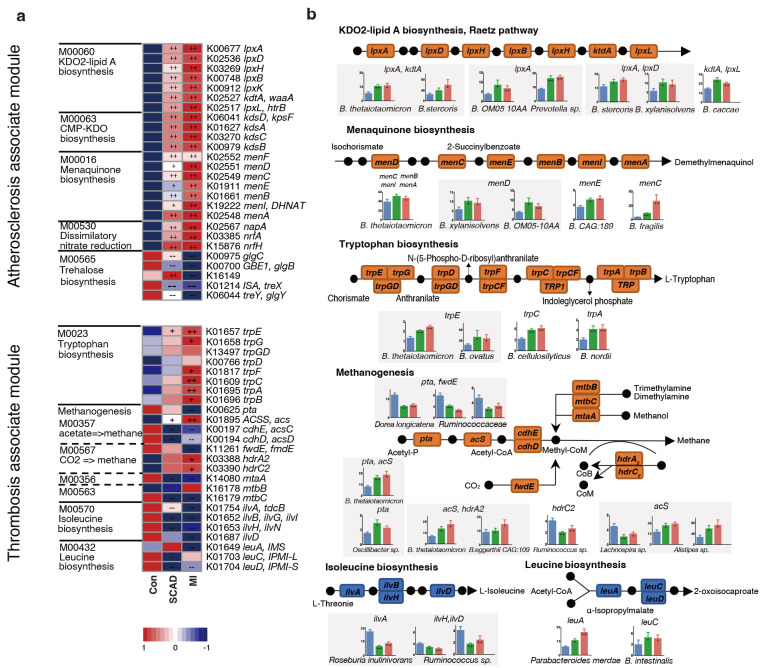
Gut microbiome and serum metabolome shifts were apparent in cases of CAD progression, disturbed the development of CAD by participating in lipopolysaccharide (LPS), menaquinone and methanogenesis pathways. Particularly, coronary thrombosis is characterized by increased circulatory levels of L-tryptophan, which correlate with that has enriched biosynthetic potential. In germ free mice we demonstrate that colonization could induce thrombosis, aggravate platelet hyperreactivity and augment fecal levels of L-tryptophan.
The disordered gut microbiota of CAD contributed to the occurrence and development of atherothrombosis. The key members of the bacterial and metabolic features may become biomarkers for predicting the cardiovascular thrombosis event. Targeting the microbial pathway may have the potential to reduce the incidence of cardiovascular disorders.
ChiCTR2000033897, https://www.chictr.org.cn/showproj.html?proj=55023.
冠状动脉血栓形成事件仍然是全球发病和死亡的主要原因。最近,新出现的证据突出了肠道微生物群在心血管疾病中的作用,但很少有研究系统地调查与动脉粥样硬化血栓形成相关的肠道微生物群变化。
我们对北京协和医院冠心病(PUMCH-CAD)队列中的146名受试者进行了多组学分析(宏基因组测序和血清代谢组学)。我们分析了与冠状动脉疾病(CAD)发展相关的关键菌株和代谢途径,深入探索了在菌株水平上促成动脉粥样硬化血栓形成的细菌功能途径。在无菌小鼠上进行的单菌株定植程序证明了紊乱的肠道微生物群对血小板活化和血栓形成表型的促进作用。
在CAD进展的病例中,肠道微生物组和血清代谢组发生了明显变化,通过参与脂多糖(LPS)、甲萘醌和甲烷生成途径干扰了CAD的发展。特别是,冠状动脉血栓形成的特征是L-色氨酸循环水平升高,这与具有丰富生物合成潜力的情况相关。在无菌小鼠中,我们证明定植可诱导血栓形成,加重血小板高反应性并增加粪便中L-色氨酸水平。
CAD患者紊乱的肠道微生物群促成了动脉粥样硬化血栓形成的发生和发展。细菌和代谢特征的关键成员可能成为预测心血管血栓形成事件的生物标志物。针对微生物途径可能有降低心血管疾病发病率的潜力。
ChiCTR2000033897,https://www.chictr.org.cn/showproj.html?proj=55023 。