Lorenzo Guillermo, Jarrett Angela M, Meyer Christian T, DiCarlo Julie C, Virostko John, Quaranta Vito, Tyson Darren R, Yankeelov Thomas E
Department of Civil Engineering and Architecture, University of Pavia, Via Ferrata 3, 27100 Pavia, Italy.
Oden Institute for Computational Engineering and Sciences, The University of Texas at Austin, Austin, USA.
Eng Comput. 2024;40(3):1469-1499. doi: 10.1007/s00366-023-01873-0. Epub 2023 Aug 7.
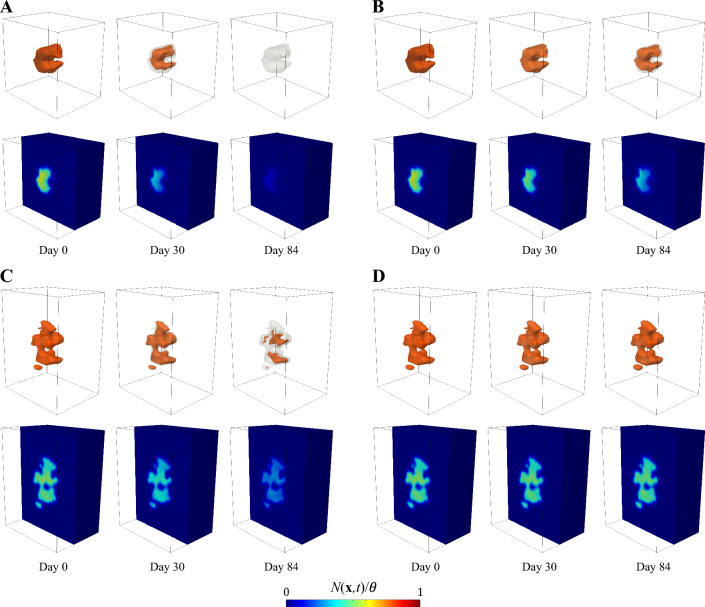
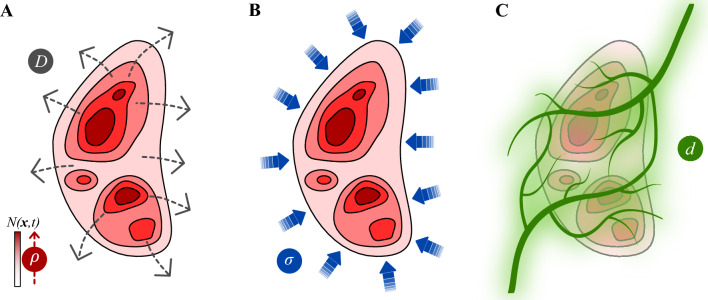
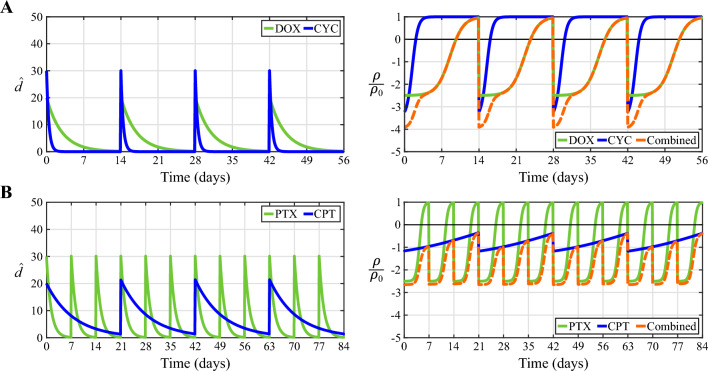
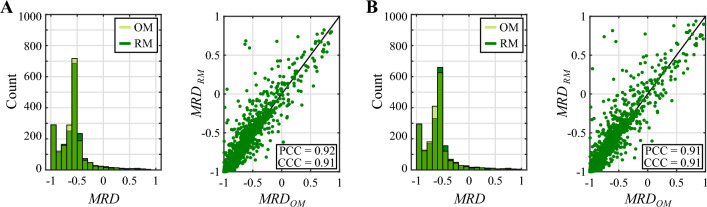
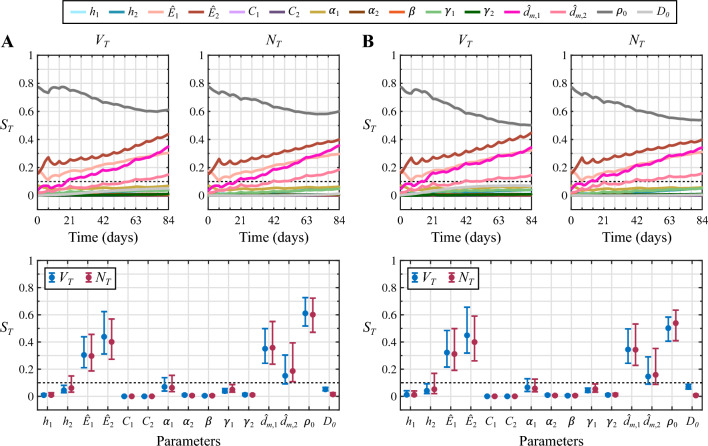
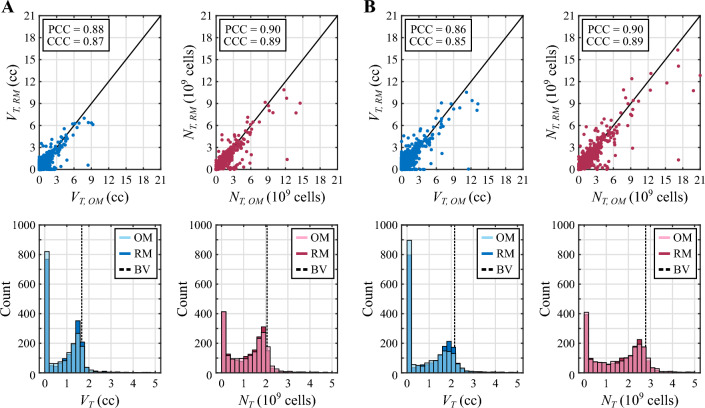
Neoadjuvant chemotherapy (NAC) is a standard-of-care treatment for locally advanced triple negative breast cancer (TNBC) before surgery. The early assessment of TNBC response to NAC would enable an oncologist to adapt the therapeutic plan of a non-responding patient, thereby improving treatment outcomes while preventing unnecessary toxicities. To this end, a promising approach consists of obtaining in silico personalized forecasts of tumor response to NAC via computer simulation of mechanistic models constrained with patient-specific magnetic resonance imaging (MRI) data acquired early during NAC. Here, we present a new mechanistic model of TNBC growth and response to NAC, including an explicit description of drug pharmacodynamics and pharmacokinetics. As longitudinal in vivo MRI data for model calibration is limited, we perform a sensitivity analysis to identify the model mechanisms driving the response to two NAC drug combinations: doxorubicin with cyclophosphamide, and paclitaxel with carboplatin. The model parameter space is constructed by combining patient-specific MRI-based in silico parameter estimates and in vitro measurements of pharmacodynamic parameters obtained using time-resolved microscopy assays of several TNBC lines. The sensitivity analysis is run in two MRI-based scenarios corresponding to a well-perfused and a poorly perfused tumor. Out of the 15 parameters considered herein, only the baseline tumor cell net proliferation rate along with the maximum concentrations and effects of doxorubicin, carboplatin, and paclitaxel exhibit a relevant impact on model forecasts (total effect index, 0.1). These results dramatically limit the number of parameters that require in vivo MRI-constrained calibration, thereby facilitating the clinical application of our model.
The online version contains supplementary material available at 10.1007/s00366-023-01873-0.
新辅助化疗(NAC)是局部晚期三阴性乳腺癌(TNBC)术前的标准治疗方法。对TNBC对NAC的反应进行早期评估,将使肿瘤学家能够调整无反应患者的治疗方案,从而改善治疗结果,同时避免不必要的毒性。为此,一种有前景的方法是通过对在NAC早期获取的患者特异性磁共振成像(MRI)数据进行约束的机制模型的计算机模拟,获得肿瘤对NAC反应的计算机模拟个性化预测。在此,我们提出了一种新的TNBC生长和对NAC反应的机制模型,包括对药物药效学和药代动力学的明确描述。由于用于模型校准的纵向体内MRI数据有限,我们进行了敏感性分析,以确定驱动对两种NAC药物组合反应的模型机制:多柔比星与环磷酰胺,以及紫杉醇与卡铂。通过结合基于患者特异性MRI的计算机模拟参数估计和使用几种TNBC细胞系的时间分辨显微镜测定法获得的药效学参数的体外测量,构建模型参数空间。敏感性分析在两种基于MRI的情况下进行,分别对应灌注良好和灌注不良的肿瘤。在本文考虑的15个参数中,只有基线肿瘤细胞净增殖率以及多柔比星、卡铂和紫杉醇的最大浓度和效应对模型预测有显著影响(总效应指数,0.1)。这些结果极大地限制了需要体内MRI约束校准的参数数量,从而促进了我们模型的临床应用。
在线版本包含可在10.1007/s00366-023-01873-0获取的补充材料。