Dong Zhihao, Chen Yuanzhu, Li Cheng, Tricco Terrence S, Hu Ting
School of Computing, Queen's University, Kingston, Canada.
School of Engineering Science, Simon Fraser University, Burnaby, Canada.
Sci Rep. 2024 Dec 2;14(1):29923. doi: 10.1038/s41598-024-78626-6.
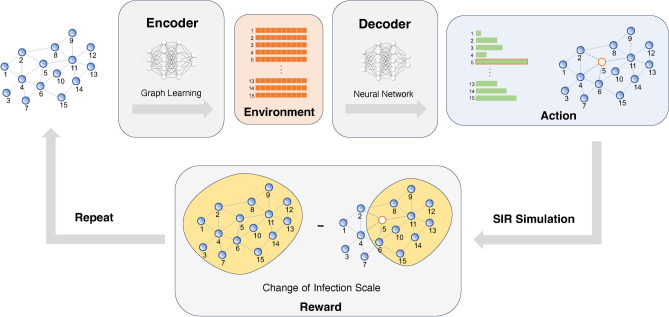
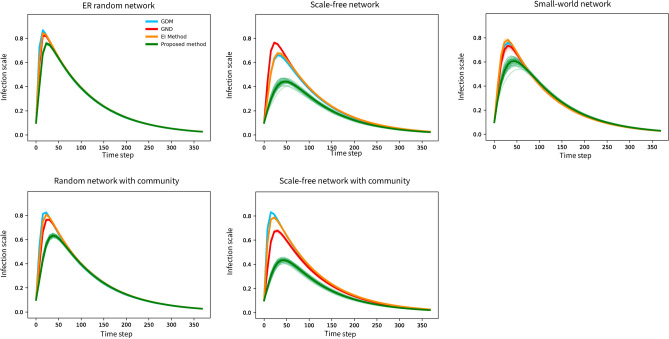
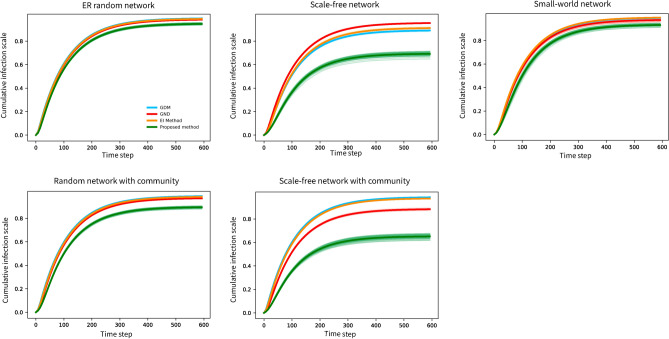
Pandemics like COVID-19 have a huge impact on human society and the global economy. Vaccines are effective in the fight against these pandemics but often in limited supplies, particularly in the early stages. Thus, it is imperative to distribute such crucial public goods efficiently. Identifying and vaccinating key spreaders (i.e., influential nodes) is an effective approach to break down the virus transmission network, thereby inhibiting the spread of the virus. Previous methods for identifying influential nodes in networks lack consistency in terms of effectiveness and precision. Their applicability also depends on the unique characteristics of each network. Furthermore, most of them rank nodes by their individual influence in the network without considering mutual effects among them. However, in many practical settings like vaccine distribution, the challenge is how to select a group of influential nodes. This task is more complex due to the interactions and collective influence of these nodes together. This paper introduces a new framework integrating Graph Neural Network (GNN) and Deep Reinforcement Learning (DRL) for vaccination distribution. This approach combines network structural learning with strategic decision-making. It aims to efficiently disrupt the network structure and stop disease spread through targeting and removing influential nodes. This method is particularly effective in complex environments, where traditional strategies might not be efficient or scalable. Its effectiveness is tested across various network types including both synthetic and real-world datasets, demonstrting a potential for real-world applications in fields like epidemiology and cybersecurity. This interdisciplinary approach shows the capabilities of deep learning in understanding and manipulating complex network systems.
像新冠疫情这样的大流行对人类社会和全球经济有着巨大影响。疫苗在抗击这些大流行方面有效,但供应往往有限,尤其是在早期阶段。因此,高效分配这类关键公共物品势在必行。识别关键传播者(即有影响力的节点)并为其接种疫苗是打破病毒传播网络、从而抑制病毒传播的有效方法。以往识别网络中有影响力节点的方法在有效性和精确性方面缺乏一致性。它们的适用性还取决于每个网络的独特特征。此外,大多数方法仅根据节点在网络中的个体影响力对节点进行排名,而没有考虑它们之间的相互影响。然而,在疫苗分配等许多实际场景中,挑战在于如何选择一组有影响力的节点。由于这些节点之间的相互作用和集体影响,这项任务更加复杂。本文引入了一个将图神经网络(GNN)和深度强化学习(DRL)相结合的新框架用于疫苗分配。这种方法将网络结构学习与战略决策相结合。其目的是通过靶向和移除有影响力的节点来有效破坏网络结构并阻止疾病传播。该方法在复杂环境中特别有效,在这种环境中传统策略可能效率不高或不可扩展。它的有效性在包括合成数据集和真实世界数据集在内的各种网络类型上进行了测试,证明了在流行病学和网络安全等领域的实际应用潜力。这种跨学科方法展示了深度学习在理解和操纵复杂网络系统方面的能力。