Wang Tao, Wang Qiu-Bo, Hou Zi-Jun, Chen Wei, Cheng Hao, He Jian-Kang, Zhu Ling-Li, Wang Yu-Long, Chen Yong-Quan
Department of Anesthesiology, Yijishan Hospital, Wannan Medical College, Wuhu, 241001, China.
Sci Rep. 2024 Dec 3;14(1):30016. doi: 10.1038/s41598-024-81801-4.
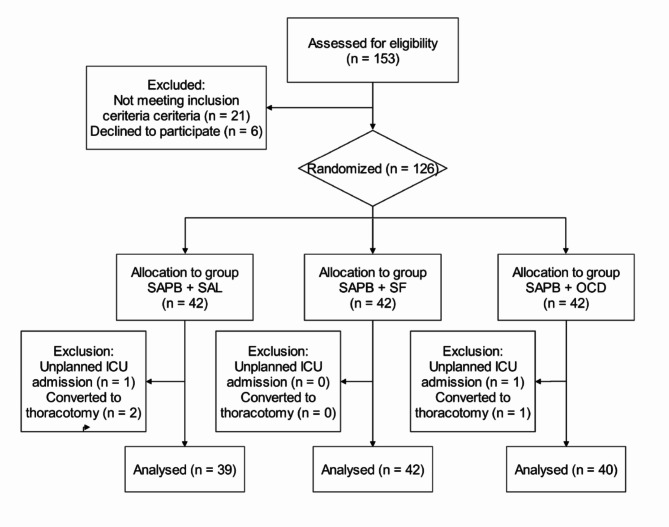
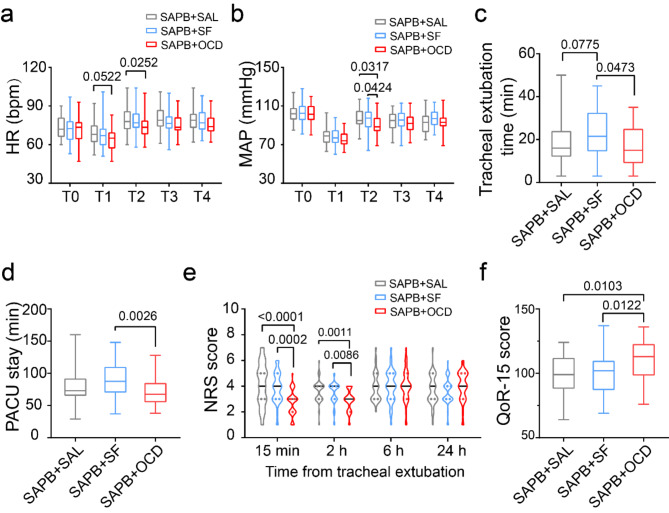
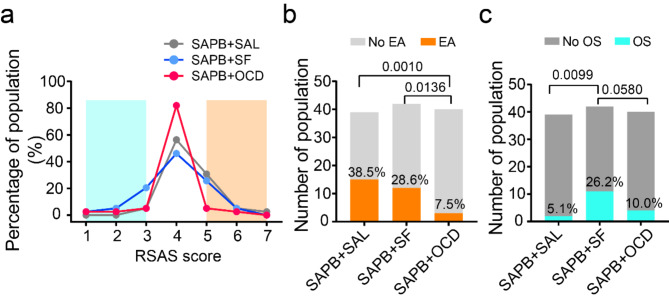
Emergence agitation (EA) is more commonly observed after thoracic surgeries and can lead to serious complications. This study aimed to evaluate the effectiveness of serratus anterior plane block (SAPB) combined with oxycodone for transitional analgesia in preventing EA after video-assisted thoracoscopic surgery (VATS). A total of 121 adult patients scheduled for VATS under one-lung ventilation anesthesia were enrolled and randomly divided into three groups: preoperative SAPB without opioids for transitional analgesia near the end of the surgery (SAPB + SAL group, n = 39); preoperative SAPB with sufentanil at 0.1 µg/kg for transitional analgesia (SAPB + SF group, n = 42); and preoperative SAPB with oxycodone at 0.1 mg/kg for transitional analgesia (SAPB + OCD group, n = 40). In primary outcomes, the incidences of EA in the SAPB + SAL, SAPB + SF, and SAPB + OCD groups were 38.5%, 28.6%, and 7.5% respectively. There was a statistically significant difference in EA incidence between the SAPB + OCD and SAPB + SF groups (P = 0.0136). In secondary outcomes, compared to the SAPB + SF group, the SAPB + OCD group experienced shorter tracheal extubation time [15(9, 25) min vs. 21.5(14.5, 32.5) min; P = 0.0473] and PACU stay [67.5(55.0, 85.0) min vs. 87.5(70.0, 110.0) min; P = 0.0026]; lower NRS scores at 15 min and 2 h post-extubation (P < 0.01), and higher Quality of Recovery-15 (QoR-15) scores post-surgery [113(98, 123) vs. 102(88, 112); P = 0.0122]. Our results suggest SAPB combined with oxycodone for transitional analgesia, compared with sufentanil, is more effective in preventing EA after VATS and conductive to rapid recovery postoperatively.Trial registration: Chinese Clinical Trial Registry, identifier: ChiCTR2300077473, Date: 09/11/2023.
术后躁动(EA)在胸科手术后更为常见,并可能导致严重并发症。本研究旨在评估前锯肌平面阻滞(SAPB)联合羟考酮用于过渡性镇痛在预防电视辅助胸腔镜手术(VATS)后EA方面的有效性。共有121例计划在单肺通气麻醉下行VATS的成年患者入组,并随机分为三组:手术接近尾声时术前使用SAPB且不使用阿片类药物进行过渡性镇痛(SAPB + SAL组,n = 39);术前使用0.1 μg/kg舒芬太尼的SAPB进行过渡性镇痛(SAPB + SF组,n = 42);以及术前使用0.1 mg/kg羟考酮的SAPB进行过渡性镇痛(SAPB + OCD组,n = 40)。在主要结局指标方面,SAPB + SAL组、SAPB + SF组和SAPB + OCD组的EA发生率分别为38.5%、28.6%和7.5%。SAPB + OCD组与SAPB + SF组之间的EA发生率存在统计学显著差异(P = 0.0136)。在次要结局指标方面,与SAPB + SF组相比,SAPB + OCD组的气管拔管时间更短[15(9,25)分钟 vs. 21.5(14.5,32.5)分钟;P = 0.0473],麻醉后复苏室(PACU)停留时间更短[67.5(55.0,85.0)分钟 vs. 87.5(70.0,110.0)分钟;P = 0.0026];拔管后15分钟和2小时时的数字评分量表(NRS)得分更低(P < 0.01),术后恢复质量-15(QoR-15)评分更高[113(98,123) vs. 102(88,112);P = 0.0122]。我们的结果表明,与舒芬太尼相比,SAPB联合羟考酮用于过渡性镇痛在预防VATS后EA方面更有效,且有助于术后快速恢复。试验注册:中国临床试验注册中心,标识符:ChiCTR2300077473,日期:2023年11月9日。