Malio Kelitha, Peni Bethseba, Hevoho Elaine, Yamba Abel, Pukienei Alois, Macfarlane-Berry Laura, Ortuzar Trinidad Velasco, Ropa Barry, Puana Ilagi, Kearns Therese, Housen Tambri
World Vision Papua New Guinea, Boroko, National Capital District, PapuaNew Guinea.
Field Epidemiology Training Program, National Department of Health, Port Moresby, Papua New Guinea.
Western Pac Surveill Response J. 2024 Nov 12;15(4):1-7. doi: 10.5365/wpsar.2024.15.1107. eCollection 2024 Oct-Dec.
Over the past two decades, there has been increased recognition of the importance of a more holistic approach to preventing, predicting, detecting and responding to public health threats. The COVID-19 pandemic highlighted the need to bring together environmental, human and animal health sectors in addressing public health threats and the need to develop skilled front-line workers to act as surge capacity during health emergencies.
Papua New Guinea is a high-risk country for emerging and re-emerging pathogens. The effects of climate change, human-mediated encroachment on natural habitats and destructive land-use practices have threatened ecosystems and caused environmental damage. The movement of goods, animals and people over porous borders provides opportunities for the introduction and spread of new pathogens.
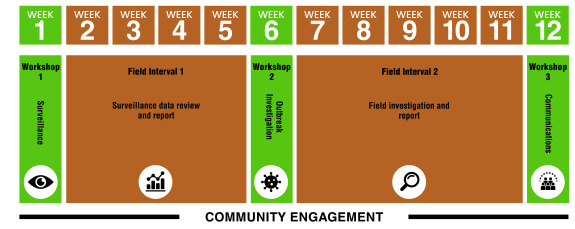
In recognition of the importance of multisectoral responses to health threats in Papua New Guinea, and the need to train front-line workers, we designed and piloted a 3-month One Health in-service training programme for front-line workers from across all sectors.
The co-creation of curricula was essential in ensuring the relevance of the programme to front-line workers from multiple sectors, and the development of provincial training teams was key to ensuring mentorship and programme sustainability. Bringing front-line workers together in joint trainings facilitated the building of relationships, the understanding of the roles and responsibilities of the various sectors, the identification of sectoral focal points and the development of informal networks.
Papua New Guinea's One Health front-line Field Epidemiology Training Program demonstrated that investment in cross-sectoral training programmes can be a catalyst for the implementation of One Health approaches on the front line.
在过去二十年里,人们越来越认识到采取更全面的方法来预防、预测、检测和应对公共卫生威胁的重要性。新冠疫情凸显了在应对公共卫生威胁时整合环境、人类和动物卫生部门的必要性,以及培养熟练的一线工作人员以在卫生紧急情况期间发挥应急能力的必要性。
巴布亚新几内亚是新出现和重新出现病原体的高风险国家。气候变化、人类对自然栖息地的侵入以及破坏性土地利用做法的影响威胁了生态系统并造成了环境破坏。货物、动物和人员跨越漏洞百出的边境流动为新病原体的传入和传播提供了机会。
认识到巴布亚新几内亚多部门应对卫生威胁的重要性以及培训一线工作人员的必要性,我们为来自所有部门的一线工作人员设计并试点了一个为期3个月的“同一健康”在职培训项目。
共同创建课程对于确保该项目与多个部门的一线工作人员相关至关重要,省级培训团队的发展是确保指导和项目可持续性的关键。将一线工作人员聚集在一起进行联合培训促进了关系的建立、对各部门角色和责任的理解、部门联络点的确定以及非正式网络的发展。
巴布亚新几内亚的“同一健康”一线现场流行病学培训项目表明,对跨部门培训项目的投资可以成为在一线实施“同一健康”方法的催化剂。