Chen Yuwei, Deng Zhibo, Chen Jian, Lin Jie, Zou Jianping, Li Sang, Sun Yang
Department of Gynecology, Clinical Oncology School of Fujian Medical University, Fujian Cancer Hospital, Fuzhou, Fujian Province, People's Republic of China.
Department of Orthopedics, Shengli Clinical Medical College of Fujian Medical University, Fujian Provincial Hospital, Fuzhou, Fujian Province, People's Republic of China.
J Inflamm Res. 2024 Nov 26;17:9773-9793. doi: 10.2147/JIR.S483977. eCollection 2024.
Ovarian cancer (OC) poses a significant health burden with high mortality rates among female reproductive malignancies. Variability in treatment responses underscores the need for reliable prognostic markers to refine risk stratification. PANoptosis, a novel form of programmed cell death, plays pivotal roles in cancer pathogenesis and therapy. However, its prognostic relevance in OC remains unclear.
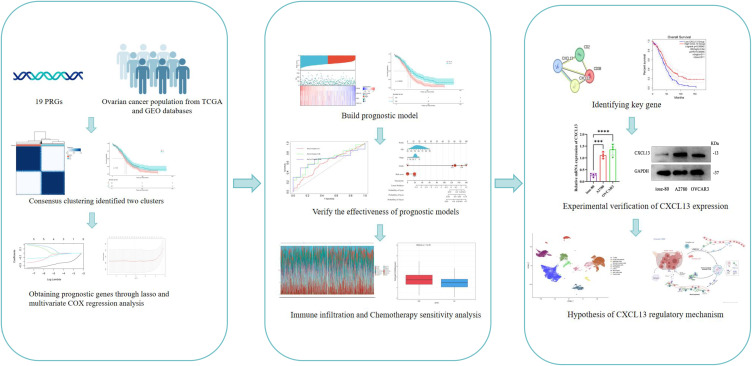
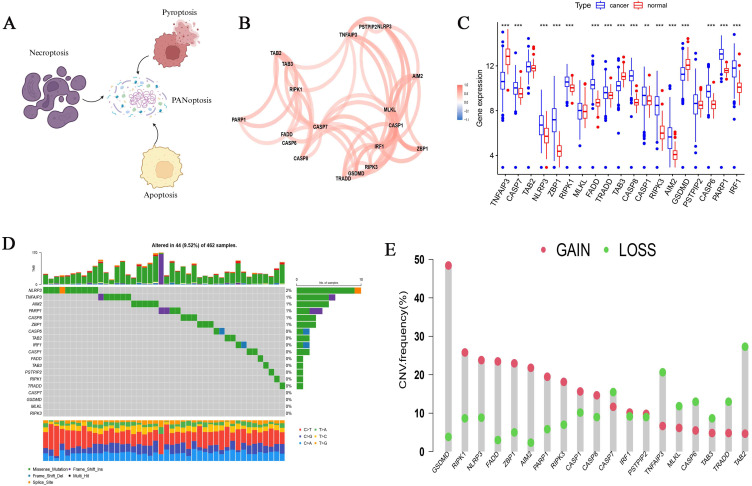
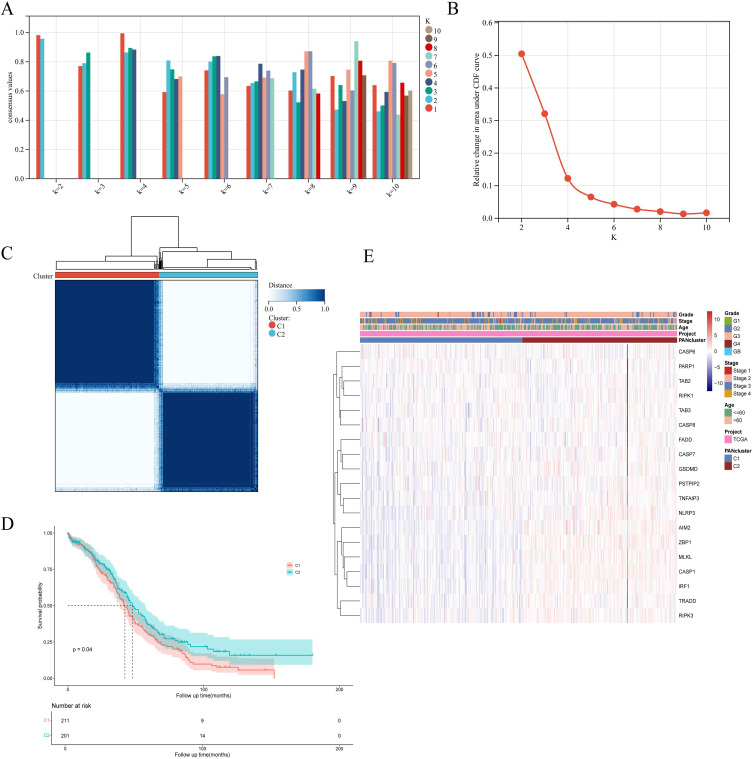
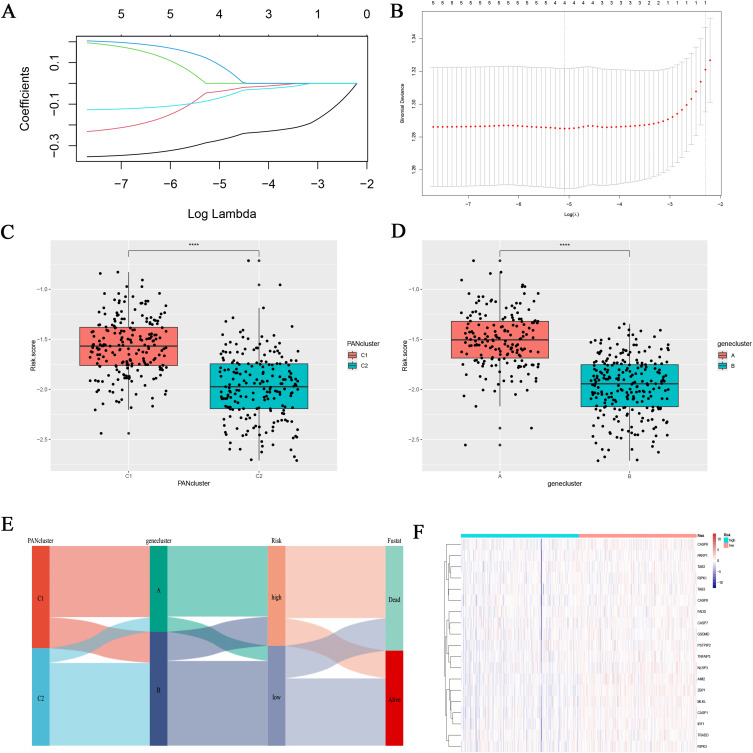
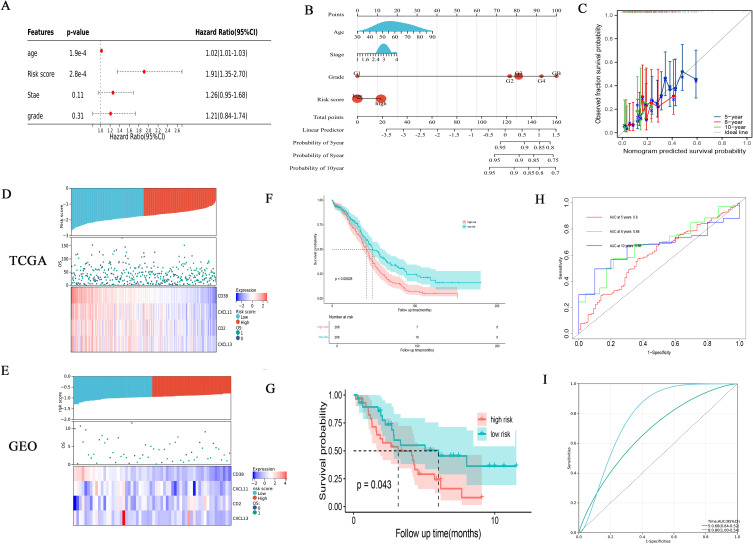
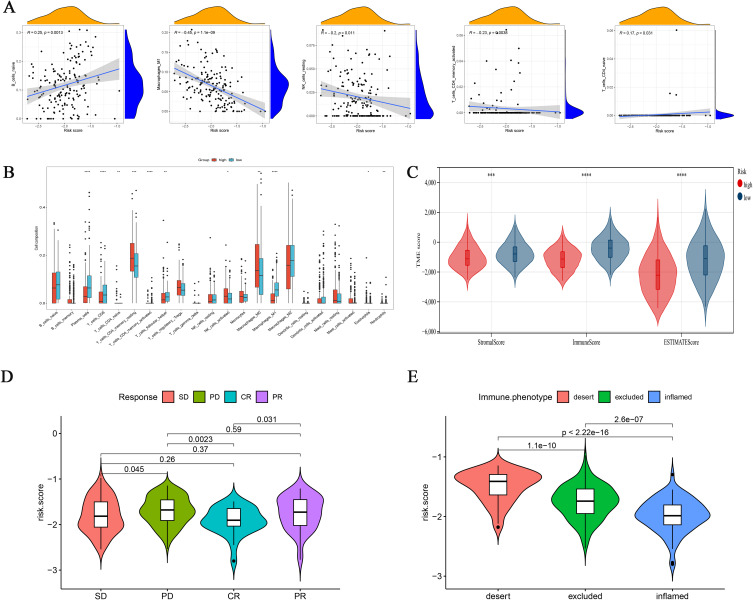
Utilizing data from The Cancer Genome Atlas (TCGA), we analyzed transcriptomic and clinical signatures of OC patients. Through consensus clustering, we delineated molecular subtypes associated with PANoptosis-related genes (PRGs). We constructed and validated prognostic models using LASSO and Cox regression analyses, corroborated with GEO dataset validation. CIBERSORT assessed immune cell infiltration by risk score, and a predictive algorithm evaluated chemotherapy responses. Additionally, we investigated the biological role of the key gene CXCL13 in OC and its response to immunotherapy.
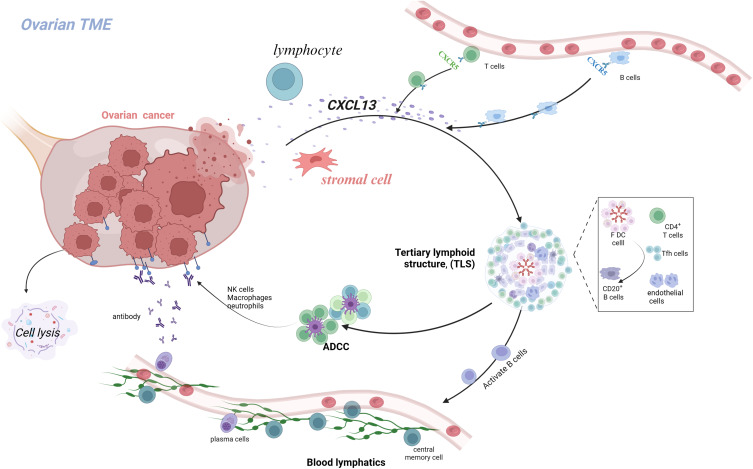
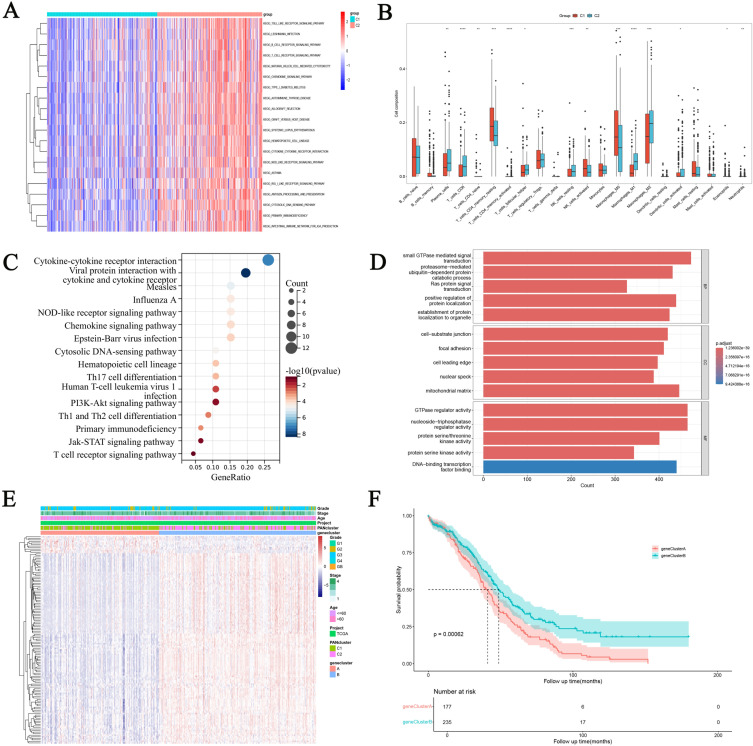
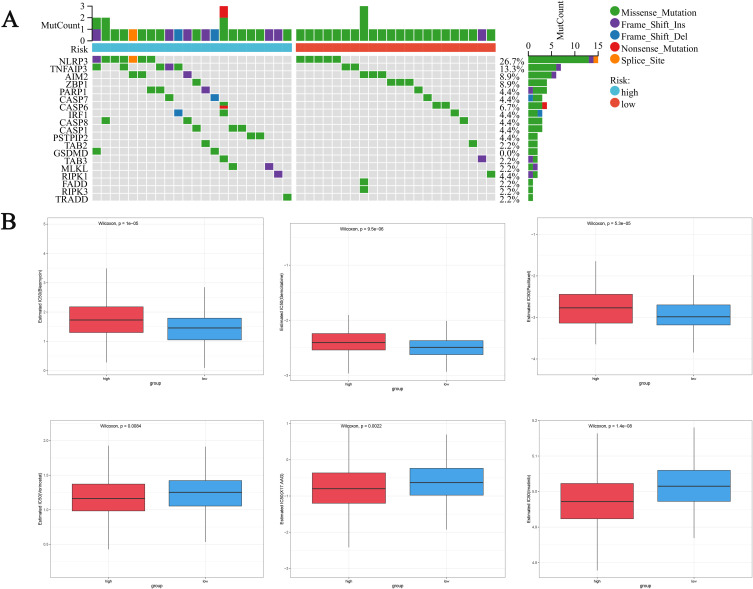
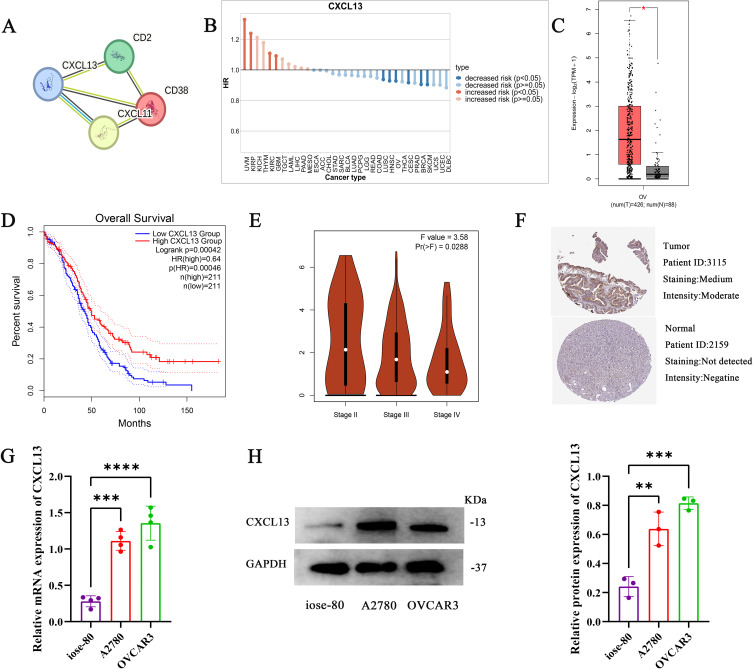
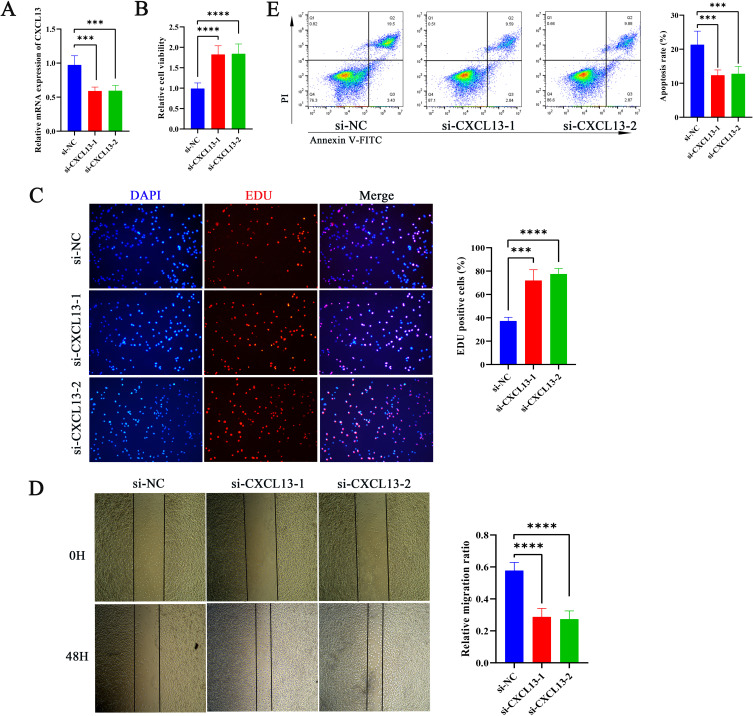
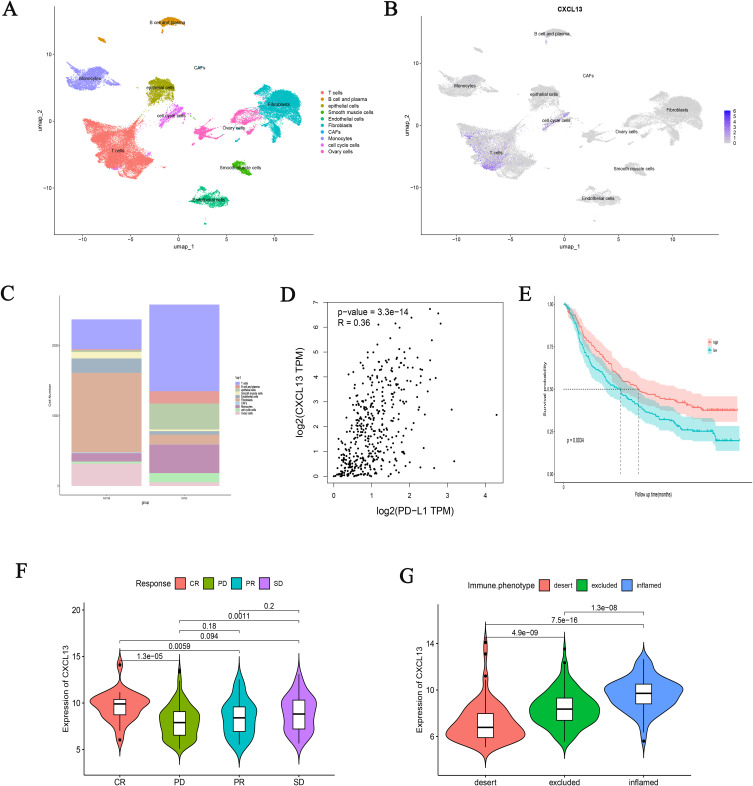
Based on 19 PRGs, we identified two OC subtypes (PAN-Cluster1, PAN-Cluster2). Machine learning-derived risk scores using PAN-Cluster differentially expressed genes emerged as an independent prognostic indicator. Distinct risk groups exhibited varying clinical outcomes, immune profiles, drug sensitivities, and mutational landscapes. Notably, we confirmed CXCL13 as a model key gene and explored its role in OC regulation. In OC cells, suppression of CXCL13 expression enhances cell proliferation and migration, while patients with high CXCL13 expression show an improved response to immunotherapy.
We initially identified the molecular subtypes associated with PRGs and established a prognostic model related to PRGs to predict survival and drug response in OC patients. Although further validation is required, these findings offer valuable insights into the development of personalized treatment strategies for OC patients.
卵巢癌(OC)在女性生殖系统恶性肿瘤中死亡率高,带来了重大的健康负担。治疗反应的变异性凸显了需要可靠的预后标志物来优化风险分层。泛凋亡是一种新型程序性细胞死亡形式,在癌症发病机制和治疗中起关键作用。然而,其在OC中的预后相关性仍不清楚。
利用来自癌症基因组图谱(TCGA)的数据,我们分析了OC患者的转录组和临床特征。通过一致性聚类,我们确定了与泛凋亡相关基因(PRGs)相关的分子亚型。我们使用LASSO和Cox回归分析构建并验证了预后模型,并通过GEO数据集验证进行了佐证。CIBERSORT通过风险评分评估免疫细胞浸润情况,一种预测算法评估化疗反应。此外,我们研究了关键基因CXCL13在OC中的生物学作用及其对免疫治疗的反应。
基于19个PRGs,我们确定了两种OC亚型(PAN-Cluster1、PAN-Cluster2)。使用PAN-Cluster差异表达基因通过机器学习得出的风险评分成为独立的预后指标。不同的风险组表现出不同的临床结果、免疫特征、药物敏感性和突变图谱。值得注意的是,我们确认CXCL13为模型关键基因,并探索了其在OC调控中的作用。在OC细胞中,抑制CXCL13表达可增强细胞增殖和迁移,而CXCL13高表达的患者对免疫治疗的反应更好。
我们初步确定了与PRGs相关的分子亚型,并建立了与PRGs相关的预后模型,以预测OC患者的生存和药物反应。尽管需要进一步验证,但这些发现为OC患者个性化治疗策略的制定提供了有价值的见解。