Veghini Lisa, Pasini Davide, Fang Rui, Delfino Pietro, Filippini Dea, Neander Christian, Vicentini Caterina, Fiorini Elena, Lupo Francesca, D'Agosto Sabrina L, Carbone Carmine, Agostini Antonio, Piro Geny, Rosa Diego, Bevere Michele, Markus Peter, Behrens Diana, Luchini Claudio, Lawlor Rita T, Scarpa Aldo, Biffi Giulia, Cheung Phyllis F, Siveke Jens T, Corbo Vincenzo
Department of Engineering for Innovation Medicine, University of Verona, Verona, Italy.
Division of Solid Tumor Translational Oncology, German Cancer Consortium (DKTK), Partner Site Essen, A Partnership Between German Cancer Research Center (DKFZ) and University Hospital Essen, Essen, Germany.
Nat Commun. 2024 Dec 3;15(1):10534. doi: 10.1038/s41467-024-54975-8.
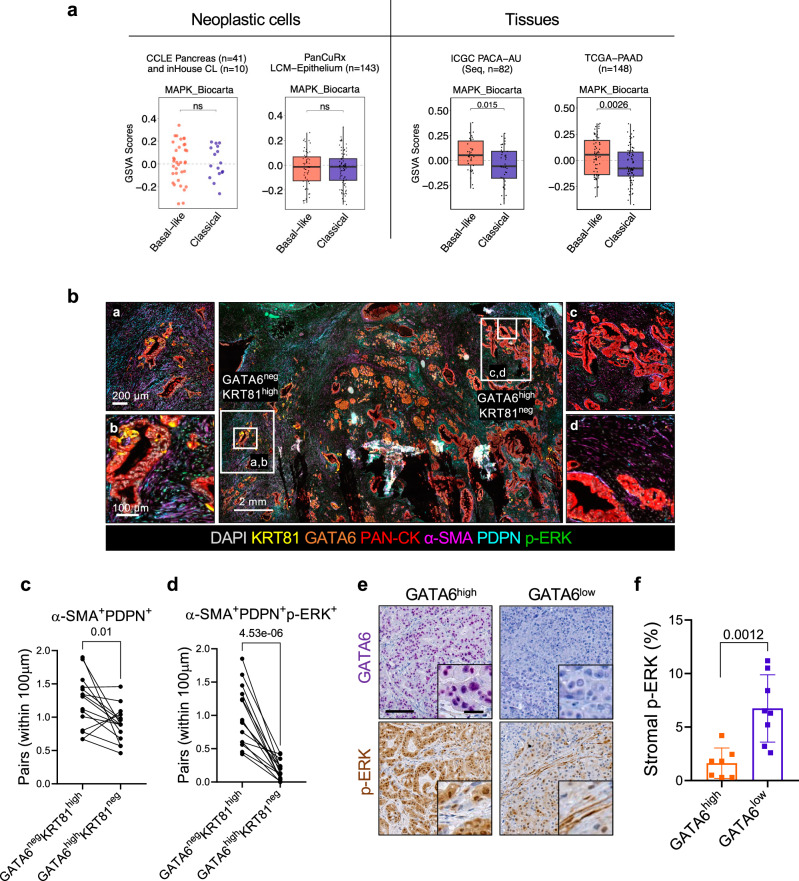
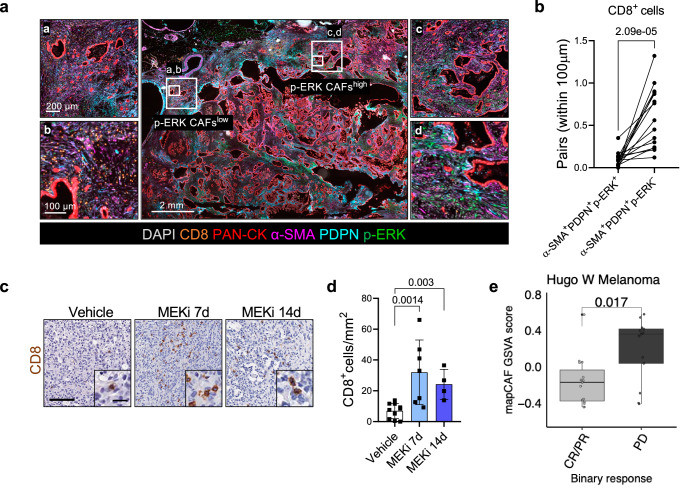
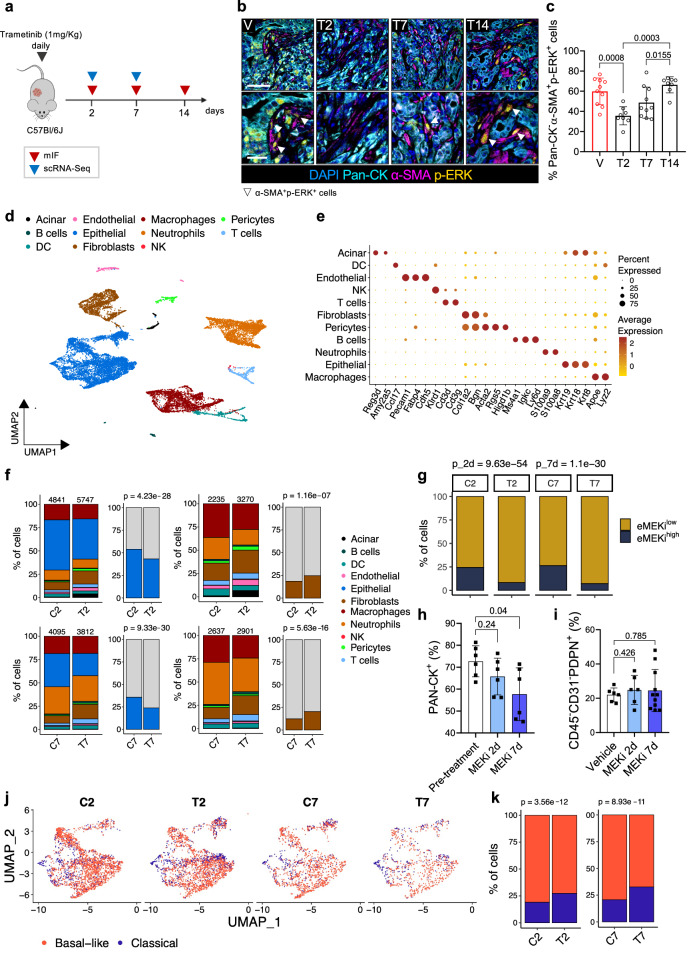
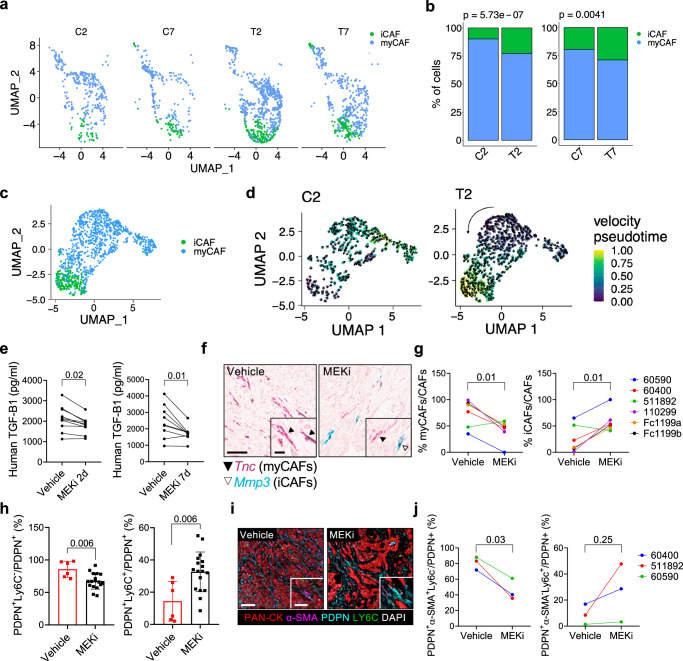
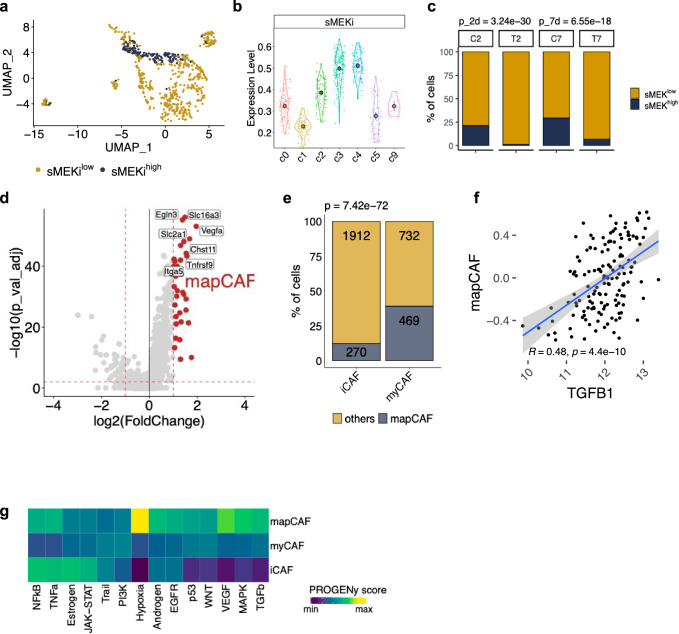
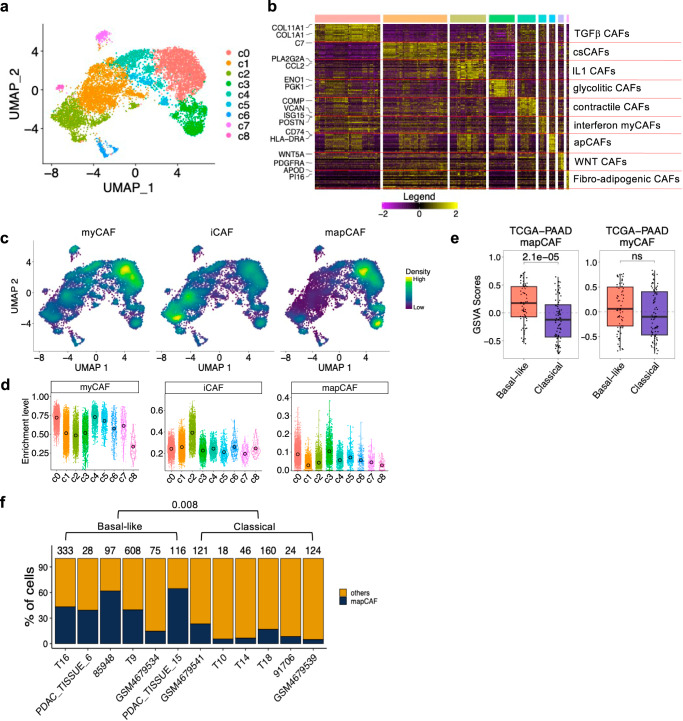
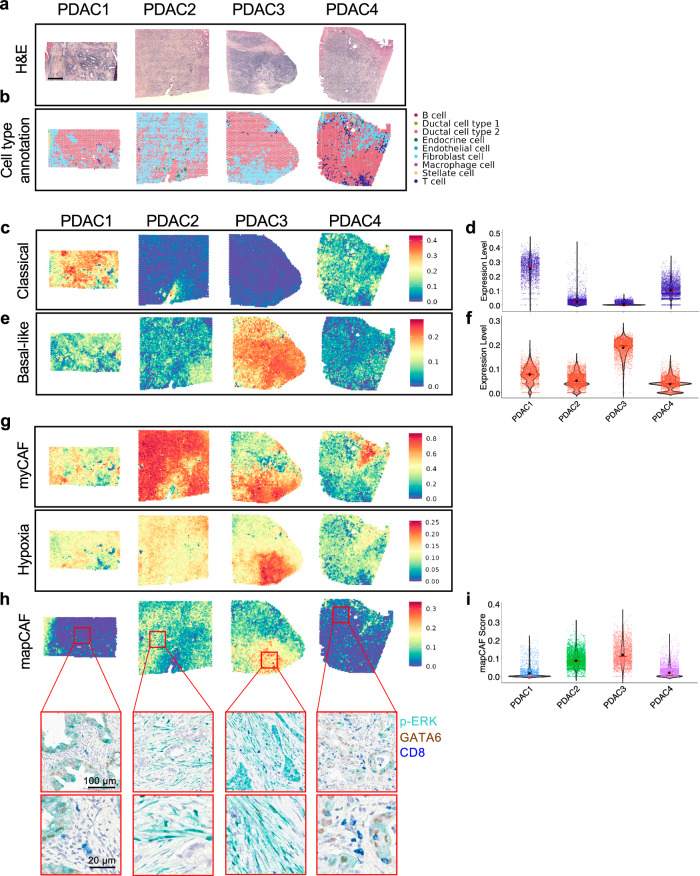
Fibroblast heterogeneity is increasingly recognised across cancer conditions. Given their important contribution to disease progression, mapping fibroblasts' heterogeneity is critical to devise effective anti-cancer therapies. Cancer-associated fibroblasts (CAFs) represent the most abundant cell population in pancreatic ductal adenocarcinoma (PDAC). Whether CAF phenotypes are differently specified by PDAC cell lineages remains to be elucidated. Here, we reveal an important role for the MAPK signalling pathway in defining PDAC CAF phenotypes. We show that epithelial MAPK activity promotes the myofibroblastic differentiation of CAFs by sustaining the expression and secretion of TGF-β1. We integrate single-cell profiling of post-perturbation transcriptional responses from mouse models with cellular and spatial profiles of human tissues to define a MAPK CAF (mapCAF) phenotype. We show that this phenotype associates with basal-like tumour cells and reduced frequency of CD8 T cells. In addition to elevated MAPK activity, this mapCAF phenotype is characterized by TGF-β signalling, hypoxia responsive signatures, and immunoregulatory gene programs. Furthermore, the mapCAF signature is enriched in myofibroblastic CAFs from various cancer conditions and correlates with reduced response to immune checkpoint inhibition in melanoma. Altogether, our data expand our knowledge on CAF phenotype heterogeneity and reveal a potential strategy for targeting myofibroblastic CAFs in vivo.
在各种癌症情况下,成纤维细胞的异质性越来越受到认可。鉴于它们对疾病进展的重要贡献,绘制成纤维细胞的异质性对于设计有效的抗癌疗法至关重要。癌症相关成纤维细胞(CAF)是胰腺导管腺癌(PDAC)中最丰富的细胞群。PDAC细胞谱系是否以不同方式指定CAF表型仍有待阐明。在这里,我们揭示了MAPK信号通路在定义PDAC CAF表型中的重要作用。我们表明,上皮MAPK活性通过维持TGF-β1的表达和分泌来促进CAF的肌成纤维细胞分化。我们将来自小鼠模型的扰动后转录反应的单细胞分析与人类组织的细胞和空间分析相结合,以定义一种MAPK CAF(mapCAF)表型。我们表明,这种表型与基底样肿瘤细胞相关,并降低了CD8 T细胞的频率。除了MAPK活性升高外,这种mapCAF表型还具有TGF-β信号传导、缺氧反应特征和免疫调节基因程序的特点。此外,mapCAF特征在来自各种癌症情况的肌成纤维细胞CAF中富集,并且与黑色素瘤中对免疫检查点抑制的反应降低相关。总之,我们的数据扩展了我们对CAF表型异质性的认识,并揭示了一种在体内靶向肌成纤维细胞CAF的潜在策略。