Raj Shraddha, Prasad Rajiv Ranjan, Ranjan Alok
State Cancer Institute, Indira Gandhi Institute of Medical Sciences, Patna, Bihar, India.
Jay Prabha Medanta Hospital, Patna, Bihar, India.
J Contemp Brachytherapy. 2024 Jun;16(3):241-256. doi: 10.5114/jcb.2024.141402. Epub 2024 Jun 29.
Cervical cancer is a significant global health burden, with advancements in treatment modalities improving outcomes. However, vaginal toxicities following definitive chemoradiation remain a concern, impacting patients' quality of life. The aim of this systematic review and meta-analysis was to estimate the incidence of vaginal toxicities, explore associated factors, and assess the relationship with radiation dose in intact cervical cancer patients undergoing radical chemoradiation.
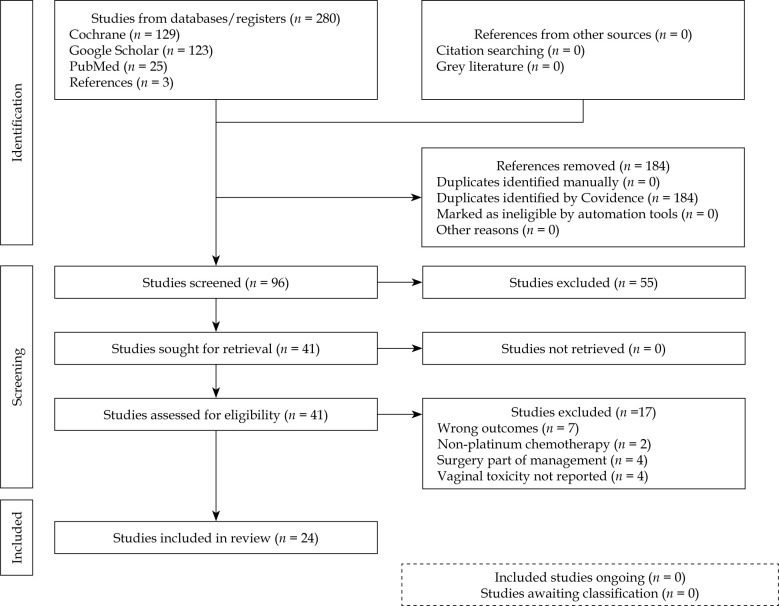
A systematic search of PubMed, Google Scholar, and Cochrane databases was conducted. Studies reporting on vaginal toxicities post-radical chemoradiation in intact cervical cancer patients were included. Data extraction and analysis were performed according to PRISMA guidelines.
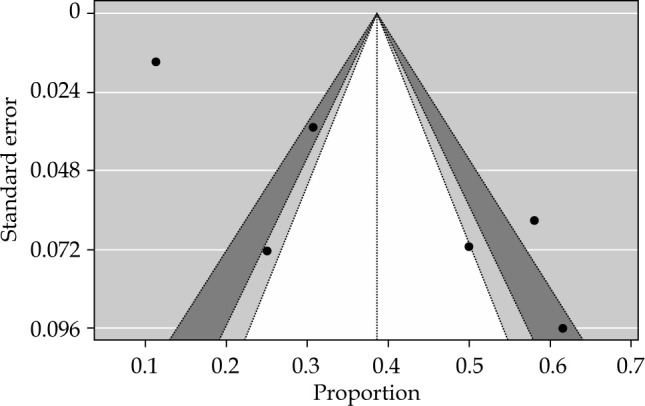
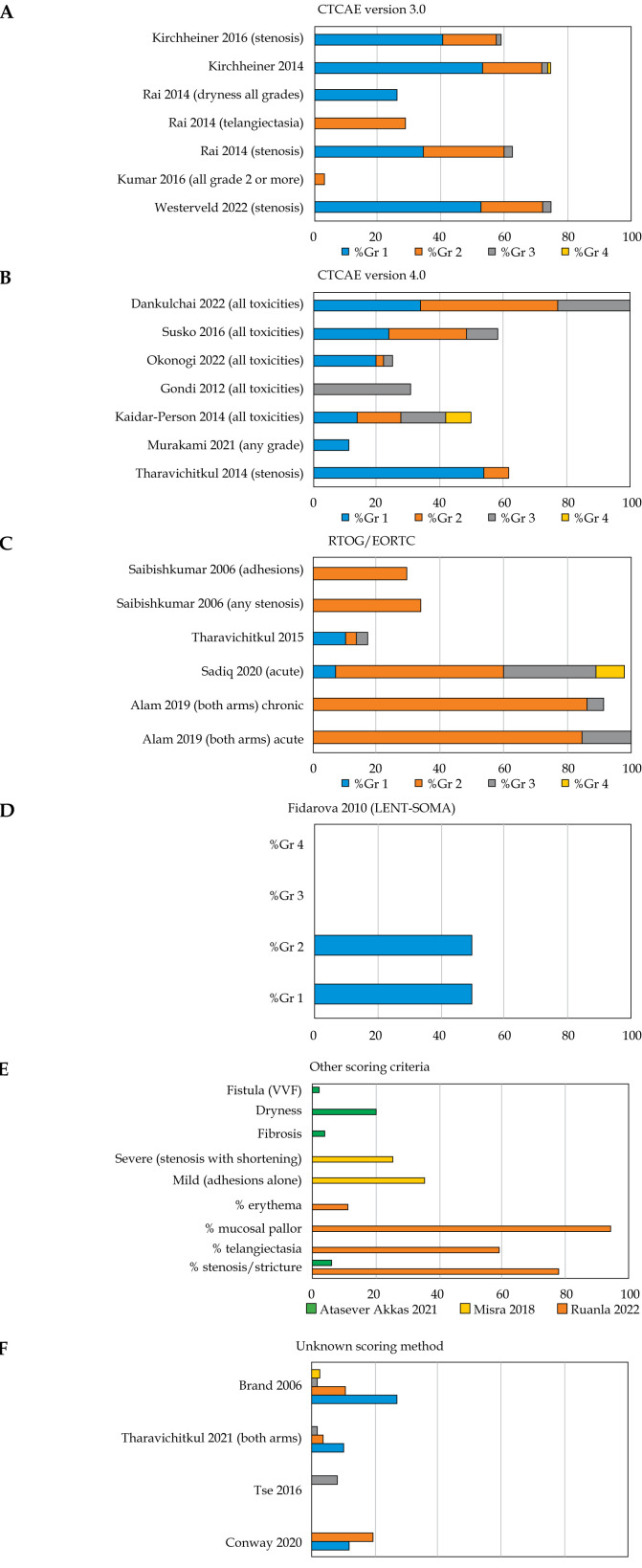
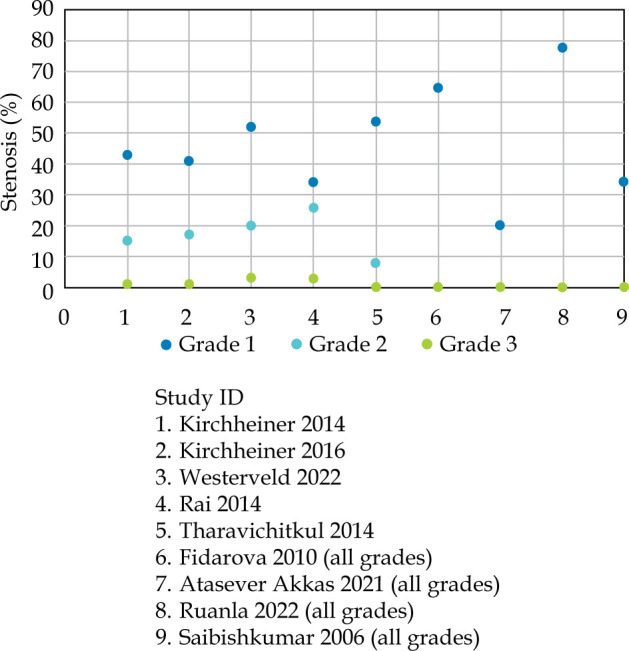
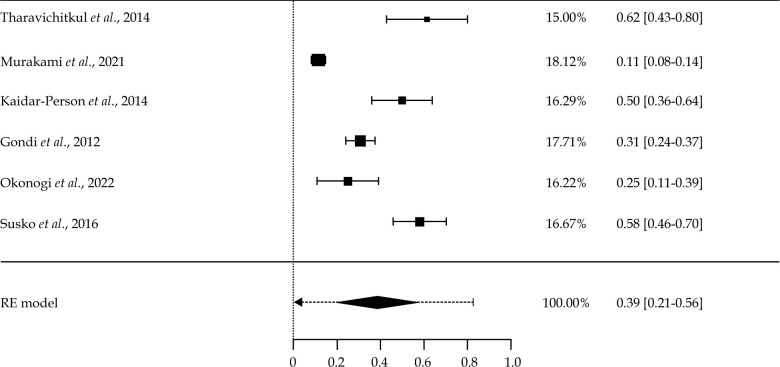
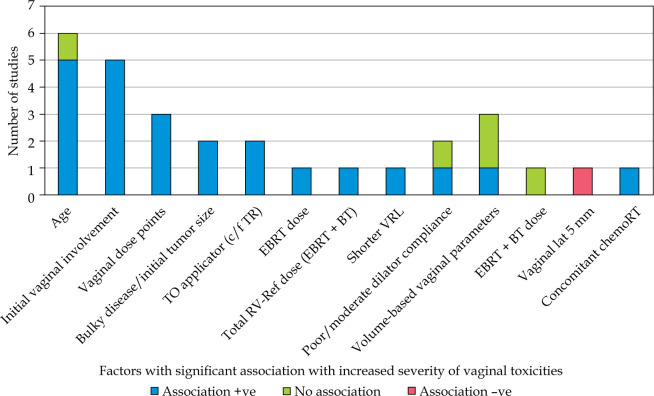
Twenty-four studies with various designs were included. The meta-analysis revealed a pooled estimate of 39% (95% CI: 21-56%) for overall vaginal toxicities among cervical cancer patients following definitive chemoradiation. Vaginal stenosis was the most commonly reported toxicity, with a median incidence of 61.5% (range, 20-77.8%) across the studies. Severe toxicities (grade ≥ 3) were reported at rates of 12.74% (CTCAE v. 4.0), 0.98% (CTCAE v. 3.0), 10.41% (RTOG/EORTC), and 0% (LENT-SOMA). Factors, such as age, initial vaginal involvement, and radiation dose were associated with increased toxicity risk. Significant heterogeneity was observed in study populations and methodologies.
Vaginal toxicities are common following definitive chemoradiation in intact cervical cancer patients, with vaginal stenosis being predominant. Standardization of toxicity scoring methods and radiotherapy dose reporting parameters is crucial for accurate comparison and interpretation of findings. Future research should focus on optimizing treatment strategies to minimize vaginal toxicities while maximizing efficacy and patient outcomes.
宫颈癌是一项重大的全球健康负担,治疗方式的进步改善了治疗效果。然而,根治性放化疗后的阴道毒性仍是一个问题,影响患者的生活质量。本系统评价和荟萃分析的目的是估计接受根治性放化疗的完整宫颈癌患者阴道毒性的发生率,探讨相关因素,并评估与放射剂量的关系。
对PubMed、谷歌学术和Cochrane数据库进行系统检索。纳入报道完整宫颈癌患者根治性放化疗后阴道毒性的研究。根据PRISMA指南进行数据提取和分析。
纳入了24项设计各异的研究。荟萃分析显示,宫颈癌患者在根治性放化疗后总体阴道毒性的合并估计值为39%(95%CI:21-56%)。阴道狭窄是最常报道的毒性,各研究中的中位发生率为61.5%(范围20-77.8%)。严重毒性(≥3级)的报告发生率分别为12.74%(CTCAE v.4.0)、0.98%(CTCAE v.3.0)、10.41%(RTOG/EORTC)和0%(LENT-SOMA)。年龄、初始阴道受累情况和放射剂量等因素与毒性风险增加相关。在研究人群和方法中观察到显著的异质性。
完整宫颈癌患者在根治性放化疗后阴道毒性很常见,其中阴道狭窄最为突出。毒性评分方法和放疗剂量报告参数的标准化对于准确比较和解释研究结果至关重要。未来的研究应侧重于优化治疗策略,以尽量减少阴道毒性,同时最大限度地提高疗效和患者治疗效果。