DeVeaux S'Dravious A, Vyshnya Sofiya, Propsom Katherine, Gbotosho Oluwabukola T, Singh Asem S, Horning Robert Z, Sharma Mihika, Jegga Anil G, Niu Liang, Botchwey Edward A, Hyacinth Hyacinth I
The Wallace H. Coulter Department of Biomedical Engineering, Georgia Tech and Emory, Atlanta, GA, United States.
Petit Institute of Bioengineering and Biosciences, Georgia Institute of Technology, Atlanta, GA, United States.
Exp Biol Med (Maywood). 2024 Nov 19;249:10361. doi: 10.3389/ebm.2024.10361. eCollection 2024.
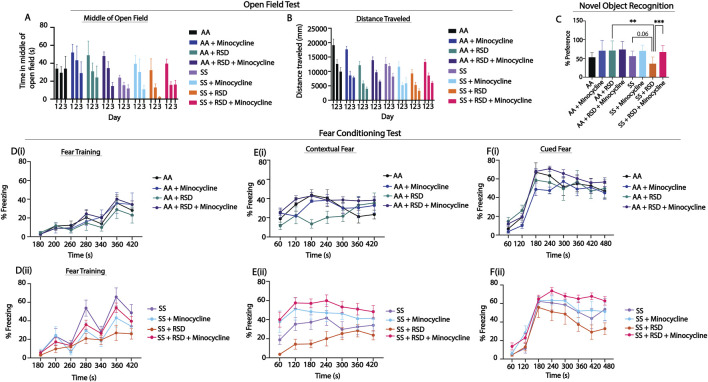
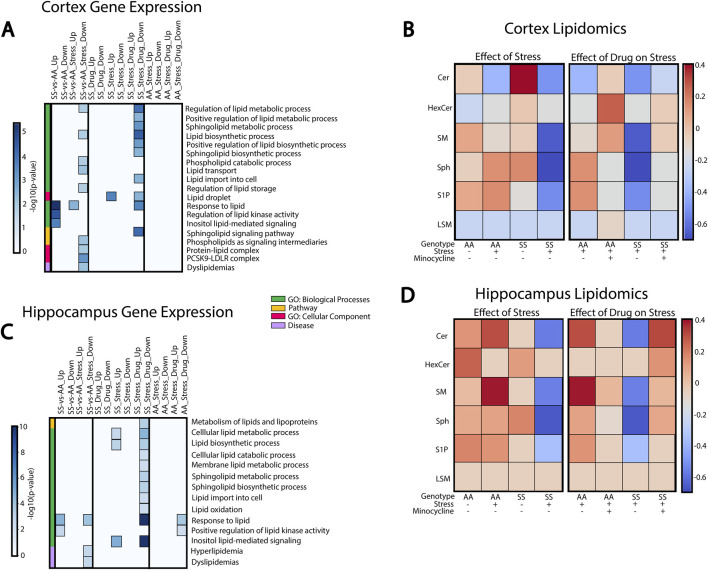
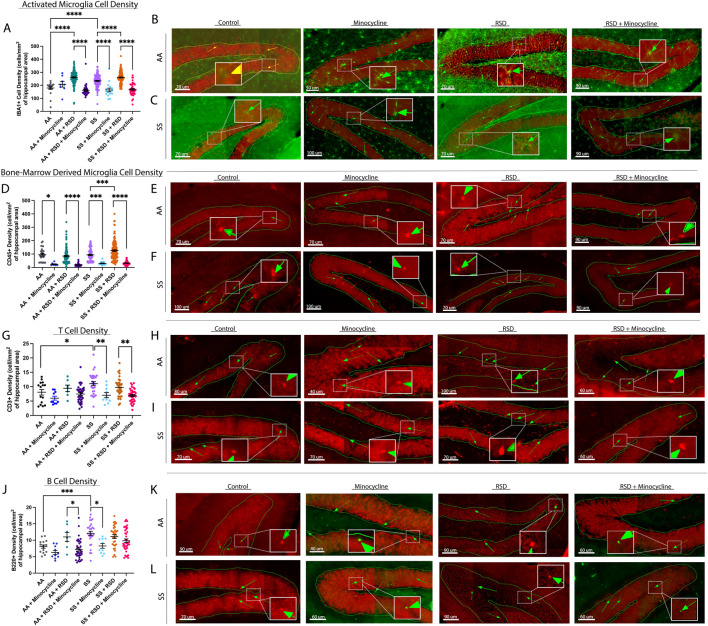
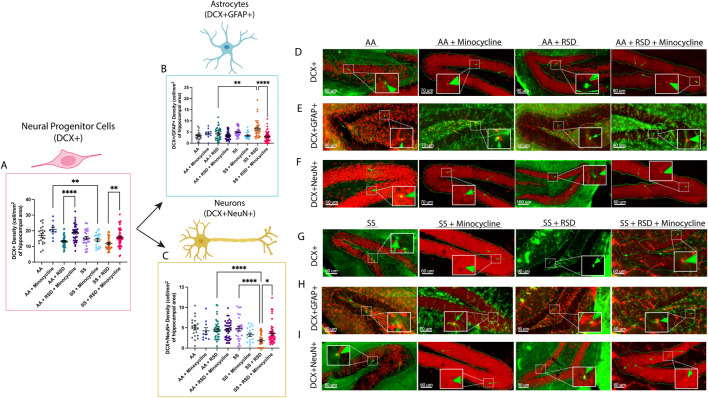
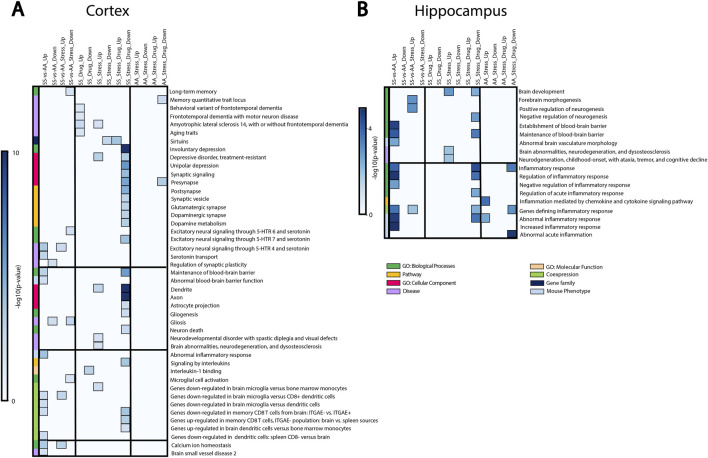
Cognitive deficit is a debilitating complication of sickle cell disease (SCD), with a multifactorial etiopathogenesis. Here we show that neuroinflammation and dysregulation in lipidomics and transcriptomics profiles are major underlying mechanisms of social stress-induced cognitive deficit in SCD. Male Townes sickle cell (SS) mice and controls (AA) were exposed to social stress using the repeat social defeat (RSD) paradigm concurrently with or without treatment with minocycline. Mice were tested for cognitive deficit using novel object recognition and fear conditioning tests. SS mice exposed to RSD without treatment had worse performance on cognitive tests compared to SS mice exposed to RSD with treatment or to AA controls, irrespective of their RSD or treatment disposition. Additionally, compared to SS mice exposed to RSD with treatment, SS mice exposed to RSD without treatment had significantly more cellular evidence of neuroinflammation coupled with a significant shift in the differentiation of neural progenitor cells towards astrogliogenesis. Additionally, brain tissue from SS mice exposed to RSD was significantly enriched for genes associated with blood-brain barrier dysfunction, neuron excitotoxicity, inflammation, and significant dysregulation in sphingolipids important to neuronal cell processes. We demonstrate in this study that social stress induces cognitive deficit in SS mice, concurrently with neuroinflammation and lipid dysregulation.
认知缺陷是镰状细胞病(SCD)的一种使人衰弱的并发症,其病因多因素。在此我们表明,神经炎症以及脂质组学和转录组学谱的失调是SCD中社会应激诱导的认知缺陷的主要潜在机制。使用重复社会挫败(RSD)范式,对雄性汤氏镰状细胞(SS)小鼠和对照(AA)小鼠施加社会应激,同时给予或不给予米诺环素治疗。使用新物体识别和恐惧条件测试对小鼠的认知缺陷进行检测。与接受治疗的暴露于RSD的SS小鼠或AA对照相比,未接受治疗的暴露于RSD的SS小鼠在认知测试中的表现更差,无论其RSD或治疗情况如何。此外,与接受治疗的暴露于RSD的SS小鼠相比,未接受治疗的暴露于RSD的SS小鼠有更多神经炎症的细胞证据,同时神经祖细胞向星形胶质细胞生成的分化发生显著变化。此外,暴露于RSD的SS小鼠的脑组织中,与血脑屏障功能障碍、神经元兴奋性毒性、炎症相关的基因以及对神经元细胞过程重要的鞘脂显著失调。我们在本研究中证明,社会应激在诱导SS小鼠认知缺陷的同时,还伴有神经炎症和脂质失调。