Roach K A, Anderson S E, Waggy C, Aldinger J, Stefaniak A B, Roberts J R
Allergy and Clinical Immunology Branch (ACIB), National Institute of Occupational Safety and Health (NIOSH), Morgantown, WV, USA.
Office of the Director, NIOSH, Morgantown, WV, USA.
J Immunotoxicol. 2024 Dec;21(1):2414979. doi: 10.1080/1547691X.2024.2414979. Epub 2024 Dec 4.
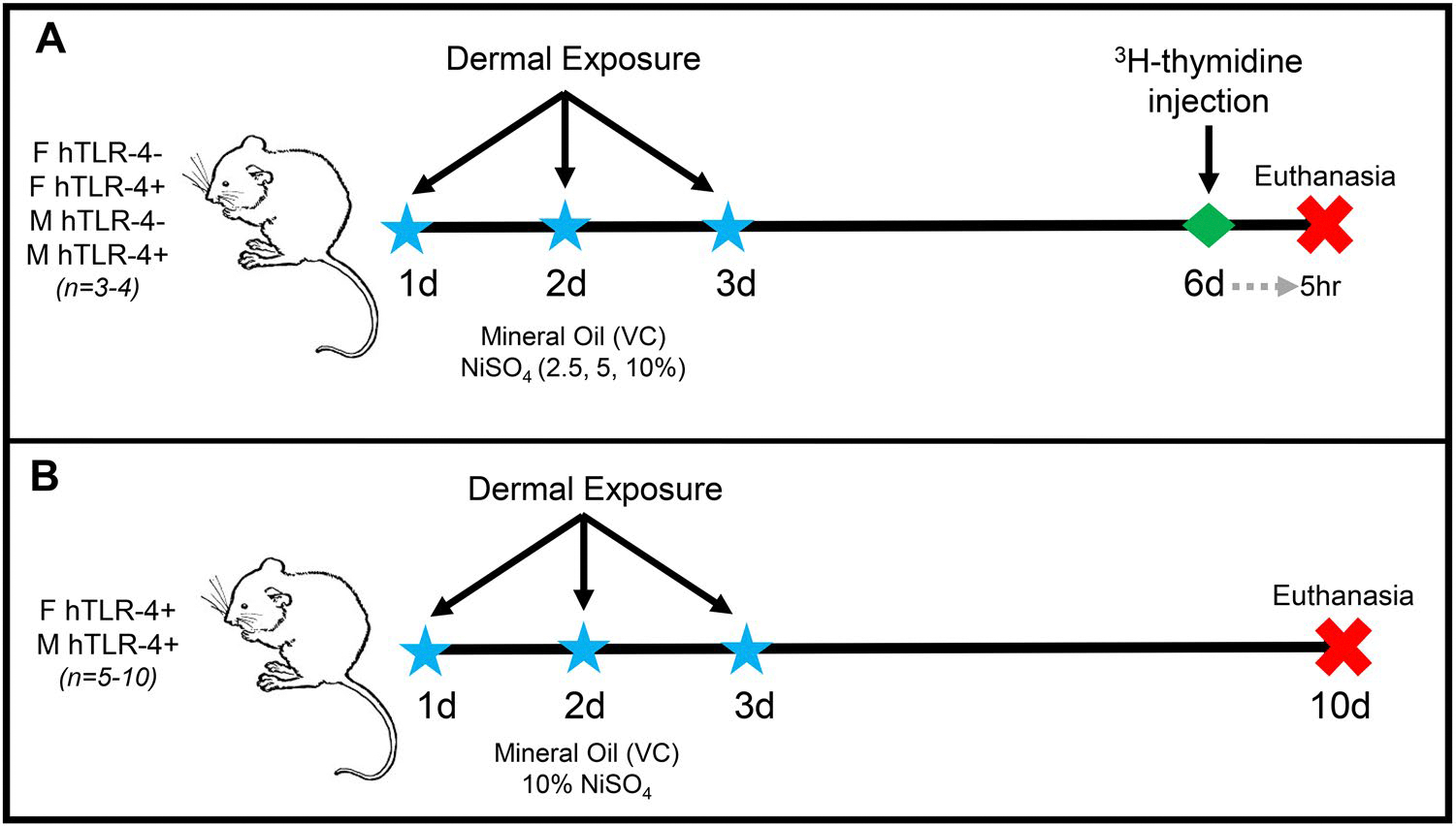
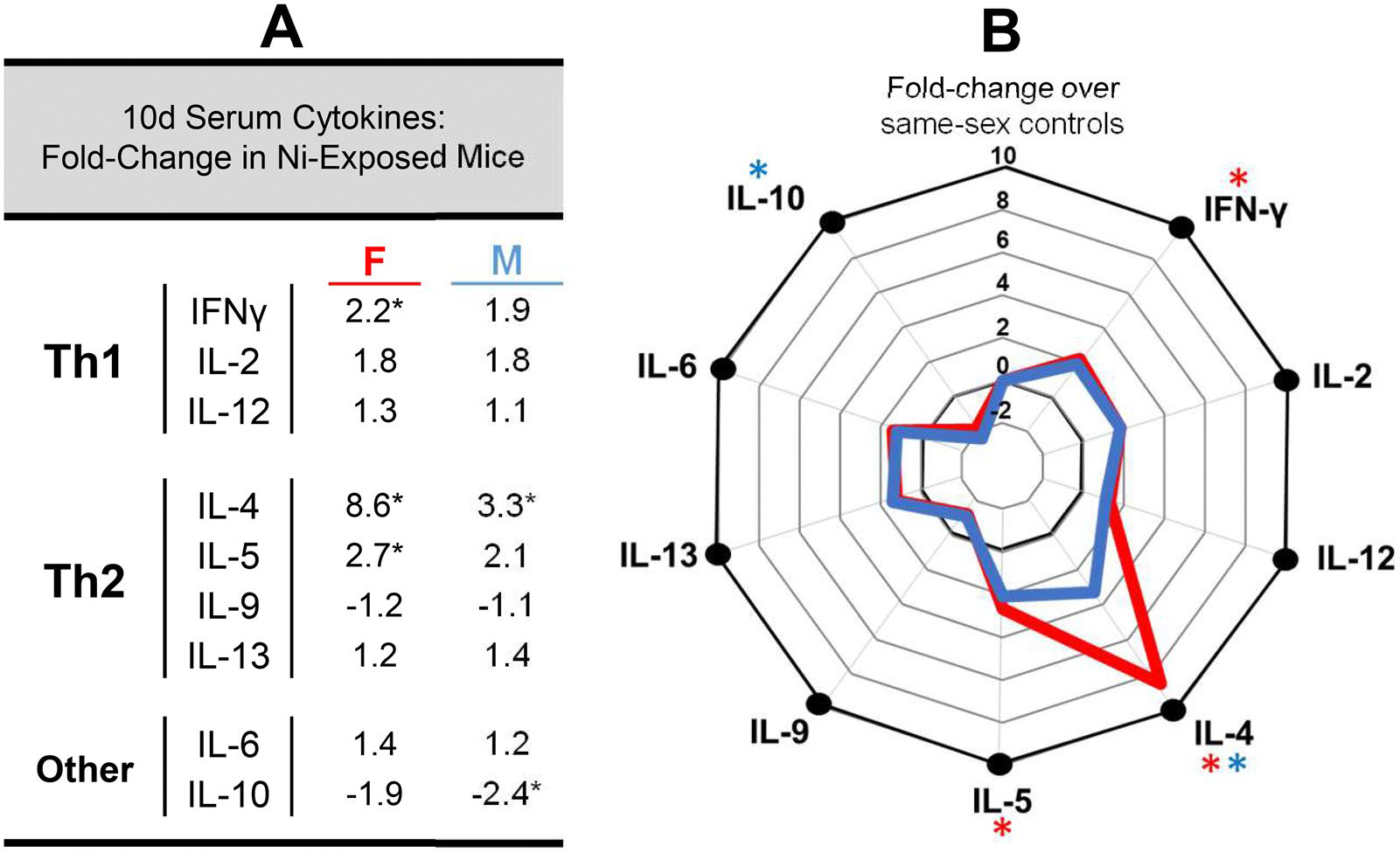
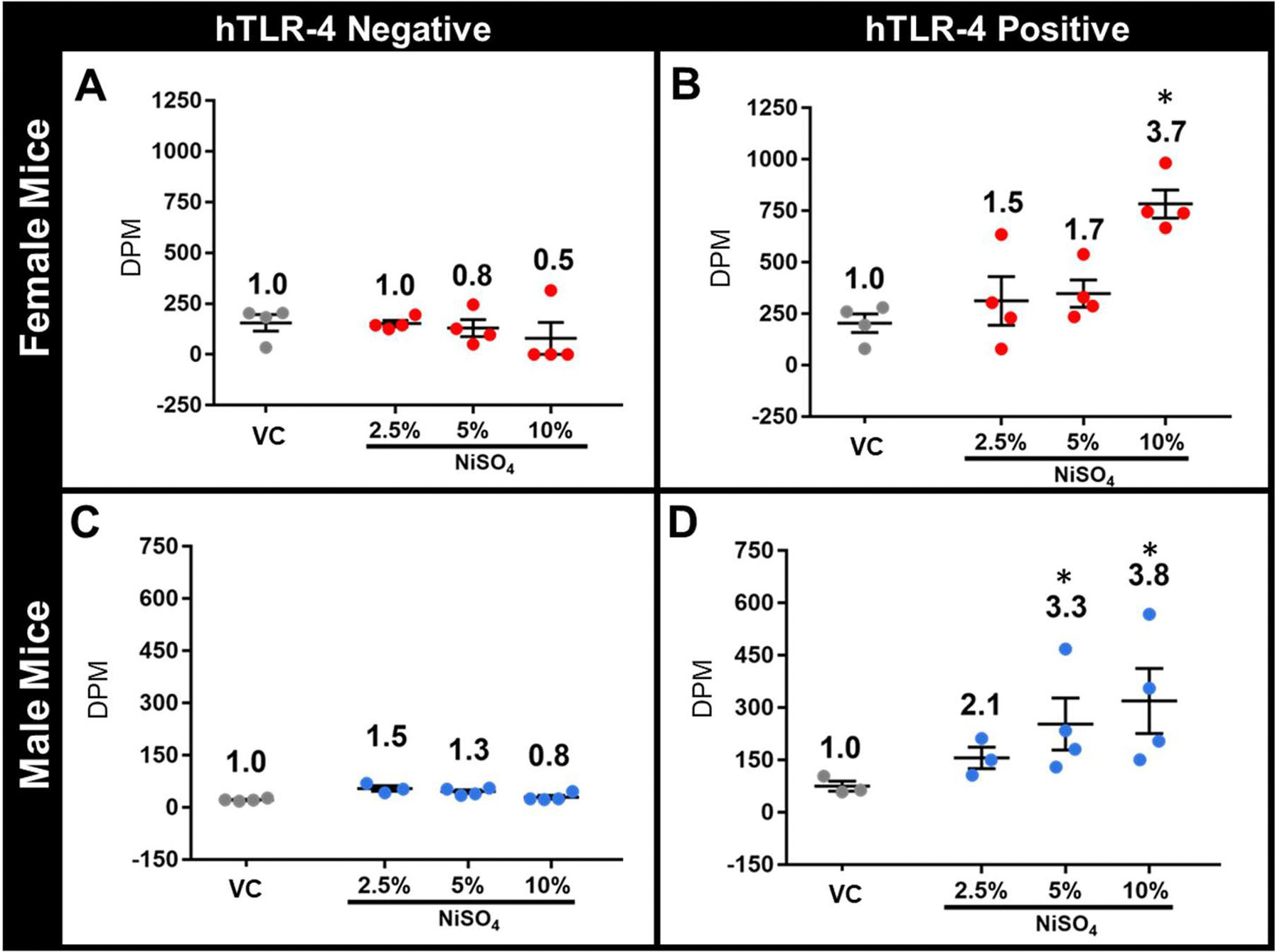
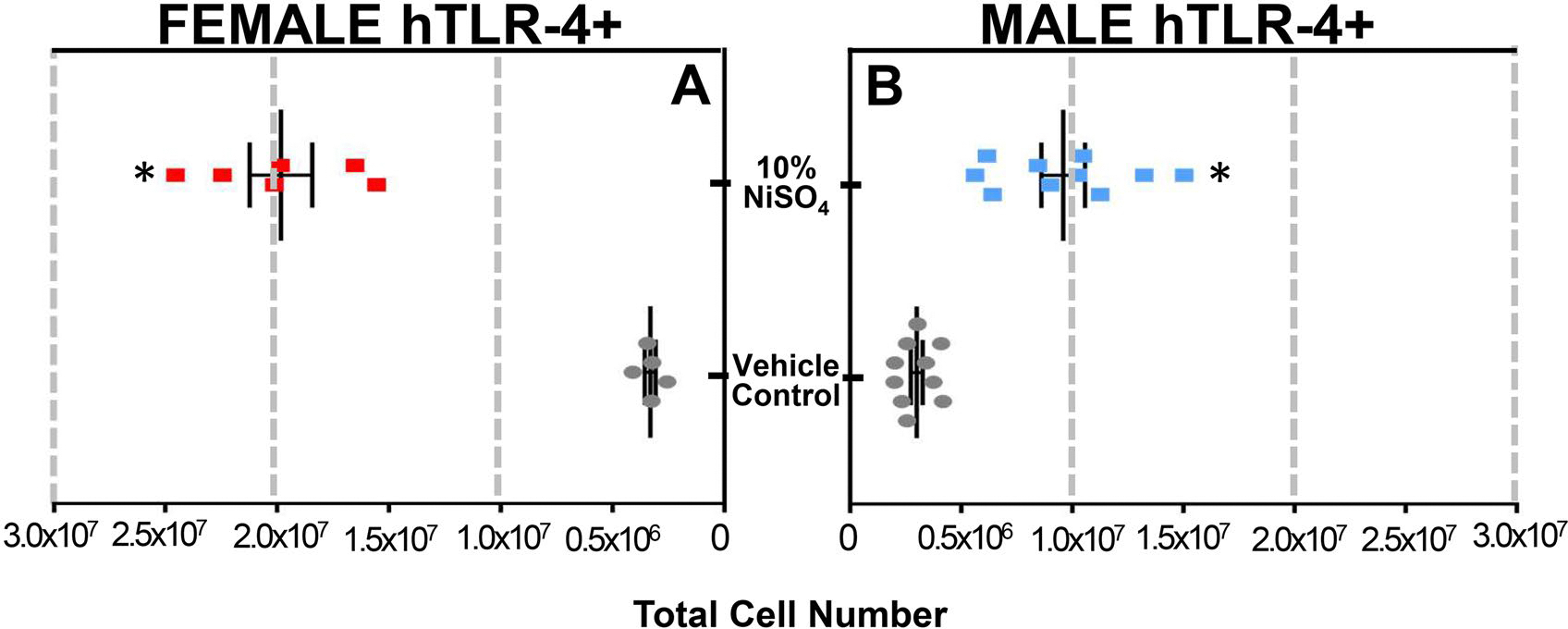
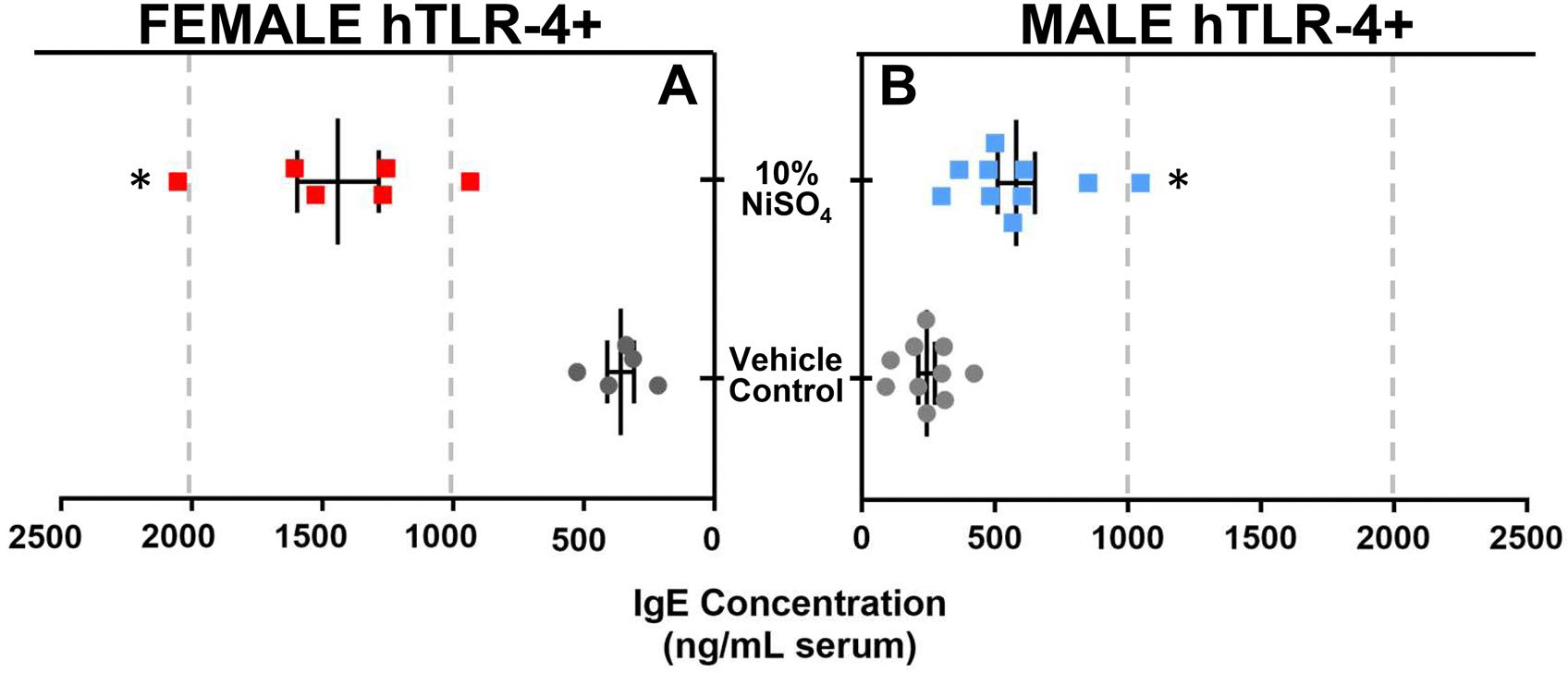
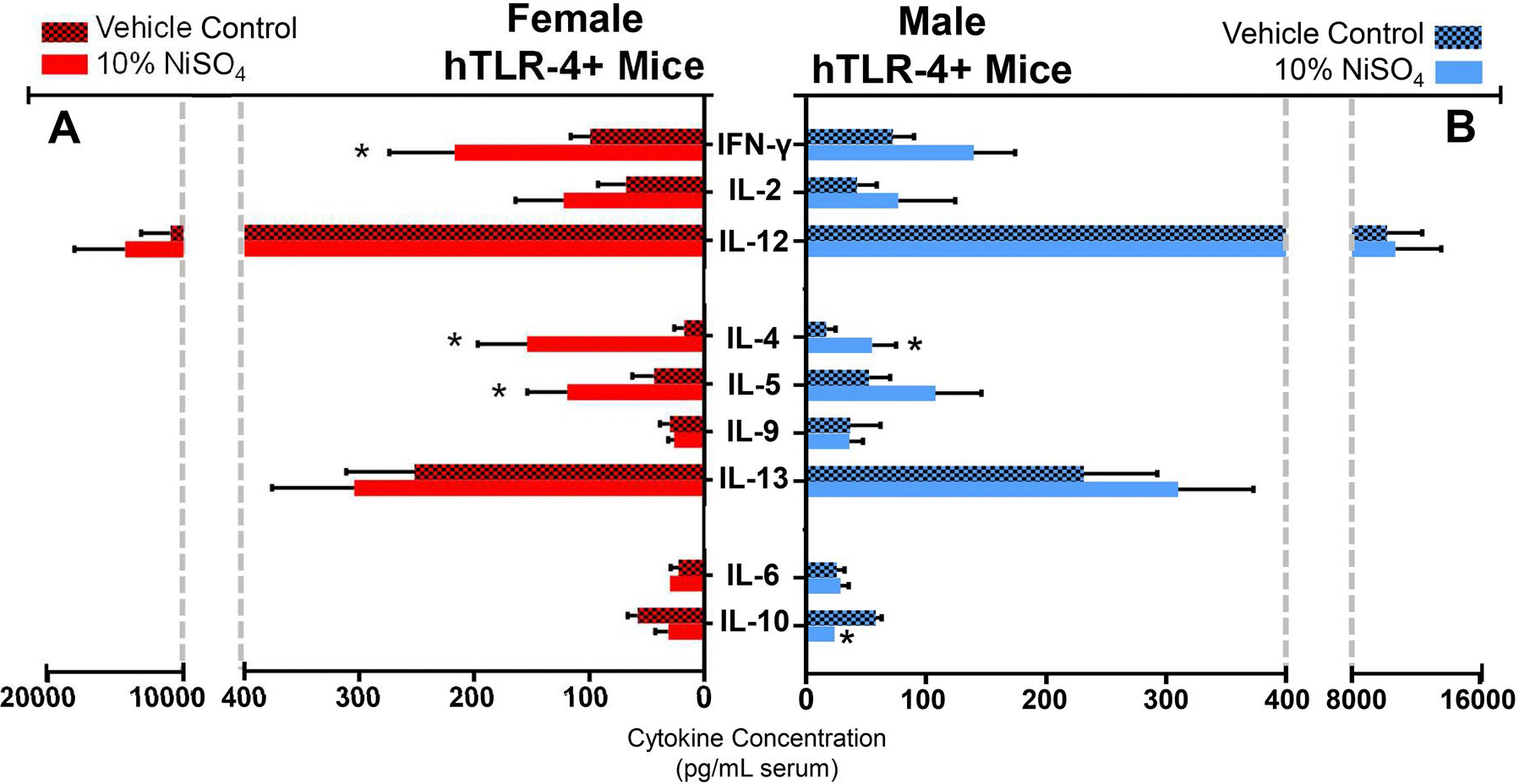
The fundamental goal of this study was to determine the potential utility of a novel humanized Toll-like receptor-4 (hTLR-4) mouse model for future studies of nickel allergy. First, mice of both sexes and hTLR-4 expression profiles were incorporated into a Local Lymph Node Assay (LLNA) to assess skin sensitization. Next, a set of hTLR-4 hTLR-4-positive mice (female and male groups) was similarly exposed to vehicle control (VC) or 10% NiSO on Days 1, 2, and 3. Mice were euthanized on Day 10, lymph node (LN) cellularity was assessed, LN and spleen cells were phenotyped, and serum was collected to quantify circulating cytokine and IgE levels. In the LLNA, hTLR-4-positive mice of both sexes exhibited enhanced responsivity to nickel. NiSO (10%) had a stimulation index (SI) of 3.7 (females) and 3.8 (males) in hTLR-4-positive animals, and an SI of 0.5 (females) and 0.8 (males) in hTLR-4 hTLR-4-negative mice. In the 10d study, hTLR-4-positive mice exposed to 10% NiSO exhibited increased LN cellularity (6.0× increase in females, 3.2× in males) and significantly higher concentrations of circulating IgE (4.1× increase in females, 3.4× in males). Significant increases in serum interferon (IFN)-γ, interleukin (IL)-4, and IL-5 levels were seen in female mice, while altered concentrations of IL-4 and IL-10 were detected in male mice. The results of this study ultimately demonstrate that murine expression of hTLR-4 confers enhanced susceptibility to dermal sensitization by nickel, and consequently, the hTLR-4 mouse model represents a viable approach for future studies of nickel allergy .
本研究的基本目标是确定一种新型人源化Toll样受体4(hTLR-4)小鼠模型在未来镍过敏研究中的潜在效用。首先,将不同性别的小鼠和hTLR-4表达谱纳入局部淋巴结试验(LLNA)以评估皮肤致敏性。接下来,一组hTLR-4阳性小鼠(雌性和雄性组)在第1、2和3天同样暴露于赋形剂对照(VC)或10%硫酸镍(NiSO₄)。在第10天对小鼠实施安乐死,评估淋巴结(LN)细胞数量,对LN和脾细胞进行表型分析,并收集血清以量化循环细胞因子和IgE水平。在LLNA中,两性hTLR-4阳性小鼠对镍的反应性增强。在hTLR-4阳性动物中,10% NiSO₄的刺激指数(SI)在雌性为3.7,在雄性为3.8;而在hTLR-4阴性小鼠中,雌性SI为0.5,雄性为0.8。在为期10天的研究中,暴露于10% NiSO₄的hTLR-4阳性小鼠LN细胞数量增加(雌性增加6.0倍,雄性增加3.2倍),循环IgE浓度显著更高(雌性增加4.1倍,雄性增加3.4倍)。雌性小鼠血清干扰素(IFN)-γ、白细胞介素(IL)-4和IL-5水平显著升高,而雄性小鼠中检测到IL-4和IL-10浓度改变。本研究结果最终表明,hTLR-4的小鼠表达赋予对镍诱导的皮肤致敏增强的易感性,因此,hTLR-4小鼠模型是未来镍过敏研究的一种可行方法。