Esposito A, Agostini A, Quero G, Piro G, Priori L, Caggiano A, Scaglione G, Battaglia A, Calegari M A, Salvatore L, Bensi M, Maratta M G, Ceccarelli A, Trovato G, Genovese G, Gurreri E, Ascrizzi S, Martini M, Fiorillo C, Fattorossi A, De Sanctis F, Ugel S, Corbo V, Alfieri S, Tortora G, Carbone C
Medical Oncology, Department of Translational Medicine, Catholic University of the Sacred Heart, Rome, Italy.
Medical Oncology, Department of Medical and Surgical Sciences, Fondazione Policlinico Universitario A. Gemelli IRCCS, Roma, Italy.
Cell Death Dis. 2024 Dec 4;15(12):878. doi: 10.1038/s41419-024-07266-5.
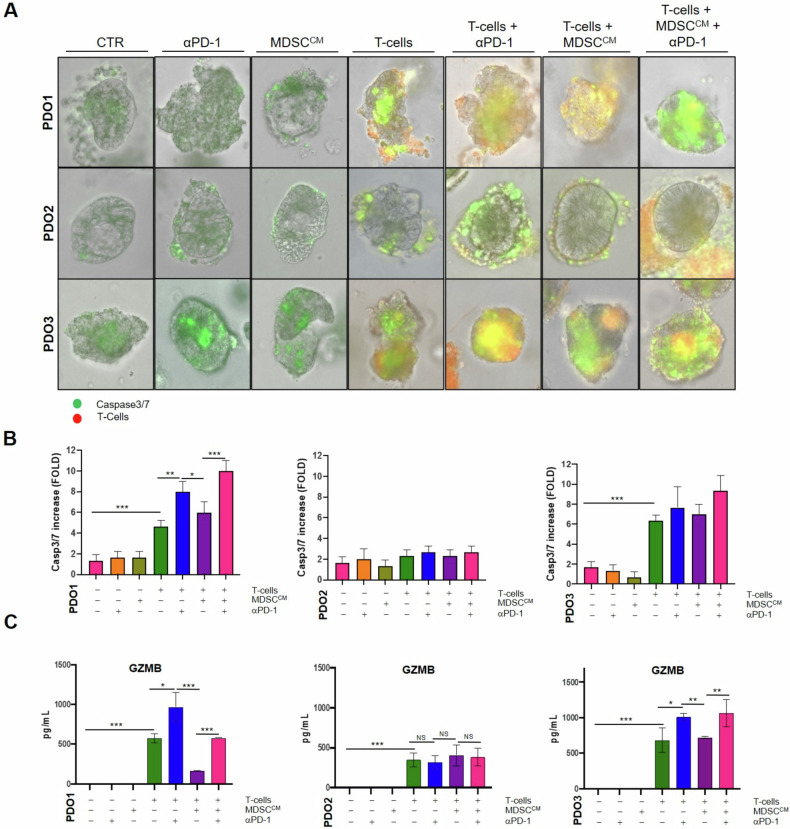
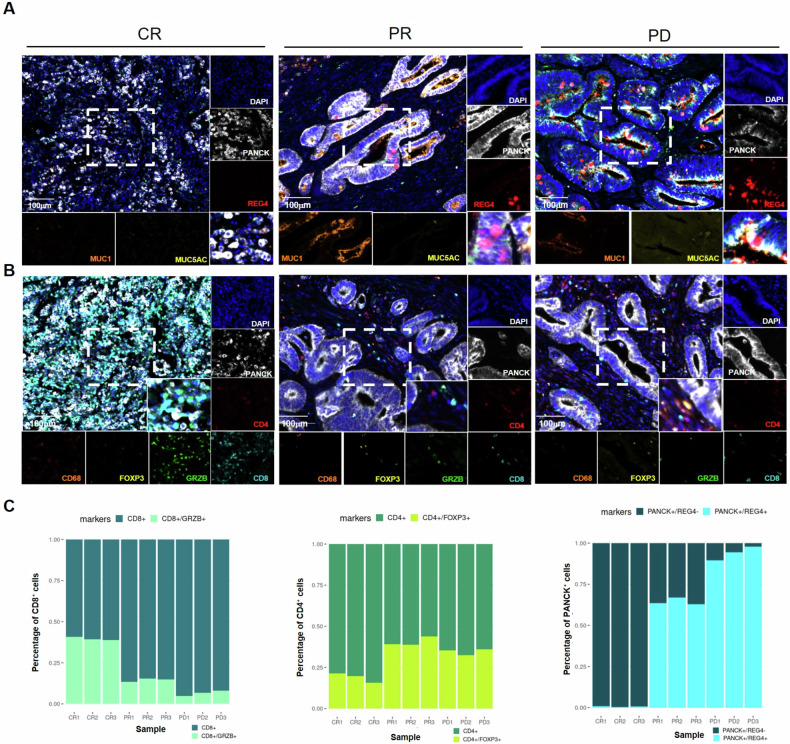
Colorectal cancer (CRC) is a devastating disease, ranking as the second leading cause of cancer-related deaths worldwide. Immune checkpoint inhibitors (ICIs) have emerged as promising treatments; however, their efficacy is largely restricted to a subgroup of microsatellite instable (MSI) CRCs. In contrast, microsatellite stable (MSS) CRCs, which account for the majority of cases, exhibit variable and generally weaker response to ICIs, with only a subset demonstrating exceptional responsiveness. Identifying novel cancer-specific tissue (CST) markers predictive of immunotherapy response is crucial for refining patient selection and overcoming treatment resistance. In this study, we developed clinically relevant CRC organoids and autologous immune system interaction platforms to model ICI response. We conducted a comprehensive molecular characterization of both responder and non-responder models, identifying CST markers that predict ICI response. Validation of these findings was performed using an independent cohort of patient specimens through multiplex immunofluorescence. Furthermore, we demonstrated that knocking out a key gene from the identified predictive signature in resistant organoids restored immune sensitivity and induced T-cell-mediated apoptosis. Overall, our results provide novel insights into the mechanisms underlying immunotherapy resistance and suggest new markers for enhancing patient selection. These findings may pave the way for new therapeutic options in MSS patients, potentially broadening the cohort of individuals eligible for immunotherapy.
结直肠癌(CRC)是一种极具破坏性的疾病,在全球癌症相关死亡原因中排名第二。免疫检查点抑制剂(ICI)已成为有前景的治疗方法;然而,其疗效在很大程度上仅限于微卫星不稳定(MSI)的结直肠癌亚组。相比之下,占大多数病例的微卫星稳定(MSS)结直肠癌对ICI的反应各不相同且通常较弱,只有一小部分表现出异常反应。识别预测免疫治疗反应的新型癌症特异性组织(CST)标志物对于优化患者选择和克服治疗耐药性至关重要。在本研究中,我们开发了与临床相关的结直肠癌类器官和自体免疫系统相互作用平台来模拟ICI反应。我们对反应者和无反应者模型进行了全面的分子表征,确定了预测ICI反应的CST标志物。通过多重免疫荧光使用独立的患者标本队列对这些发现进行了验证。此外,我们证明从耐药类器官中鉴定出的预测特征中敲除一个关键基因可恢复免疫敏感性并诱导T细胞介导的细胞凋亡。总体而言,我们的结果为免疫治疗耐药性的潜在机制提供了新见解,并提出了增强患者选择的新标志物。这些发现可能为MSS患者的新治疗选择铺平道路,有可能扩大符合免疫治疗条件的人群。