Bakker Olivier B, Claringbould Annique, Westra Harm-Jan, Wiersma Henry, Boulogne Floranne, Võsa Urmo, Urzúa-Traslaviña Carlos G, Mulcahy Symmons Sophie, Zidan Mahmoud M M, Sadler Marie C, Kutalik Zoltán, Jonkers Iris H, Franke Lude, Deelen Patrick
Department of Genetics, University Medical Center Groningen, University of Groningen, Groningen, The Netherlands.
Structural and Computational Biology Unit, EMBL, Heidelberg, Germany.
Sci Rep. 2024 Dec 4;14(1):30206. doi: 10.1038/s41598-024-80670-1.
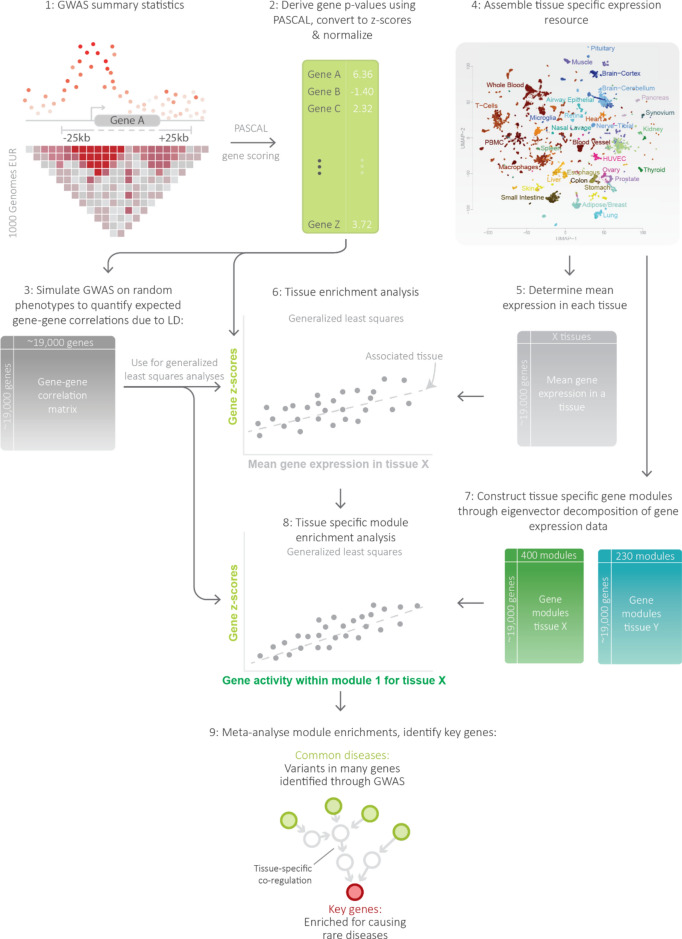
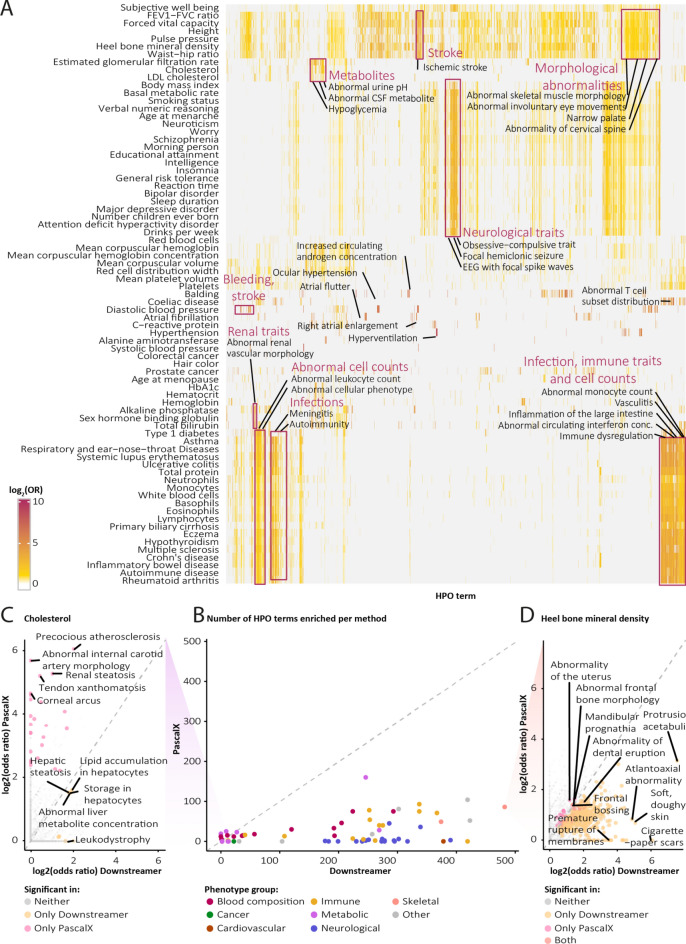
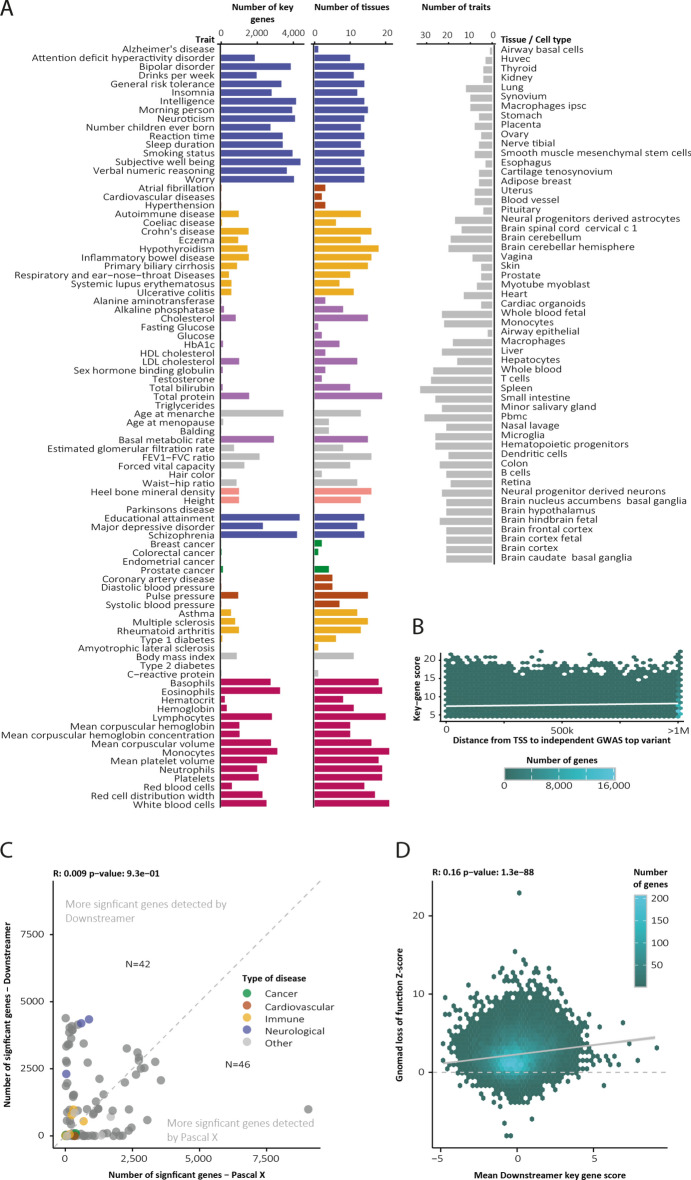
Genetic variants identified through genome-wide association studies (GWAS) are typically non-coding, exerting small regulatory effects on downstream genes. However, which downstream genes are ultimately impacted and how they confer risk remains mostly unclear. By contrast, variants that cause rare Mendelian diseases are often coding and have a more direct impact on disease development. Here we demonstrate that common and rare genetic diseases can be linked by studying how common disease-associated variants influence gene co-expression in 57 different tissues and cell types. We implemented this method in a framework called Downstreamer and applied it to 88 GWAS traits. We find that predicted downstream "genes" are enriched with Mendelian disease genes, e.g. key genes for height are enriched for genes that cause skeletal abnormalities and Ehlers-Danlos syndromes. 78% of these key genes are located outside of GWAS loci, suggesting that they result from complex trans regulation rather than being impacted by disease-associated variants in cis. Based on our findings, we discuss the challenges in reconstructing gene regulatory networks and provide a roadmap to improve the identification of these highly connected genes linked to common traits and diseases.
通过全基因组关联研究(GWAS)鉴定出的基因变异通常是非编码的,对下游基因发挥微小的调控作用。然而,哪些下游基因最终受到影响以及它们如何带来风险仍大多不清楚。相比之下,导致罕见孟德尔疾病的变异通常是编码的,对疾病发展有更直接的影响。在这里,我们通过研究常见疾病相关变异如何影响57种不同组织和细胞类型中的基因共表达,证明了常见和罕见遗传疾病可以相互关联。我们在一个名为Downstreamer的框架中实施了这种方法,并将其应用于88个GWAS性状。我们发现预测的下游“基因”富含孟德尔疾病基因,例如身高的关键基因富含导致骨骼异常和埃勒斯-丹洛斯综合征的基因。这些关键基因中有78%位于GWAS位点之外,这表明它们是由复杂的反式调控产生的,而不是受顺式疾病相关变异的影响。基于我们的发现,我们讨论了重建基因调控网络的挑战,并提供了一个路线图,以改进对这些与常见性状和疾病相关的高度连接基因的识别。