
衰老细胞裂解剂:开辟新途径还是增强现有抗肿瘤疗法?
Senolytics: charting a new course or enhancing existing anti-tumor therapies?
作者信息
Czajkowski Konrad, Herbet Mariola, Murias Marek, Piątkowska-Chmiel Iwona
机构信息
Department of Toxicology, Faculty of Pharmacy, Medical University of Lublin, Lublin, Poland.
Department of Toxicology, Poznan University of Medical Sciences, Poznań, Poland.
出版信息
Cell Oncol (Dordr). 2025 Apr;48(2):351-371. doi: 10.1007/s13402-024-01018-5. Epub 2024 Dec 4.
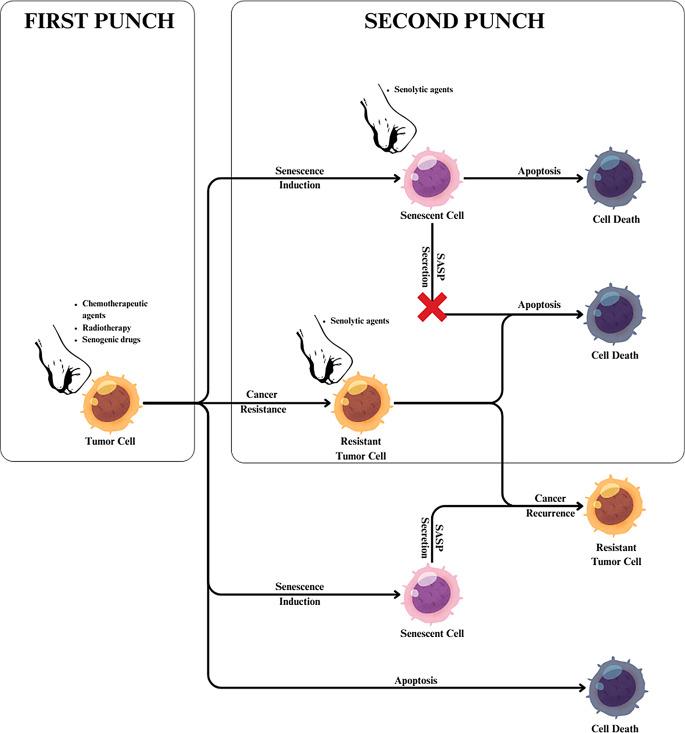
Cell senescence is a natural response within our organisms. Initially, it was considered an effective anti-tumor mechanism. However, it is now believed that while cell senescence initially acts as a robust barrier against tumor initiation, the subsequent accumulation of senescent cells can paradoxically promote cancer recurrence and cause damage to neighboring tissues. This intricate balance between cell proliferation and senescence plays a pivotal role in maintaining tissue homeostasis. Moreover, senescence cells secrete many bioactive molecules collectively termed the senescence-associated secretory phenotype (SASP), which can induce chronic inflammation, alter tissue architecture, and promote tumorigenesis through paracrine signaling. Among the myriads of compounds, senotherapeutic drugs have emerged as exceptionally promising candidates in anticancer treatment. Their ability to selectively target senescent cells while sparing healthy tissues represents a paradigm shift in therapeutic intervention, offering new avenues for personalized oncology medicine. Senolytics have introduced new therapeutic possibilities by enabling the targeted removal of senescent cells. As standalone agents, they can clear tumor cells in a senescent state and, when combined with chemo- or radiotherapy, eliminate residual senescent cancer cells after treatment. This dual approach allows for the intentional use of lower-dose therapies or the removal of unintended senescent cells post-treatment. Additionally, by targeting non-cancerous senescent cells, senolytics may help reduce tumor formation risk, limit recurrence, and slow disease progression. This article examines the mechanisms of cellular senescence, its role in cancer treatment, and the importance of senotherapy, with particular attention to the therapeutic potential of senolytic drugs.
细胞衰老 是我们生物体中的一种自然反应。最初,它被认为是一种有效的抗肿瘤机制。然而,现在人们认为,虽然细胞衰老最初作为一道强大的屏障抵御肿瘤发生,但衰老细胞的后续积累却可能反常地促进癌症复发并对邻近组织造成损害。细胞增殖与衰老之间的这种复杂平衡在维持组织稳态中起着关键作用。此外,衰老细胞会分泌许多生物活性分子,统称为衰老相关分泌表型(SASP),这些分子可通过旁分泌信号传导诱导慢性炎症、改变组织结构并促进肿瘤发生。在众多化合物中,衰老治疗药物已成为抗癌治疗中极具潜力的候选药物。它们能够选择性地靶向衰老细胞,同时不损害健康组织,这代表了治疗干预的一种范式转变,为个性化肿瘤医学提供了新途径。衰老溶解剂通过能够靶向清除衰老细胞引入了新的治疗可能性。作为单独的药物,它们可以清除处于衰老状态的肿瘤细胞,并且与化学疗法或放射疗法联合使用时,能够在治疗后消除残留的衰老癌细胞。这种双重方法允许有意使用低剂量疗法或在治疗后清除意外产生的衰老细胞。此外,通过靶向非癌性衰老细胞,衰老溶解剂可能有助于降低肿瘤形成风险、限制复发并减缓疾病进展。本文探讨了细胞衰老的机制、其在癌症治疗中的作用以及衰老疗法的重要性,特别关注衰老溶解药物的治疗潜力。
 Zotero 插件