
髂后上棘与胫骨近端:治疗骨关节炎时,抗炎和再生细胞的不同来源,6个月临床疗效相当。
Posterior iliac crest vs. proximal tibia: distinct sources of anti-inflammatory and regenerative cells with comparable 6-month clinical outcomes in treatment of osteoarthritis.
作者信息
Mormone E, Savastano L, Rossi G, Maruccia F, Di Maggio G, Sinisi N P, Sandri M, Copetti M, De Santis E, Guerra V, Biancofiore G, Cisternino C, Caradonna E, Graziano P, Gorgoglione F L
机构信息
Institute for Stem Cell Biology, Regenerative Medicine and Innovative Therapies (ISBReMIT), Fondazione IRCCS "Casa Sollievo Della Sofferenza", Viale Padre Pio, 7, 71013, San Giovanni Rotondo, FG, Italy.
Department of Orthopedics and Trauma Surgery, Fondazione IRCCS "Casa Sollievo Della Sofferenza", Viale Dei Cappuccini 1, 71013, San Giovanni Rotondo, FG, Italy.
出版信息
J Transl Med. 2024 Dec 4;22(1):1101. doi: 10.1186/s12967-024-05924-y.
BACKGROUND
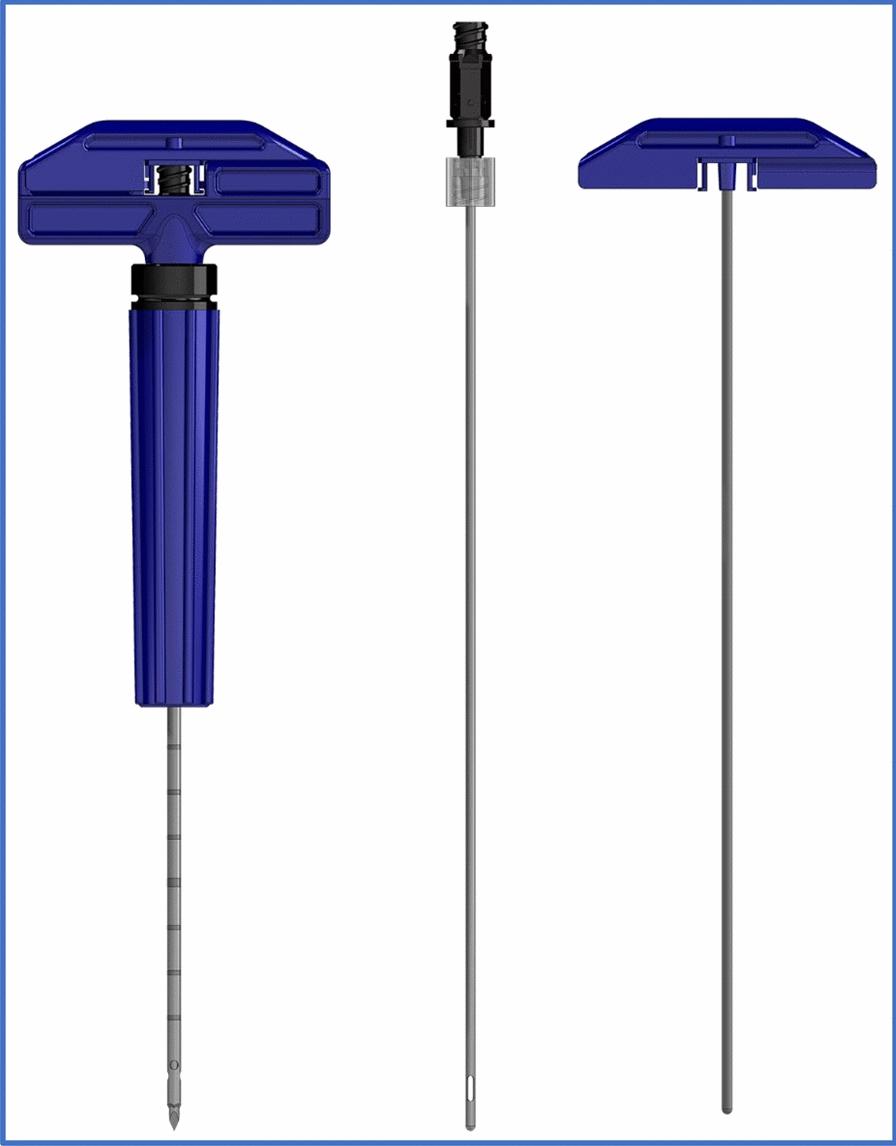
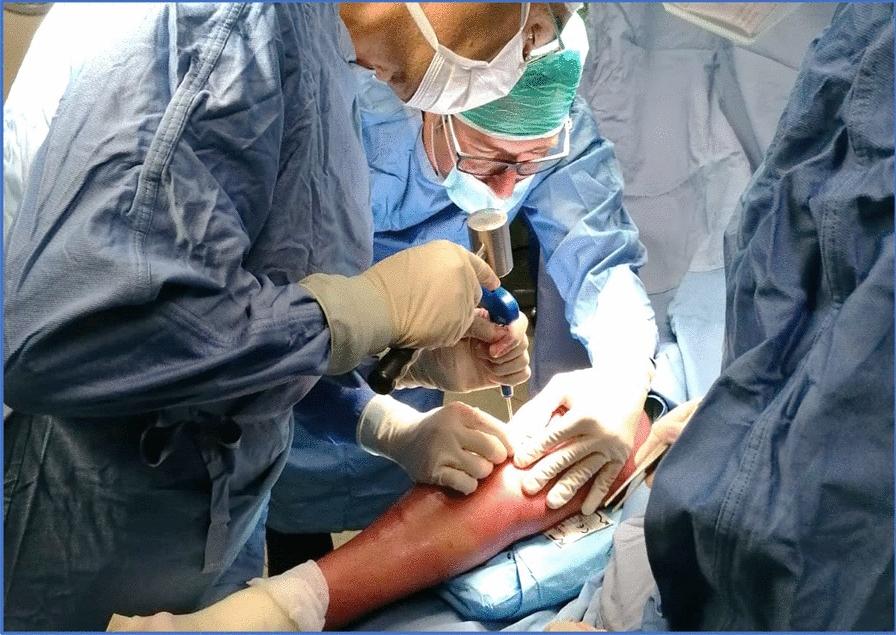
Human bone marrow is a source of mesenchymal stem cells (MSCs), other progenitor cells, and factors with anti-inflammatory and regenerative capacity. Though the fraction of MSCs out of the nucleated cells is very small, bone marrow aspirate (BMA) for osteoarthritis (OA) has noteworthy effects. BMA is usually collected from the posterior or anterior iliac crest, and rarely from the proximal tibia. We investigated the clinically beneficial concentration of ex vivo MSCs, derived from BM harvested from the posterior iliac crest and proximal tibia by Marrow Cellution™ Aspiration System, and their phenotypic differences, in comparison to autologous Platelet-Rich Plasma (PRP) treatment prepared with a manual, closed system.
METHODS
A single-center, parallel, randomized controlled study was designed to investigate the efficacy of BMA from the posterior iliac crest compared to BMA from the proximal tibia, against a control group treated with PRP, in knee OA. Thirty patients with knee OA grade I-IV, according to Kellgren-Lawrence (KL), were distributed into each group. Visual Analog Scale (VAS) and Western Ontario & McMaster Universities Arthritis Index (WOMAC) score were used for clinical outcome evaluation.
RESULTS
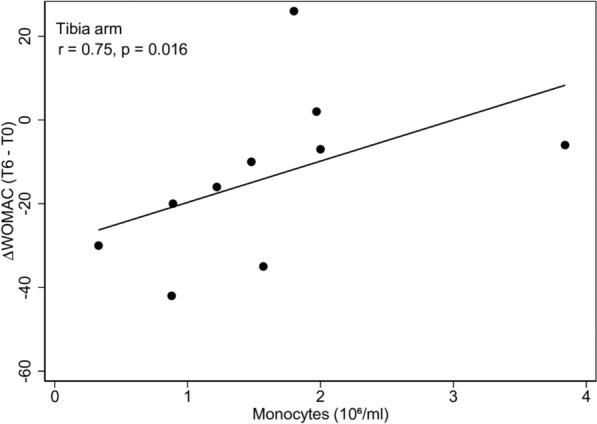
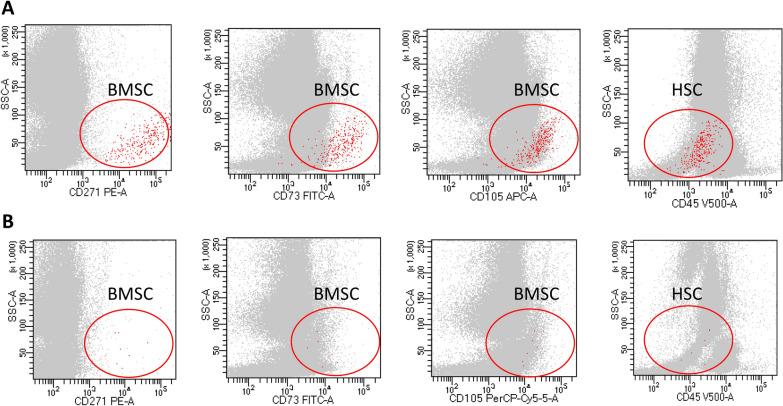
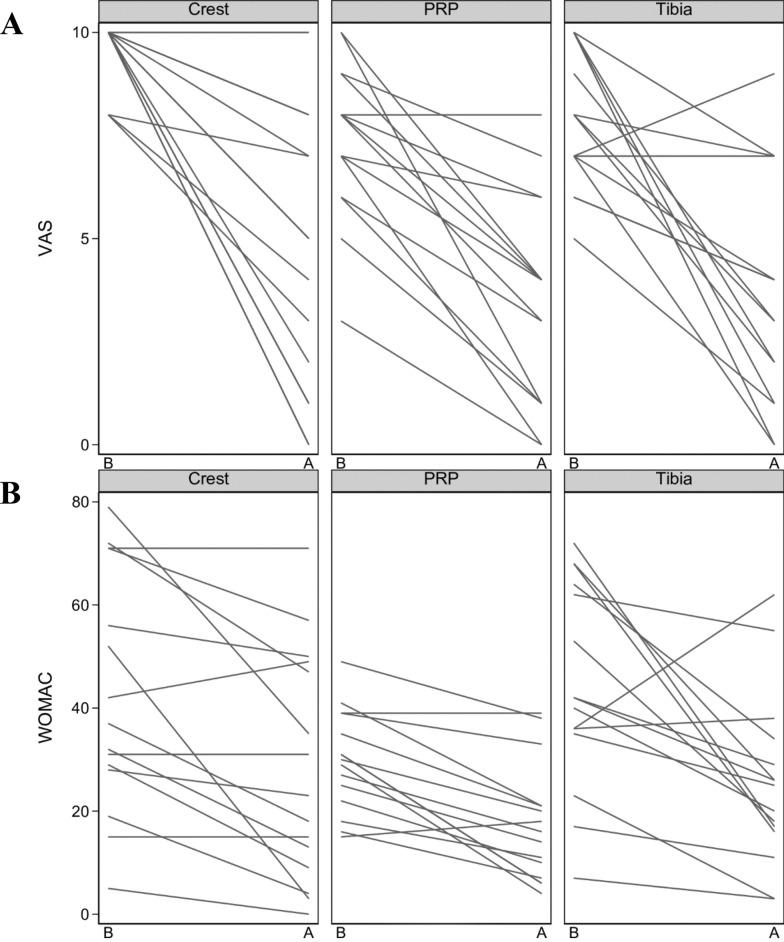
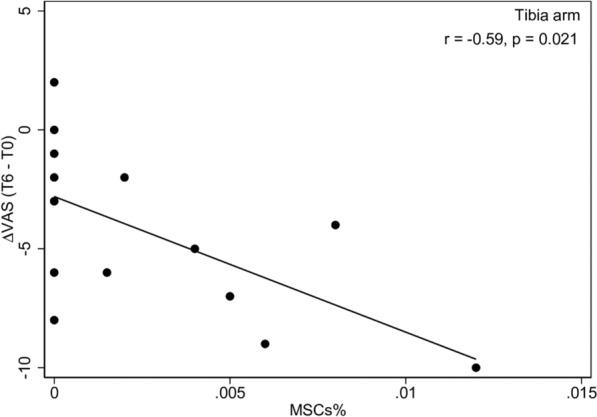
Data from an intermediate analysis of 6-months follow-up, involving 15 patients in each arm, showed that the posterior iliac crest was significantly more densely populated with mononuclear cells, than the proximal tibia (p = 0.005). Flow cytometric analysis on ex vivo BMA showed a significantly greater number of MSCs in the BM-derived from the posterior iliac crest when compared with the proximal tibia (p < 0.001), together with a significantly higher number of platelets (PLTs) (p < 0.001). Surprisingly, despite these differences in cells number, the improvement in early pain and function scores, after each treatment, were statistically significant within each of the three arms. BM from the proximal tibia showed the highest ΔWOMAC, while BM from the posterior iliac crest showed the highest ΔVAS; however, these differences were not statistically significant across the three arms (p > 0.05). A better outcome, in terms of ΔVAS, was observed in patients classified as KL I-II, when treated with BMA from crest (p < 0.001) and PRP (p = 0.004). Moreover, the effect of BMA treatment on ΔVAS depends on MSCs % only in the Tibia Arm (r = -0.59, p = 0.021), where we also found a correlation between ΔWOMAC and monocytes (r = 0.75, p = 0.016).
CONCLUSION
The results indicate that the iliac crest yields a higher concentration of MSCs compared to the proximal tibia, however both BM, independently of the MSCs concentration, show a beneficial clinical outcome in the treatment of knee OA. Furthermore, BMA is not superior to PRP treatment.
背景
人骨髓是间充质干细胞(MSCs)、其他祖细胞以及具有抗炎和再生能力的因子的来源。尽管有核细胞中MSCs的比例非常小,但用于骨关节炎(OA)的骨髓抽吸物(BMA)具有显著效果。BMA通常从髂后嵴或髂前嵴采集,很少从胫骨近端采集。我们研究了通过Marrow Cellution™抽吸系统从髂后嵴和胫骨近端采集的骨髓中获得的体外MSCs的临床有益浓度及其表型差异,并与采用手动封闭系统制备的自体富血小板血浆(PRP)治疗进行比较。
方法
设计了一项单中心、平行、随机对照研究,以研究与PRP治疗的对照组相比,髂后嵴BMA与胫骨近端BMA在膝关节OA治疗中的疗效。根据Kellgren-Lawrence(KL)分级为I-IV级的30例膝关节OA患者被分配到每组。使用视觉模拟量表(VAS)和西安大略和麦克马斯特大学关节炎指数(WOMAC)评分进行临床结局评估。
结果
对6个月随访的中期分析数据,每组涉及15例患者,结果显示,髂后嵴的单核细胞密度明显高于胫骨近端(p = 0.005)。对体外BMA的流式细胞术分析显示,与胫骨近端相比,髂后嵴来源的骨髓中MSCs数量显著更多(p < 0.001),血小板(PLTs)数量也显著更高(p < 0.001)。令人惊讶的是,尽管细胞数量存在这些差异,但每次治疗后,三个治疗组中早期疼痛和功能评分的改善在统计学上均具有显著性。胫骨近端的骨髓显示出最高的WOMAC变化值(ΔWOMAC),而髂后嵴的骨髓显示出最高的VAS变化值(ΔVAS);然而,这三个治疗组之间的这些差异无统计学意义(p > 0.05)。在分类为KL I-II级的患者中,当接受来自髂嵴的BMA(p < 0.001)和PRP(p = 0.004)治疗时,观察到在ΔVAS方面有更好的结局。此外,BMA治疗对ΔVAS的影响仅在胫骨组中取决于MSCs百分比(r = -0.59,p = 0.021),在该组中我们还发现ΔWOMAC与单核细胞之间存在相关性(r = 0.75,p = 0.016)。
结论
结果表明,与胫骨近端相比,髂嵴产生的MSCs浓度更高,然而,两种骨髓,无论MSCs浓度如何,在膝关节OA治疗中均显示出有益的临床结局。此外,BMA并不优于PRP治疗。

 Zotero 插件