Gou Zixuan, Wu Haonan, Li Shanyu, Liu Ziyu, Zhang Ying
Department of Pediateic Respiration, Children's Medical Center, The First Hospital of Jilin University, Changchun, China.
Department of Hepatobiliary and Pancreatic Surgery, General Surgery Center, The First Hospital of Jilin University, Changchun, China.
Part Fibre Toxicol. 2024 Dec 4;21(1):50. doi: 10.1186/s12989-024-00613-6.
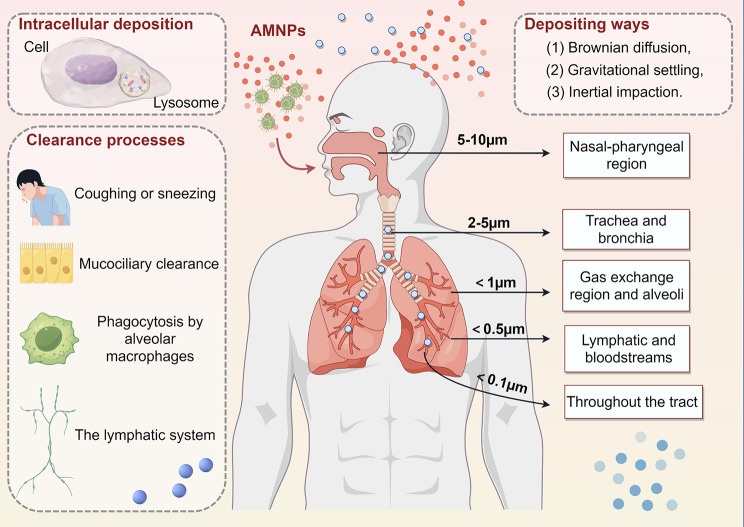
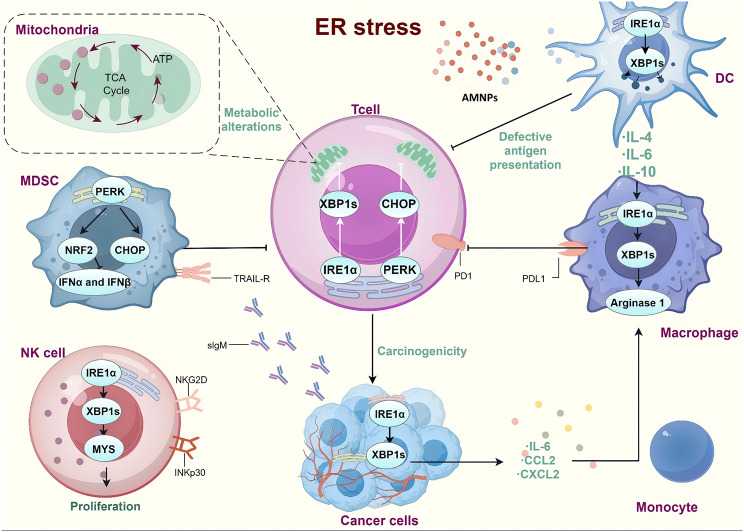
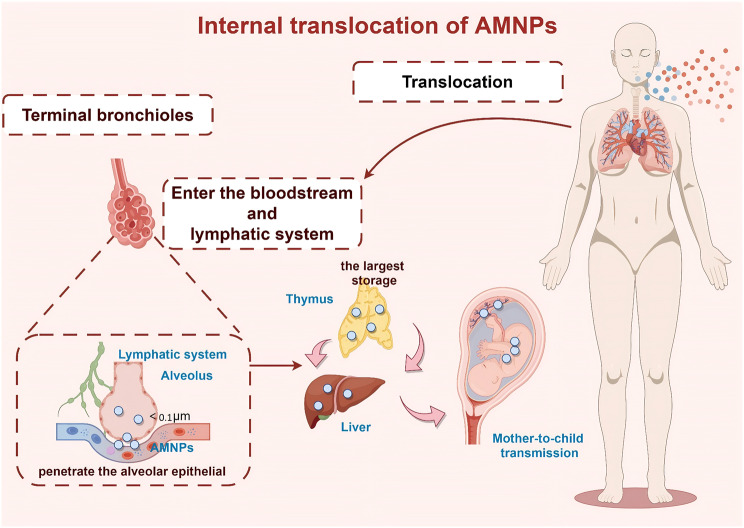
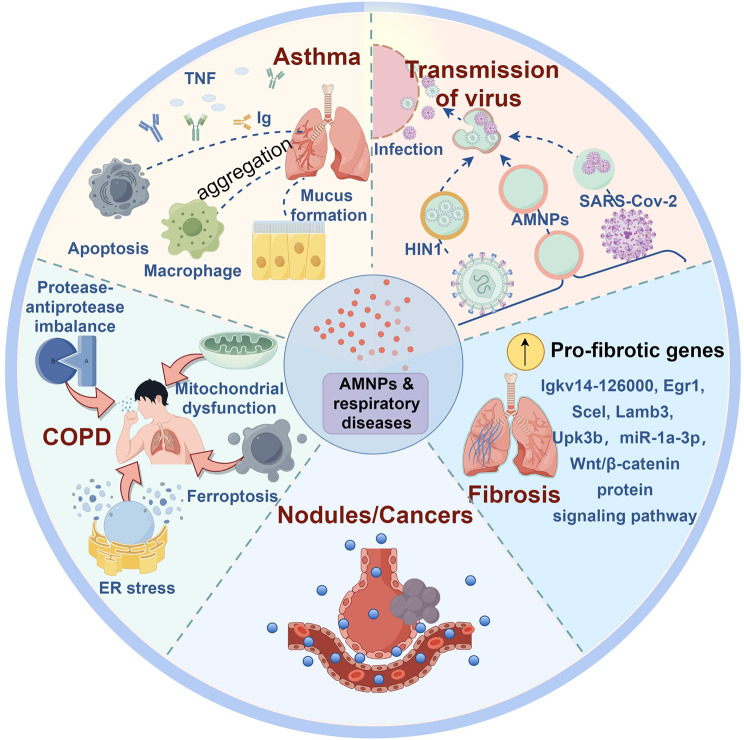
Airborne micro- and nanoplastics (AMNPs) are ubiquitously present in human living environments and pose significant threats to respiratory health. Currently, much research has been conducted on the relationship between micro- and nanoplastics (MNPs) and cardiovascular and gastrointestinal diseases, yet there is a clear lack of understanding regarding the link between AMNPs and respiratory diseases. Therefore, it is imperative to explore the relationship between the two. Recent extensive studies by numerous scholars on the characteristics of AMNPs and their relationship with respiratory diseases have robustly demonstrated that AMNPs from various sources significantly influence the onset and progression of respiratory conditions. Thus, investigating the intrinsic mechanisms involved and finding necessary preventive and therapeutic measures are crucial. In this review, we primarily describe the fundamental characteristics of AMNPs, their impact on the respiratory system, and the intrinsic toxic mechanisms that facilitate disease development. It is hoped that this article will provide new insights for further research and contribute to the advancement of human health.
空气中的微塑料和纳米塑料(AMNP)广泛存在于人类生活环境中,对呼吸健康构成重大威胁。目前,已经对微塑料和纳米塑料(MNP)与心血管疾病和胃肠道疾病之间的关系进行了大量研究,但对于AMNP与呼吸道疾病之间的联系显然缺乏了解。因此,探索两者之间的关系势在必行。众多学者最近对AMNP的特性及其与呼吸道疾病的关系进行了广泛研究,有力地证明了来自各种来源的AMNP会显著影响呼吸道疾病的发生和发展。因此,研究其中涉及的内在机制并找到必要的预防和治疗措施至关重要。在这篇综述中,我们主要描述了AMNP的基本特征、它们对呼吸系统的影响以及促进疾病发展的内在毒性机制。希望本文能为进一步的研究提供新的见解,并有助于促进人类健康。