Koala Ratmalgre A S D, Fujita Masayuki, Nagatsuma Tadao
Information Photonics Group, Div. Adv. Electronics & Optical Science, D348 Graduate School of Engineering Science, Osaka University, 1-3 Machikaneyama, Toyonaka, 560-0043 Osaka, Japan.
Nanophotonics. 2022 Feb 8;11(9):1741-1759. doi: 10.1515/nanoph-2021-0673. eCollection 2022 Apr.
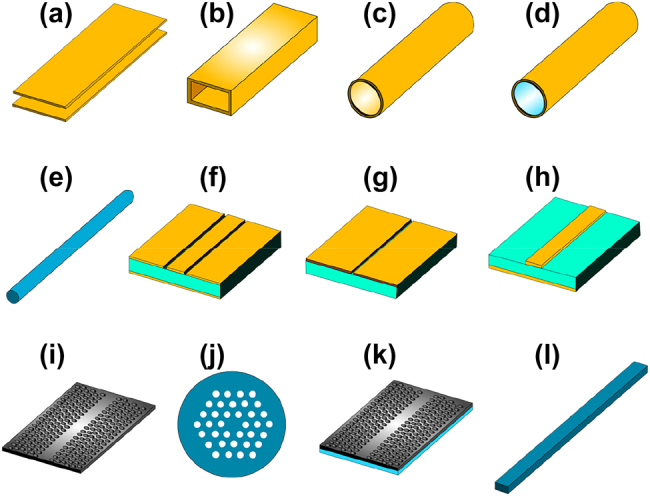
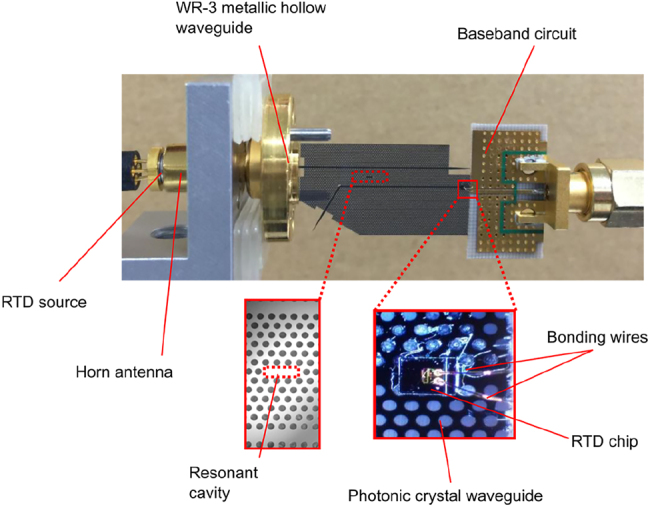
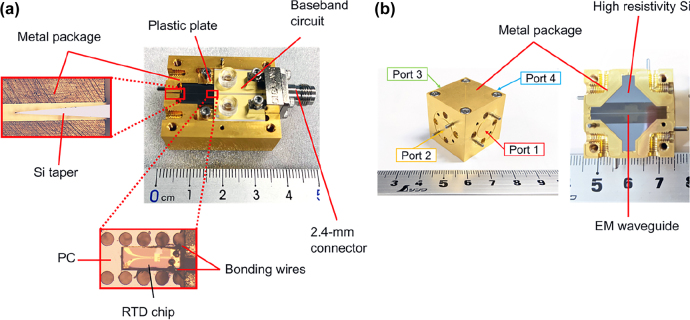
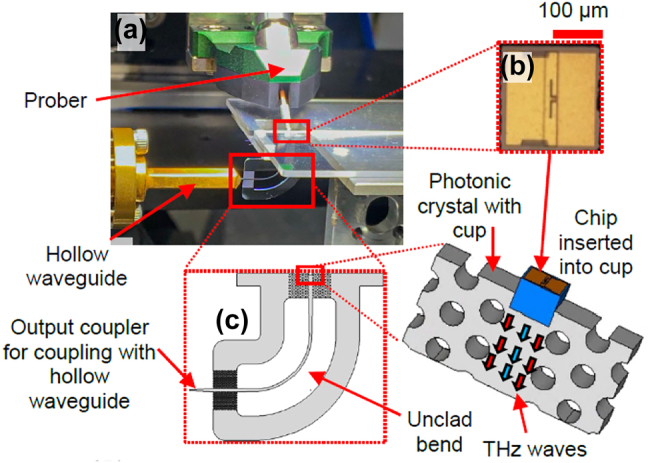
Recent advances in silicon (Si) microphotonics have enabled novel devices for the terahertz (THz) range based on dielectric waveguides. In the past couple of years, dielectric waveguides have become commonplace for THz systems to mitigate issues in efficiency, size, and cost of integration and packaging using metal-based waveguides. Therefore, THz systems have progressively evolved from cumbersome collections of discreet components to THz-wave integrated circuits. This gradual transition of THz systems from numerous components to compact integrated circuits has been facilitated at each step by incredible advances in all-Si waveguides allowing low-loss, low dispersion, and single-mode waveguiding operation. As such, all-Si waveguides position themselves as highly efficient interconnects to realize THz integrated circuits and further large-scale integration in the THz range. This review article intends to reevaluate the evolution stages of THz integrated circuits and systems based on all-Si waveguides.
硅(Si)微光子学的最新进展使得基于介质波导的太赫兹(THz)波段新型器件成为可能。在过去几年中,介质波导已成为太赫兹系统的常用部件,用于解决使用金属基波导时在效率、尺寸以及集成与封装成本方面的问题。因此,太赫兹系统已逐渐从由离散元件组成的笨重集合体演变为太赫兹波集成电路。全硅波导令人难以置信的进展在每一步都推动了太赫兹系统从众多元件向紧凑集成电路的这种逐步转变,实现了低损耗、低色散和单模波导操作。正因如此,全硅波导将自身定位为实现太赫兹集成电路以及在太赫兹波段进一步大规模集成的高效互连部件。本文旨在重新评估基于全硅波导的太赫兹集成电路和系统的发展阶段。