Bueno Beatriz Egerland, Muniz Brito André Luiz, Garcia Rea Victor S, Kurnianto Rifki Wahyu, Zaiat Marcelo, van Lier Jules B
Biological Processes Laboratory, Department of Environmental Engineering, University of Sao Paulo, São Carlos, Brazil.
Sanitary Engineering Section, Department of Water Management, Delft University of Technology, Delft, Netherlands.
Front Bioeng Biotechnol. 2024 Nov 20;12:1491974. doi: 10.3389/fbioe.2024.1491974. eCollection 2024.
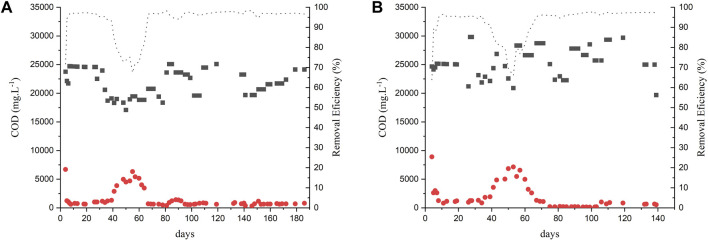
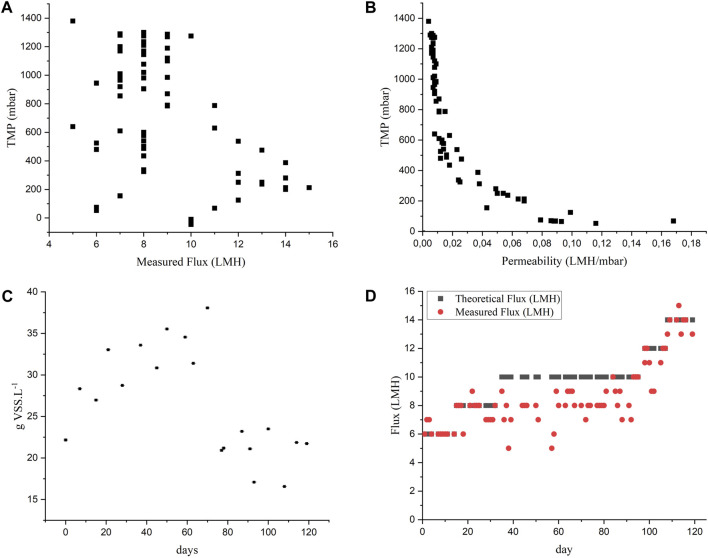
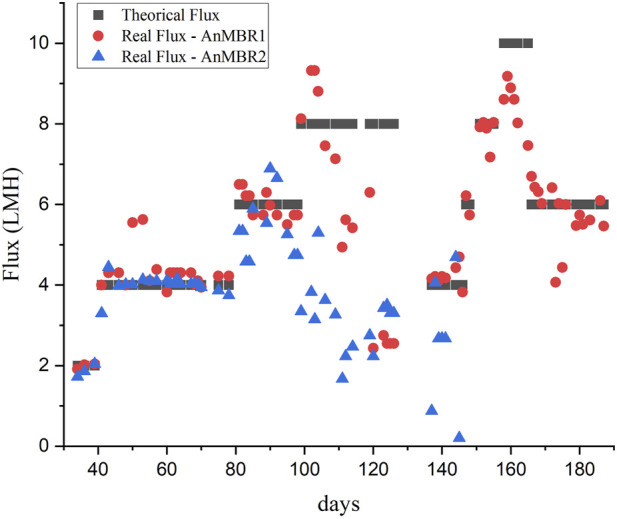
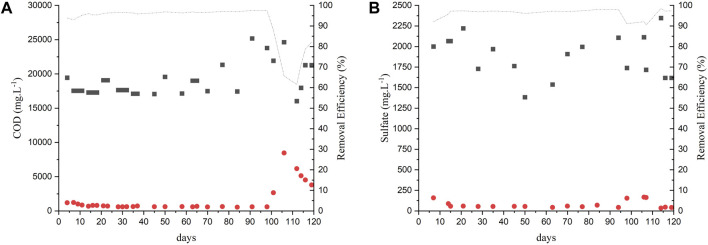
Vinasse, a by-product of ethanol production, is generated at significant rates. While rich in nutrients such as calcium, magnesium, and potassium, its high solids, organic matter, acidity, and sulfate content pose challenges when disposed directly on soil, necessitating treatment. Anaerobic digestion is a viable solution, reducing organic pollution while recovering energy in the form of biogas, aligning with the biorefinery concept. Traditionally, sludge bed reactors and anaerobic contact reactors are utilized for vinasse processing, with sludge granulation being vital for treatment success. However, challenges such as sludge wash-out due to recalcitrant compounds, high solids concentration in the influent, low pH, salinity, and temperature hinder granule formation. Anaerobic membrane bioreactors (AnMBR) offer an alternative, simplifying treatment by integrating intensified pre- and post-treatment units. Due to complete sludge retention, AnMBRs achieve high COD removal efficiencies, yielding a suspended solids-free and largely disinfected effluent. Therefore, AnMBRs show promise for vinasse treatment, eliminating the need for sludge granulation and producing nutrient-rich effluent with minimal residual organics and suspended solids. In this study, an AnMBR equipped with an inside-out external crossflow ultrafiltration membrane was proposed for the treatment of vinasse. The AnMBR reached a COD removal efficiency of 95% ± 2.6% and produced 0.3 CH L. g COD working at organic loading rates of 8 g COD. L d and membrane fluxes of 10 LMH. At organic loading rates of 10 g COD. L d and fluxes of 12 and 14 LMH, the COD removal efficiency decreased to 77% ± 11% and 73% ± 7.9%, respectively. The AnMBR technology represents an innovation for wastewater treatment, however, more research using the cross-flow configuration and different types of effluents is needed. Literature studies that address the treatment of sugar beet or sugarcane vinasse using AnMBR are still scarce. This study explored the potentials of AnMBR technology for vinasse treatment and contributes to the dissemination of this technology, opening new possibilities for vinasse processing.
酒糟是乙醇生产的副产品,产量巨大。虽然它富含钙、镁和钾等营养物质,但其高固体含量、有机物、酸度和硫酸盐含量在直接施用于土壤时会带来挑战,因此需要进行处理。厌氧消化是一种可行的解决方案,它可以减少有机污染,同时以沼气的形式回收能量,符合生物精炼的概念。传统上,污泥床反应器和厌氧接触反应器用于酒糟处理,污泥颗粒化对于处理成功至关重要。然而,由于难降解化合物导致的污泥流失、进水高固体浓度、低pH值、盐度和温度等挑战阻碍了颗粒的形成。厌氧膜生物反应器(AnMBR)提供了一种替代方案,通过集成强化的预处理和后处理单元简化了处理过程。由于完全保留了污泥,AnMBR实现了高COD去除效率,产生了无悬浮固体且基本消毒的出水。因此,AnMBR在酒糟处理方面显示出前景,无需污泥颗粒化,并且产生富含营养的出水,残留有机物和悬浮固体极少。在本研究中,提出了一种配备由内向外的外部错流超滤膜的AnMBR用于酒糟处理。该AnMBR在有机负荷率为8 g COD·L⁻¹·d⁻¹和膜通量为10 LMH的条件下,COD去除效率达到95%±2.6%,并产生0.3 CH₄ L·g COD⁻¹。在有机负荷率为10 g COD·L⁻¹·d⁻¹以及通量为12 LMH和14 LMH时,COD去除效率分别降至77%±11%和73%±7.9%。AnMBR技术代表了废水处理的一项创新,然而,需要更多使用错流配置和不同类型废水的研究。涉及使用AnMBR处理甜菜或甘蔗酒糟的文献研究仍然很少。本研究探索了AnMBR技术在酒糟处理方面的潜力,并有助于该技术的传播,为酒糟处理开辟了新的可能性。