Zhong Lei, Yang Xi, Shang Yuxuan, Yang Yao, Li Junchen, Liu Shuo, Zhang Yunshu, Liu Jifeng, Jiang Xingchi
Department of General Surgery, The First Affiliated Hospital of Dalian Medical University, Dalian, Liaoning, China.
Department of Plastic Surgery, The First Affiliated Hospital of Dalian Medical University, Dalian, Liaoning, China.
Front Endocrinol (Lausanne). 2024 Nov 20;15:1405726. doi: 10.3389/fendo.2024.1405726. eCollection 2024.
Type 2 diabetes mellitus (T2DM) is a chronic metabolic disease that accounts for > 90% of all diabetes cases. Acute pancreatitis (AP) can be triggered by various factors and is a potentially life-threatening condition. Although T2DM has been shown to have a close relationship with AP, the common mechanisms underlying the two conditions remain unclear.
We identified common differentially expressed genes (DEGs) in T2DM and AP and used functional enrichment analysis and Mendelian randomization to understand the underlying mechanisms. Subsequently, we used several machine learning algorithms to identify candidate biomarkers and construct a diagnostic nomogram for T2DM and AP. The diagnostic performance of the model was evaluated using ROC, calibration, and DCA curves. Furthermore, we investigated the potential roles of core genes in T2DM and AP using GSEA, xCell, and single-cell atlas and by constructing a ceRNA network. Finally, we identified potential small-molecule compounds with therapeutic effects on T2DM and AP using the CMap database and molecular docking.
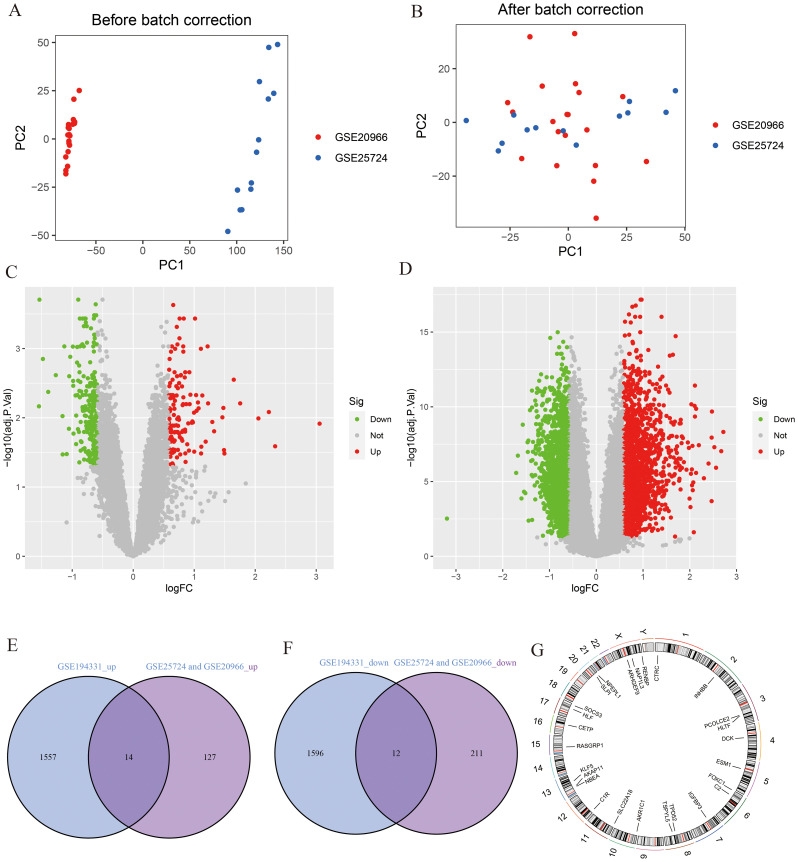
A total of 26 DEGs, with 14 upregulated and 12 downregulated genes, were common between T2DM and AP. According to functional and DisGeNET enrichment analysis, these DEGs were mainly enriched in immune effector processes, blood vessel development, dyslipidemia, and hyperlipidemia. Mendelian randomization analyses further suggested that lipids may be a potential link between AP and T2DM. Machine learning algorithms revealed ARHGEF9 and SLPI as common genes associated with the two diseases. ROC, calibration, and DCA curves showed that the two-gene model had good diagnostic efficacy. Additionally, the two genes were found to be closely associated with immune cell infiltration. Finally, imatinib was identified as a potential compound for the treatment of T2DM and AP.
This study suggests that abnormal lipid metabolism is a potential crosstalk mechanism between T2DM and AP. In addition, we established a two-gene model for the clinical diagnosis of T2DM and AP and identified imatinib as a potential therapeutic agent for both diseases.
2型糖尿病(T2DM)是一种慢性代谢性疾病,占所有糖尿病病例的90%以上。急性胰腺炎(AP)可由多种因素引发,是一种潜在的危及生命的疾病。虽然已表明T2DM与AP关系密切,但这两种疾病的共同潜在机制仍不清楚。
我们鉴定了T2DM和AP中常见的差异表达基因(DEG),并使用功能富集分析和孟德尔随机化来了解潜在机制。随后,我们使用几种机器学习算法来鉴定候选生物标志物,并构建T2DM和AP的诊断列线图。使用ROC、校准和DCA曲线评估模型的诊断性能。此外,我们使用GSEA、xCell和单细胞图谱并通过构建ceRNA网络研究了核心基因在T2DM和AP中的潜在作用。最后,我们使用CMap数据库和分子对接鉴定了对T2DM和AP具有治疗作用的潜在小分子化合物。
T2DM和AP共有26个DEG,其中14个基因上调,12个基因下调。根据功能和DisGeNET富集分析,这些DEG主要富集于免疫效应过程、血管发育、血脂异常和高脂血症。孟德尔随机化分析进一步表明,脂质可能是AP和T2DM之间的潜在联系。机器学习算法显示ARHGEF9和SLPI是与这两种疾病相关的常见基因。ROC、校准和DCA曲线表明,双基因模型具有良好的诊断效能。此外,发现这两个基因与免疫细胞浸润密切相关。最后,伊马替尼被鉴定为治疗T2DM和AP的潜在化合物。
本研究表明,脂质代谢异常是T2DM和AP之间潜在的相互作用机制。此外,我们建立了一个用于T2DM和AP临床诊断的双基因模型,并鉴定伊马替尼为这两种疾病的潜在治疗药物。