Ahmed Doaa S, AboElela Asmaa M, Ismail Samar S, Hammour Zeinab E, Fawaz Rasha A, Abdelmoniem Marwa E
Public Health, Community Medicine and Occupational Medicine Department, Faculty of Medicine for Girls, Al-Azhar University, Cairo, Egypt.
Pediatric Medicine Department, Faculty of Medicine for Girls, Al-Azhar University, Cairo, Egypt.
J Egypt Public Health Assoc. 2024 Dec 5;99(1):33. doi: 10.1186/s42506-024-00176-6.
Antibiotic resistance, a major global health concern, is primarily caused by the irrational use of antibiotics. Parents play a crucial role in antibiotic use by children, directly impacting their clinical outcomes. This study aimed to assess the pattern of antibiotic use among parents and its related factors.
A cross-sectional study was conducted among 400 parents randomly selected from the pediatric outpatient clinics of Al-Zahraa University Hospital, Cairo. Data were collected using a structured interview questionnaire about sociodemographic data, antibiotic use patterns, parental knowledge and attitudes, common sources of information, and reasons for self-prescribing antibiotics.
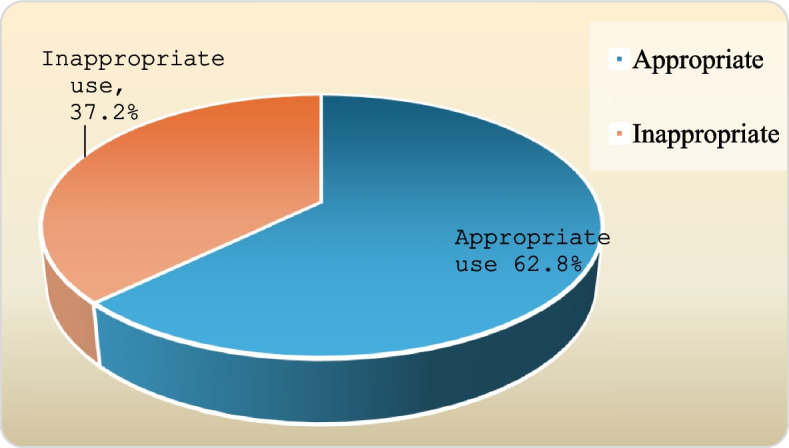
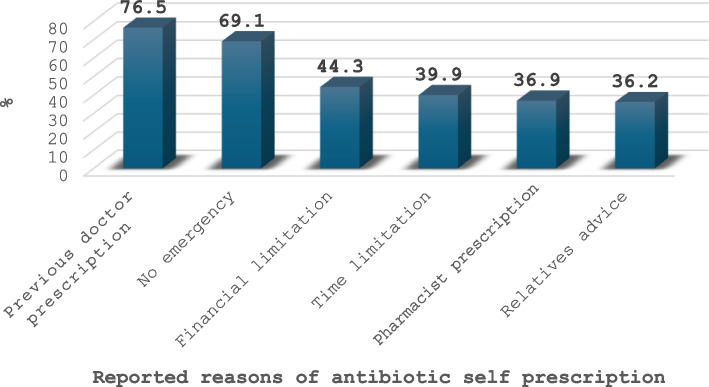
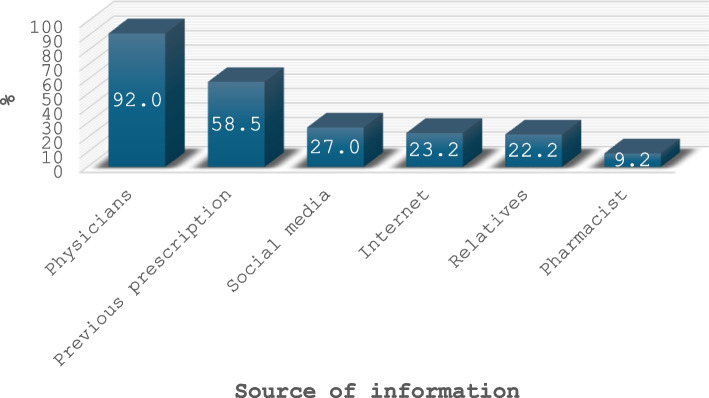
Out of the 400 parents surveyed, 87.7% were mothers with a mean age of 31.9 ± 7 years, 76% were highly educated, almost half were not working, 63% came from urban areas, and 95.2% had sufficient income. As for their children, 57.5% had male children; their average age was 5.5 ± 3.7 years. The misuse of antibiotics was prevalent among 37.2% (95% CI = 32.5-42.2%) of parents. When assessing parents' knowledge and attitude towards antibiotic use, 30.2% (95% CI = 25.8-35.0%) had good knowledge which was significantly more common among highly educated, working, and high-income parents, while the majority (72%, 95% CI = 67.3-76.3%) had a positive attitude. Having more and older children significantly increased the probability of antibiotic misuse, while a higher level of parental education and a positive attitude decreased the likelihood of such misuse (odds ratio (OR) was 1.31, 1.09, 0.52, and 0.11, respectively). Most parents obtained their information about antibiotics from physicians (92%) followed by experience from previous prescription (58.5%). Moreover, among inappropriate users, previous prescriptions and the parent's perception of the child's illness as a nonurgent condition were the most frequently cited reasons for the parents' self-prescription of antibiotics (76.5% and 69.1%, respectively).
Approximately, one-third of surveyed parents demonstrated an inappropriate use of antibiotics. Despite possessing a highly positive attitude and a reasonable level of knowledge about antibiotics, parents often underestimate the potential adverse effects. Tailored measures to promote appropriate antibiotic use are therefore needed to combat the problem of antibiotic resistance.
抗生素耐药性是全球主要的健康关注点,主要由抗生素的不合理使用所致。父母在儿童抗生素使用中起着关键作用,直接影响其临床结局。本研究旨在评估父母抗生素使用模式及其相关因素。
对从开罗艾资哈尔大学医院儿科门诊随机选取的400名父母进行了一项横断面研究。使用结构化访谈问卷收集有关社会人口学数据、抗生素使用模式、父母知识和态度、常见信息来源以及自行开具抗生素原因的数据。
在接受调查的400名父母中,87.7%为母亲,平均年龄为31.9±7岁,76%受过高等教育,近一半没有工作,63%来自城市地区,95.2%有足够收入。至于他们的孩子,57.5%有男孩;孩子的平均年龄为5.5±3.7岁。37.2%(95%置信区间=32.5 - 42.2%)的父母存在抗生素滥用情况。在评估父母对抗生素使用的知识和态度时,30.2%(95%置信区间=25.8 - 35.0%)有良好的知识,这在受过高等教育、有工作且收入高的父母中更为常见,而大多数(72%,95%置信区间=67.3 - 76.3%)态度积极。孩子数量更多且年龄更大显著增加了抗生素滥用的可能性,而父母受教育程度较高和态度积极则降低了这种滥用的可能性(优势比分别为1.31、1.09、0.52和0.11)。大多数父母从医生那里获取有关抗生素的信息(92%),其次是以往处方的经验(58.5%)。此外,在不当使用者中,以往的处方以及父母认为孩子的病情不紧急是父母自行开具抗生素最常提及的原因(分别为76.5%和69.1%)。
大约三分之一接受调查的父母表现出抗生素使用不当。尽管父母对抗生素持有高度积极的态度且有一定程度的了解,但他们往往低估了潜在的不良影响。因此,需要采取针对性措施来促进抗生素的合理使用,以应对抗生素耐药性问题。