
微通道液冷板式锂电池组的散热分析与多目标优化
Heat dissipation analysis and multi-objective optimization of microchannel liquid cooled plate lithium battery pack.
作者信息
Pan Xueyong, Xu Chuntian, Sun Xuemei, Shi Jianhui, Zhou Zhilong, Liu Yunlong
机构信息
School of Mechanical & Vehicle Engineering, Linyi University, Shandong, China.
School of Mechanical Engineering & Automation, Liaoning Science and Technology University, Liaoning, China.
出版信息
PLoS One. 2024 Dec 5;19(12):e0313594. doi: 10.1371/journal.pone.0313594. eCollection 2024.
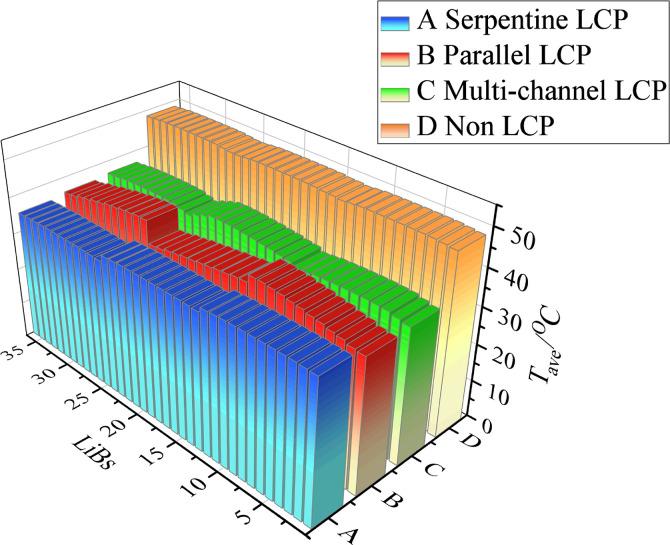
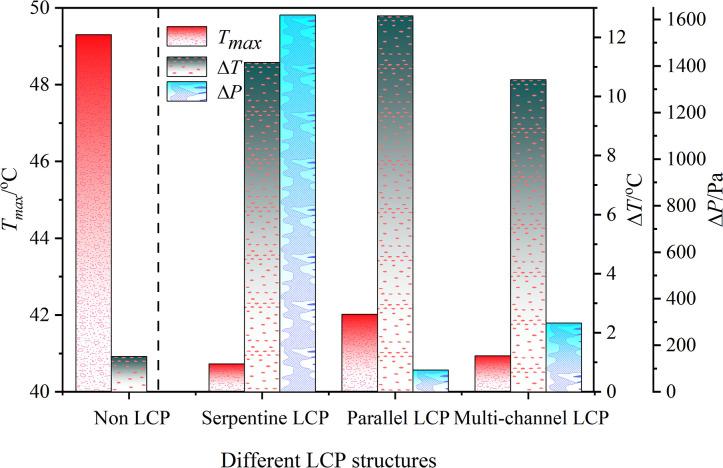
An efficient battery pack-level thermal management system was crucial to ensuring the safe driving of electric vehicles. To address the challenges posed by insufficient heat dissipation in traditional liquid cooled plate battery packs and the associated high system energy consumption. This study proposes three distinct channel liquid cooling systems for square battery modules, and compares and analyzes their heat dissipation performance to ensure battery safety during high-rate discharge. The results demonstrated that the extruded multi-channel liquid cooled plate exhibits the highest heat dissipation efficiency. Subsequently, response surface experiments were conducted to analyze the width parameters of various flow channels in the liquid cooled plate Finally, the Design of Experiment (DOE) was employed to conduct optimal Latin hypercube sampling on the flow channel depth (H), mass flow (Q), and inlet and outlet diameter (d), combined with a genetic algorithm for multi-objective analysis. The Tmax of the battery module decreased by 6.84% from 40.94°C to 38.14°C and temperature mean square deviation decreased (TSD) by 62.13% from 1.69 to 0.64. Importantly, the battery thermal management model developed in this study successfully met heat dissipation requirements without significantly increasing pump energy consumption.
一个高效的电池组级热管理系统对于确保电动汽车的安全驾驶至关重要。为了应对传统液冷板电池组散热不足以及相关的高系统能耗所带来的挑战。本研究针对方形电池模块提出了三种不同的通道液冷系统,并对其散热性能进行了比较和分析,以确保在高倍率放电期间电池的安全。结果表明,挤压式多通道液冷板具有最高的散热效率。随后,进行了响应面实验以分析液冷板中各种流道的宽度参数。最后,采用实验设计(DOE)对流道深度(H)、质量流量(Q)和进出口直径(d)进行最优拉丁超立方采样,并结合遗传算法进行多目标分析。电池模块的Tmax从40.94°C降至38.14°C,降低了6.84%,温度均方差(TSD)从1.69降至0.64,降低了62.13%。重要的是,本研究开发的电池热管理模型成功满足了散热要求,而没有显著增加泵的能耗。





 Zotero 插件