Jiang Jing, Wu Jiajing, Yu Wenke, Yu Junyi, Xiong Qin, Liu Dixin, Xiong Ziyun, Feng Jianying, Xuan Dongying
Department of Orthodontics, West Branch of Hangzhou Stomatology Hospital, Hangzhou, Zhejiang, China.
Department of Orthodontics, North Branch of Hangzhou Stomatology Hospital, Hangzhou, Zhejiang, China.
BMC Oral Health. 2024 Dec 5;24(1):1479. doi: 10.1186/s12903-024-05263-w.
Existing literature supports the efficacy of PAOO in augmenting alveolar bone volume and facilitating orthodontic tooth movement. However, there is a paucity of literature addressing its application in the treatment of adults with skeletal Class III malocclusion. This retrospective clinical study aimed to compare the clinical efficacy of camouflage orthodontic treatment combined with and without PAOO in adult patients presenting with skeletal Class III malocclusion.
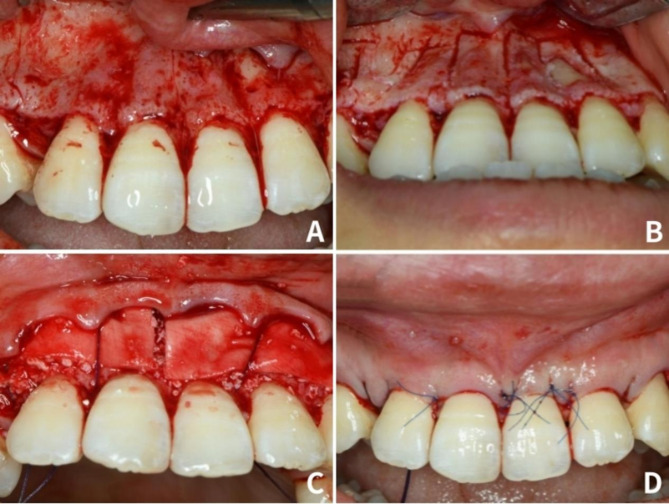
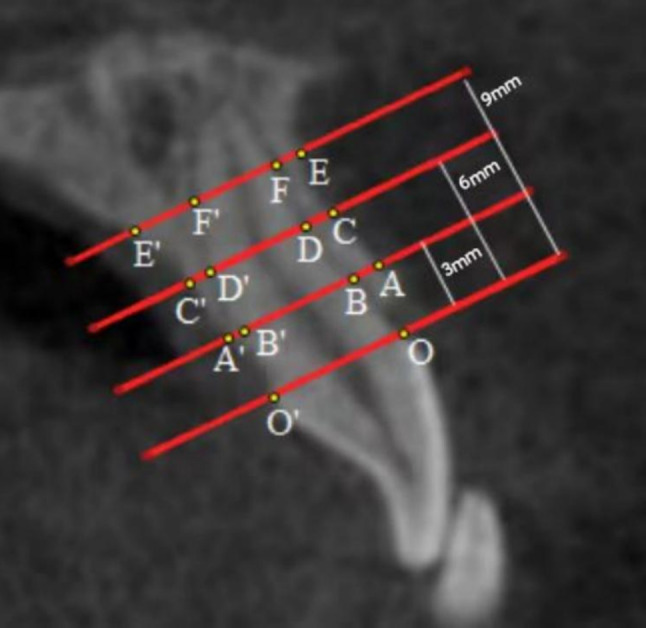
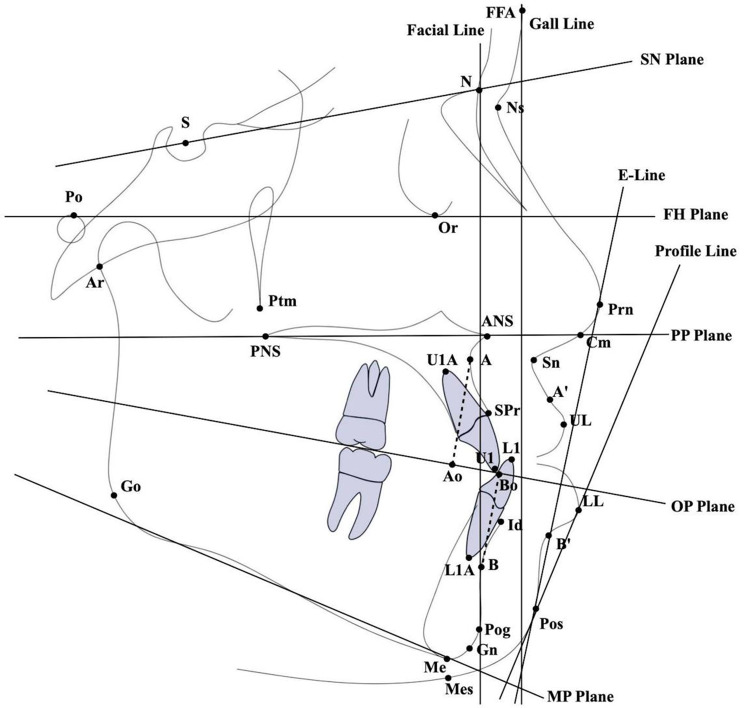
A retrospective study was performed in 38 patients with mild to moderate skeletal Class III malocclusion who underwent orthodontic treatment. Patients were divided into two cohorts: the experimental group, which underwent the PAOO procedure combined with orthodontic treatment, and the control group, which received traditional camouflage orthodontic treatment alone. Radiographic assessments, including lateral cephalograms and cone-beam computed tomography (CBCT) scans, were conducted before treatment (T0) and after treatment (T1) to evaluate changes in maxillary incisor inclination, alveolar bone thickness, and various skeletal and soft tissue parameters.
The experimental group exhibited a significant reduction in the axial inclination of the maxillary incisors after treatment (P < 0.05; U1-PP, -4.97 ± 5.23°). The root apex of the maxillary incisors moved labially, and the A-point moved forward. In contrast, the control group demonstrated significant proclination of the maxillary incisors (P < 0.05; U1-PP, 6.80 ± 7.89°). The ANB assessments demonstrated significant improvements (P < 0.05; 3.03 ± 1.62°), with a significant difference between groups that favored the experimental group. Nasolabial angle and G Vert-Sn increased significantly only in the experimental group (P < 0.05; Nasolabial A, 9.47 ± 12.67°; G Vert-Sn, 2.19 ± 2.56 mm). Compared with T0, labial bone thickness significantly increased in the experimental group at T1, while it decreased significantly in the control group.
The integration of PAOO with orthodontic treatment appears to enhance labial alveolar bone augmentation and facilitate the labial movement of maxillary incisor roots in patients with skeletal Class III malocclusion. Concurrently, it results in significant improvements in patients' aesthetics of both soft and hard tissue profiles.
现有文献支持骨皮质切开辅助正畸治疗(PAOO)在增加牙槽骨体积和促进正畸牙齿移动方面的疗效。然而,关于其在治疗成人骨性III类错牙合畸形中的应用的文献较少。这项回顾性临床研究旨在比较在患有骨性III类错牙合畸形的成年患者中,联合或不联合PAOO的掩饰性正畸治疗的临床疗效。
对38例接受正畸治疗的轻度至中度骨性III类错牙合畸形患者进行回顾性研究。患者分为两组:实验组,接受PAOO手术联合正畸治疗;对照组,仅接受传统的掩饰性正畸治疗。在治疗前(T0)和治疗后(T1)进行影像学评估,包括头颅侧位片和锥形束计算机断层扫描(CBCT),以评估上颌切牙倾斜度、牙槽骨厚度以及各种骨骼和软组织参数的变化。
治疗后,实验组上颌切牙的轴向倾斜度显著降低(P < 0.05;U1-PP,-4.97±5.23°)。上颌切牙的根尖向唇侧移动,A点向前移动。相比之下,对照组上颌切牙明显前倾(P < 0.05;U1-PP,6.80±7.89°)。ANB评估显示有显著改善(P < 0.05;3.03±1.62°),两组之间存在显著差异,实验组更具优势。鼻唇角和G Vert-Sn仅在实验组中显著增加(P < 0.05;鼻唇角,9.47±12.67°;G Vert-Sn,2.19±2.56 mm)。与T0相比,实验组在T1时唇侧骨厚度显著增加,而对照组则显著减少。
PAOO与正畸治疗相结合似乎能增强唇侧牙槽骨的增加,并促进骨性III类错牙合畸形患者上颌切牙根的唇向移动。同时,它能显著改善患者软硬组织侧貌的美观度。