Hill Christine, Pillay Renai, Liu Karen P Y
School of Health Sciences, Western Sydney University, Penrith, NSW, Australia.
Concord Hospital, Concord, NSW, Australia.
Pilot Feasibility Stud. 2024 Dec 5;10(1):148. doi: 10.1186/s40814-024-01578-1.
Less dopaminergic neurons in people with Parkinson's disease result in a reliance on a slow and energy-intensive control, restricting their ability to complete routine everyday activities. Self-regulation takes an active learning approach to rehabilitation by enhancing the person's self-awareness and encourages self-reflection to overcome problems. Mental imagery assists the person to focus attention on the requirements for the task, making it a goal-directed action and allowing for faster movements. There is a growing body of evidence to support the use of self-regulation and mental imagery in rehabilitation to maintain or improve the performance of everyday activities for people with a neurological condition.
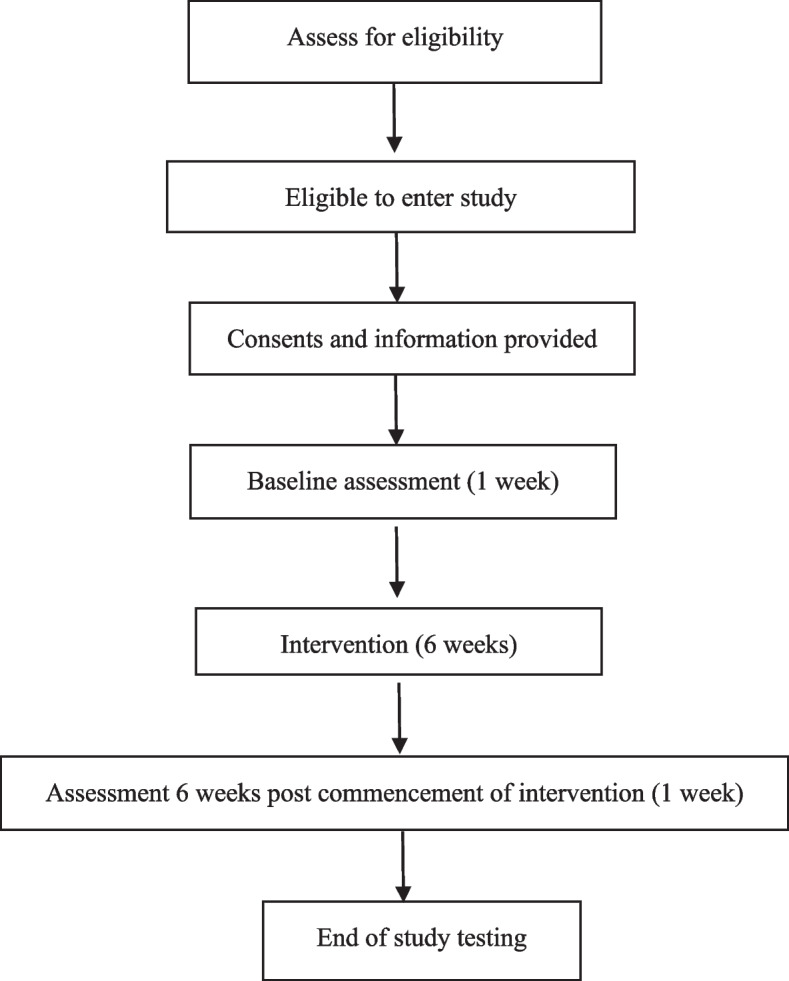
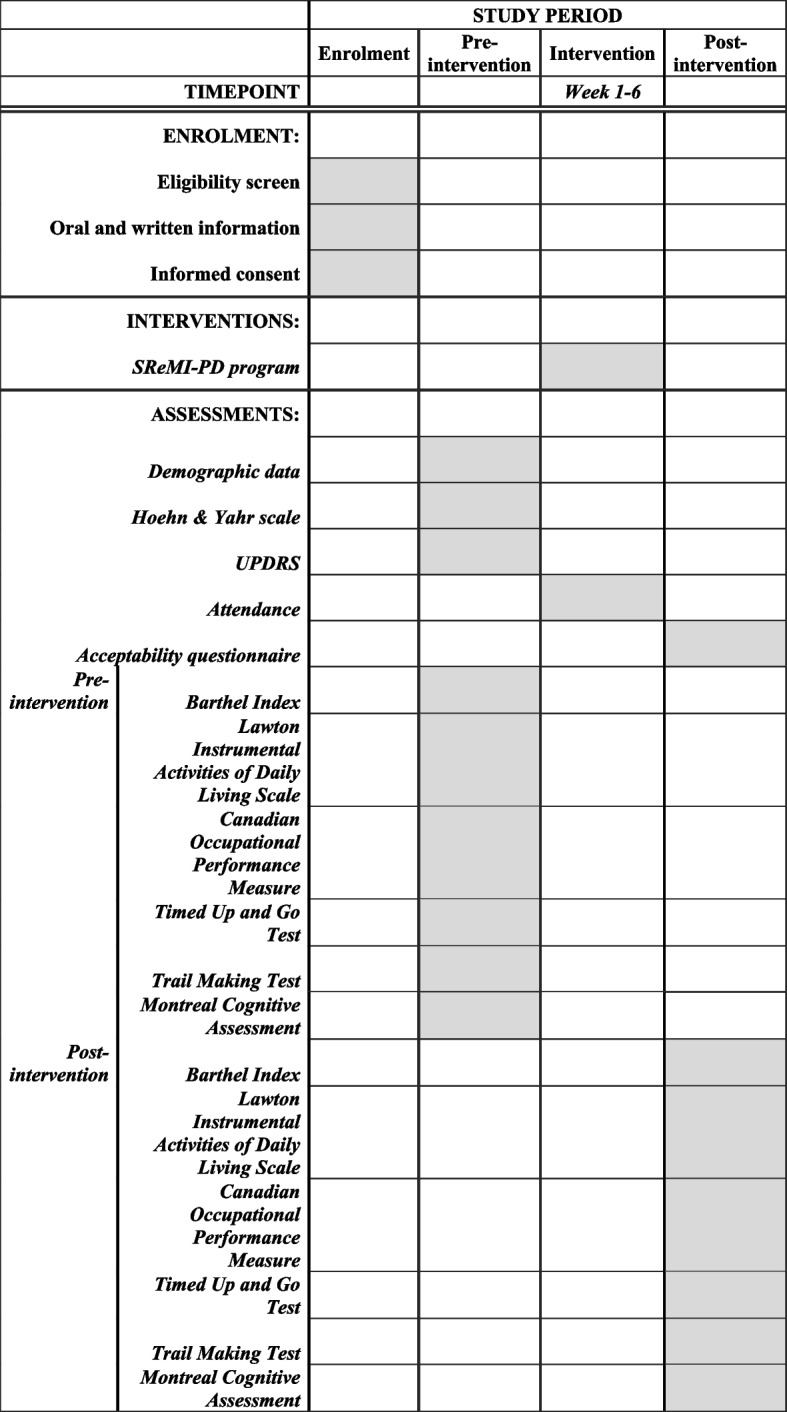
A prospective pilot study using a single-group, pre-test and posttest design will test the feasibility and acceptability of a self-regulation and mental imagery programme to enhance performance of everyday activities and motor and cognitive function in people with Parkinson's disease. People who have a diagnosis of Parkinson's disease with mild-to-moderate severity and intact attention, comprehension and short-term memory will be recruited. The participants will receive a 6-week programme with one therapist-led session, a home programme and a telephone call each week. The programme uses self-regulation through a step-based problem-solving process and mental imagery to assist in movement planning. Appropriate rehabilitation strategies are used as solutions to tackle problems experienced, impacting performance in everyday activities. The attendance rate will be recorded to indicate the feasibility. A questionnaire will be administered post-intervention to collect feedback on programme acceptability. Patient outcomes will include Barthel index, Lawton Instrumental Activities of Daily Living Scale, Canadian Occupational Performance Measure and Timed Up and Go test. Trail Making Test and Montreal Cognitive Assessment will be collected pre- and post-intervention.
The programme aims to combine the metacognitive strategies of self-regulation and mental imagery to enable individuals with Parkinson's disease to improve the performance of everyday activities. If feasible, the programme has the potential to be further tested in a randomised controlled trial and benefit people with Parkinson's disease by enhancing their performance required in independent community living.
Australian New Zealand Clinical Trials Registry ACTRN12621000903886, Registered on 12 July 2021 - retrospectively registered.
帕金森病患者体内多巴胺能神经元较少,导致他们依赖缓慢且耗能的控制方式,限制了他们完成日常常规活动的能力。自我调节通过增强个体的自我意识,采用积极的学习方法进行康复治疗,并鼓励自我反思以克服问题。心理意象帮助个体将注意力集中在任务要求上,使其成为一种目标导向的行动,并能实现更快的动作。越来越多的证据支持在康复治疗中使用自我调节和心理意象,以维持或改善神经系统疾病患者的日常活动表现。
一项采用单组、前测和后测设计的前瞻性试点研究,将测试自我调节和心理意象方案在提高帕金森病患者日常活动表现以及运动和认知功能方面的可行性和可接受性。将招募诊断为轻度至中度帕金森病且注意力、理解力和短期记忆完好的患者。参与者将接受为期6周的方案,包括每周一次由治疗师主导的课程、家庭方案和一次电话沟通。该方案通过基于步骤的问题解决过程进行自我调节,并运用心理意象辅助运动规划。采用适当的康复策略作为解决所遇到问题的方案,这些问题会影响日常活动表现。将记录出勤率以表明可行性。干预后将发放问卷以收集关于方案可接受性的反馈。患者的结局指标将包括巴氏指数、洛顿日常生活能力量表、加拿大职业表现测量量表和定时起立行走测试。干预前后将收集连线测验和蒙特利尔认知评估。
该方案旨在结合自我调节和心理意象的元认知策略,使帕金森病患者能够提高日常活动表现。如果可行,该方案有可能在随机对照试验中进一步测试,并通过提高帕金森病患者独立社区生活所需的表现而使其受益。
澳大利亚新西兰临床试验注册中心ACTRN12621000903886,于2021年7月12日注册——追溯注册。