Hao Zhuo-Wen, Zhang Zhe-Yuan, Wang Ze-Pu, Wang Ying, Chen Jia-Yao, Chen Tian-Hong, Shi Guang, Li Han-Ke, Wang Jun-Wu, Dong Min-Chao, Hong Li, Li Jing-Feng
Department of Orthopedics, Zhongnan Hospital of Wuhan University, Wuhan, 430071, China.
Department of Obstetrics and Gynecology, Renmin Hospital of Wuhan University, Wuhan, 430060, China.
Mil Med Res. 2024 Dec 5;11(1):75. doi: 10.1186/s40779-024-00576-x.
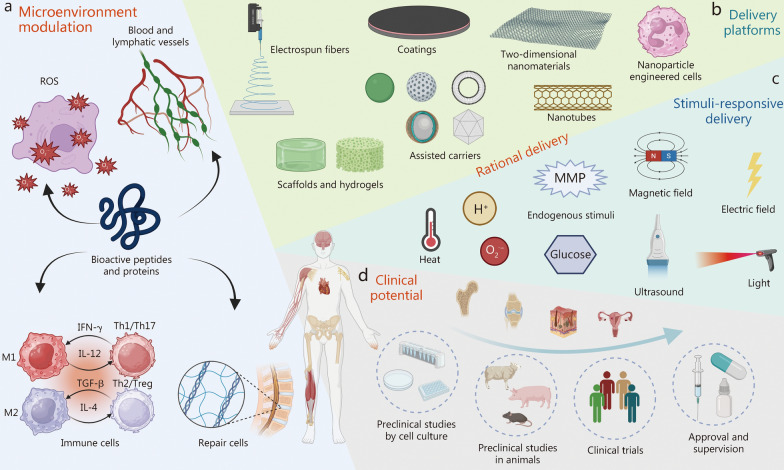
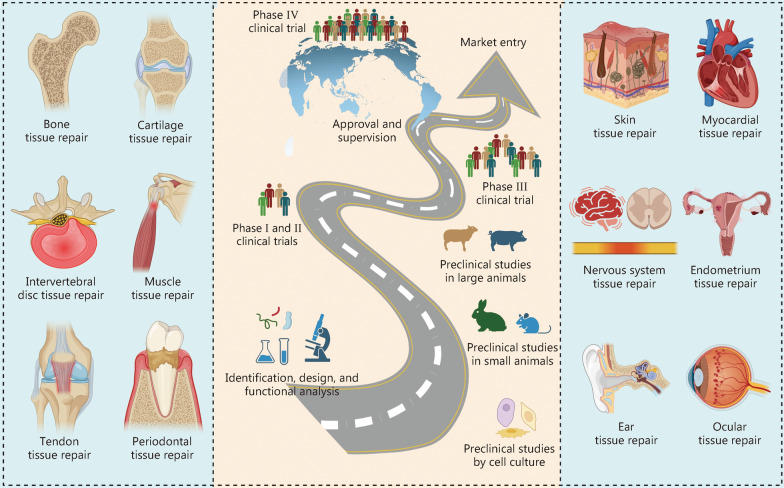
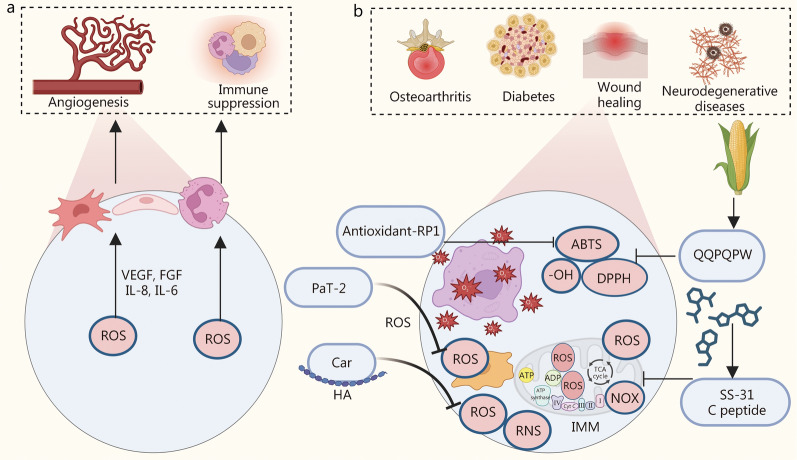
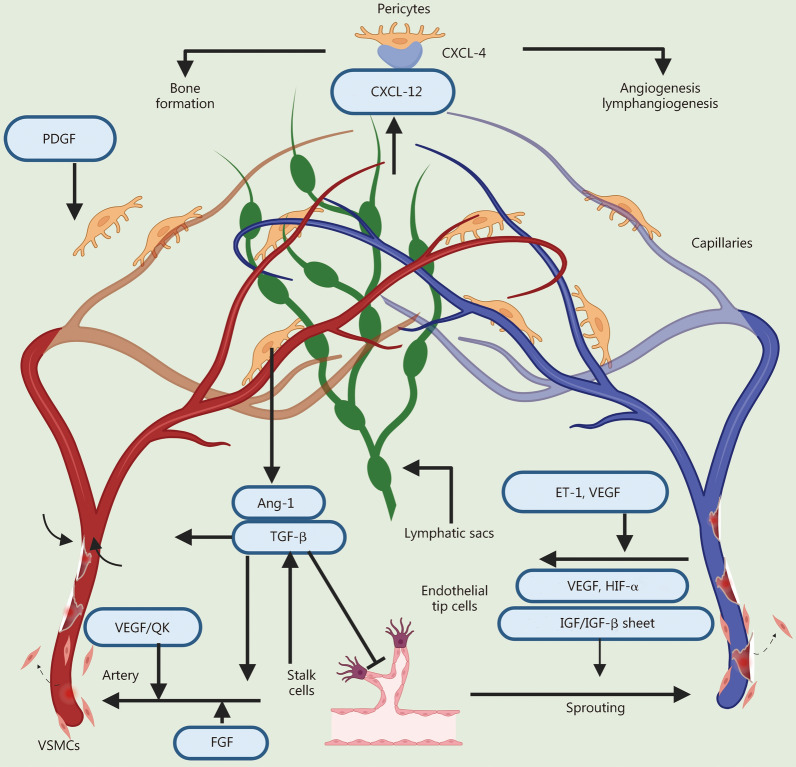
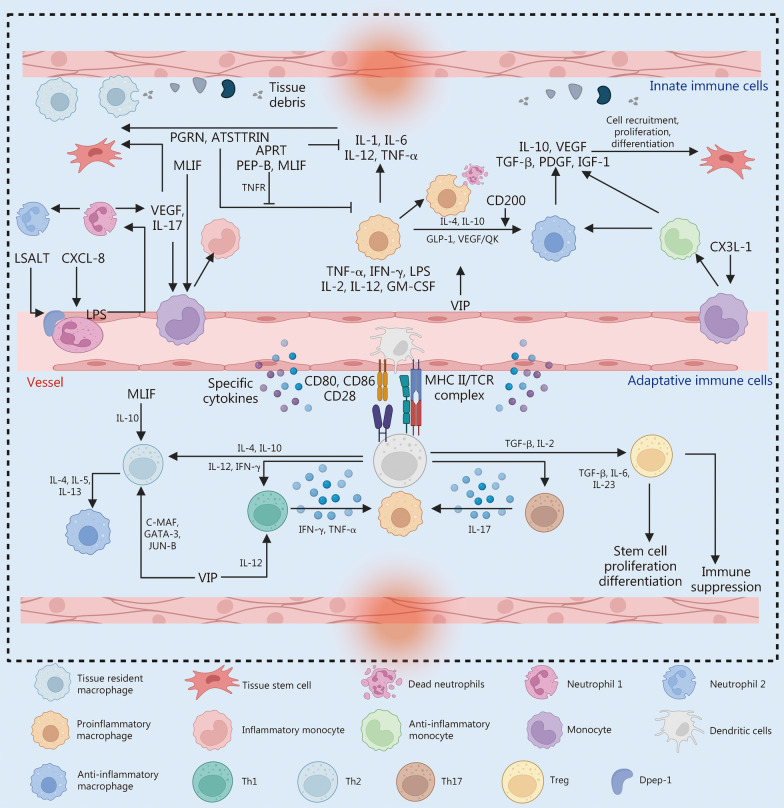
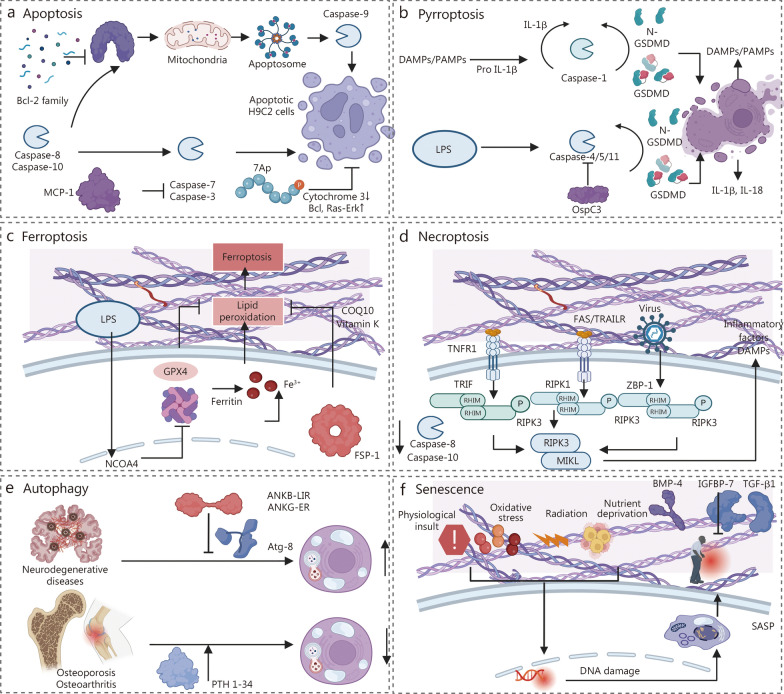
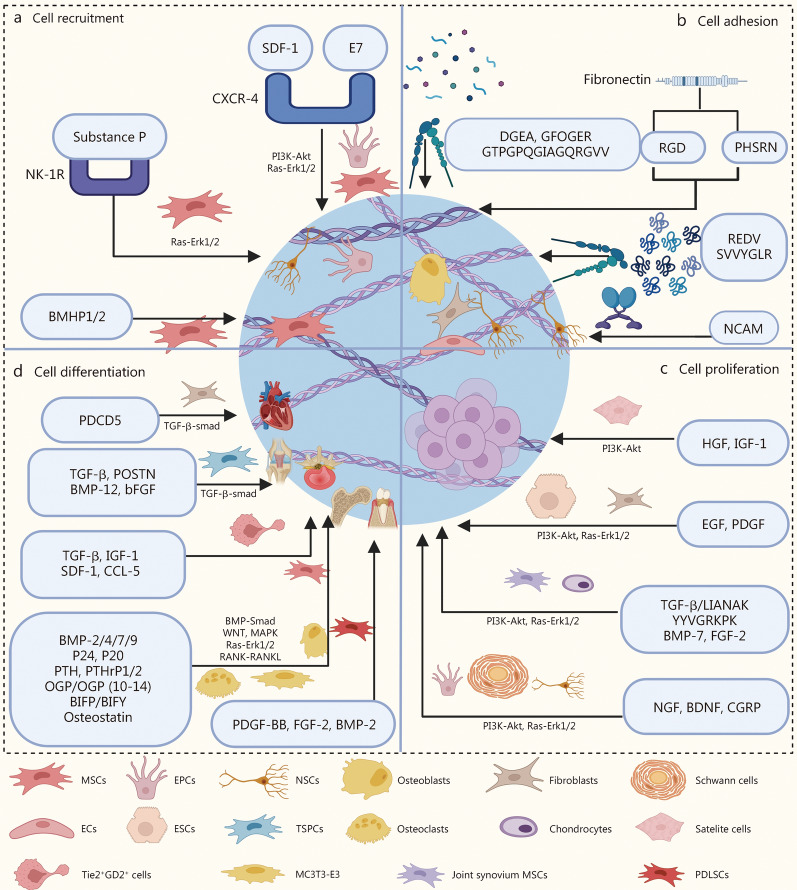
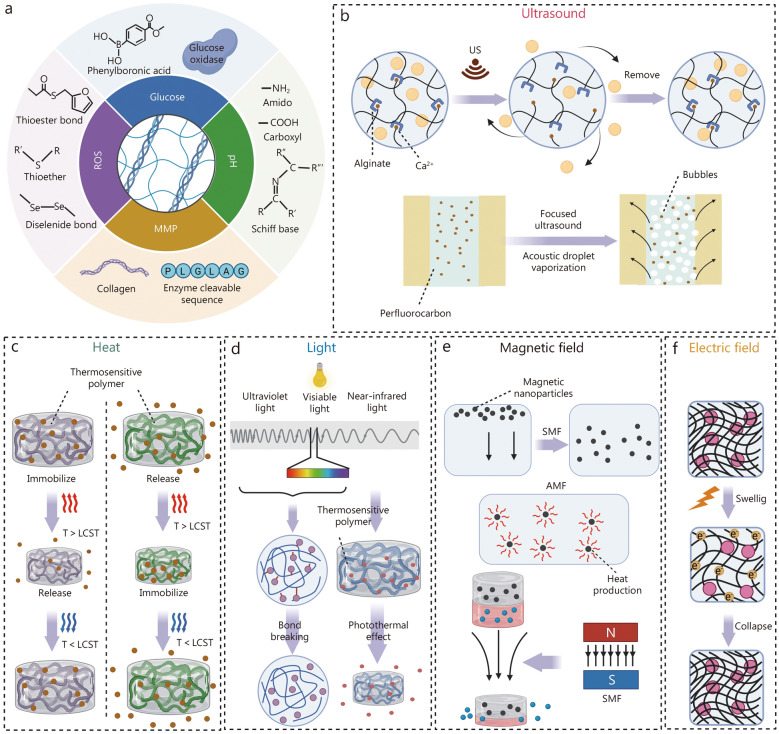
Bioactive peptides and proteins (BAPPs) are promising therapeutic agents for tissue repair with considerable advantages, including multifunctionality, specificity, biocompatibility, and biodegradability. However, the high complexity of tissue microenvironments and their inherent deficiencies such as short half-live and susceptibility to enzymatic degradation, adversely affect their therapeutic efficacy and clinical applications. Investigating the fundamental mechanisms by which BAPPs modulate the microenvironment and developing rational delivery strategies are essential for optimizing their administration in distinct tissue repairs and facilitating clinical translation. This review initially focuses on the mechanisms through which BAPPs influence the microenvironment for tissue repair via reactive oxygen species, blood and lymphatic vessels, immune cells, and repair cells. Then, a variety of delivery platforms, including scaffolds and hydrogels, electrospun fibers, surface coatings, assisted particles, nanotubes, two-dimensional nanomaterials, and nanoparticles engineered cells, are summarized to incorporate BAPPs for effective tissue repair, modification strategies aimed at enhancing loading efficiencies and release kinetics are also reviewed. Additionally, the delivery of BAPPs can be precisely regulated by endogenous stimuli (glucose, reactive oxygen species, enzymes, pH) or exogenous stimuli (ultrasound, heat, light, magnetic field, and electric field) to achieve on-demand release tailored for specific tissue repair needs. Furthermore, this review focuses on the clinical potential of BAPPs in facilitating tissue repair across various types, including bone, cartilage, intervertebral discs, muscle, tendons, periodontal tissues, skin, myocardium, nervous system (encompassing brain, spinal cord, and peripheral nerve), endometrium, as well as ear and ocular tissue. Finally, current challenges and prospects are discussed.
生物活性肽和蛋白质(BAPPs)是用于组织修复的有前景的治疗剂,具有诸多显著优势,包括多功能性、特异性、生物相容性和生物可降解性。然而,组织微环境的高度复杂性及其固有缺陷,如半衰期短和易受酶降解影响,对其治疗效果和临床应用产生不利影响。研究BAPPs调节微环境的基本机制并制定合理的递送策略,对于优化其在不同组织修复中的给药方式及促进临床转化至关重要。本综述首先聚焦于BAPPs通过活性氧、血管和淋巴管、免疫细胞以及修复细胞影响组织修复微环境的机制。然后,总结了多种递送平台,包括支架和水凝胶、电纺纤维、表面涂层、辅助颗粒、纳米管、二维纳米材料以及工程化细胞纳米颗粒,以结合BAPPs实现有效的组织修复,还综述了旨在提高负载效率和释放动力学的修饰策略。此外,BAPPs的递送可通过内源性刺激(葡萄糖、活性氧、酶、pH值)或外源性刺激(超声、热、光、磁场和电场)进行精确调控,以实现针对特定组织修复需求的按需释放。此外,本综述重点关注BAPPs在促进各类组织修复方面的临床潜力,包括骨骼、软骨、椎间盘、肌肉、肌腱、牙周组织、皮肤、心肌、神经系统(包括脑、脊髓和周围神经)、子宫内膜以及耳和眼组织。最后,讨论了当前面临的挑战和前景。