Jung Minhue, Kim Na Hee, Oh Seung Hyeon, Kim Kook-Hyung
Department of Agricultural Biotechnology, Seoul National University, Seoul 08826, Korea.
Research Institute of Agriculture and Life Sciences, Seoul National University, Seoul 08826, Korea.
Plant Pathol J. 2024 Dec;40(6):625-632. doi: 10.5423/PPJ.OA.09.2024.0134. Epub 2024 Dec 1.
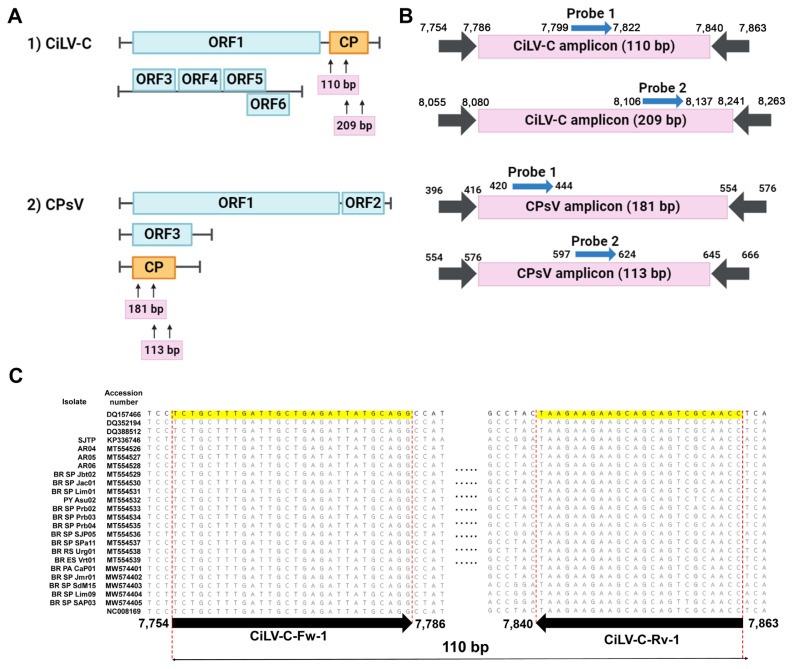
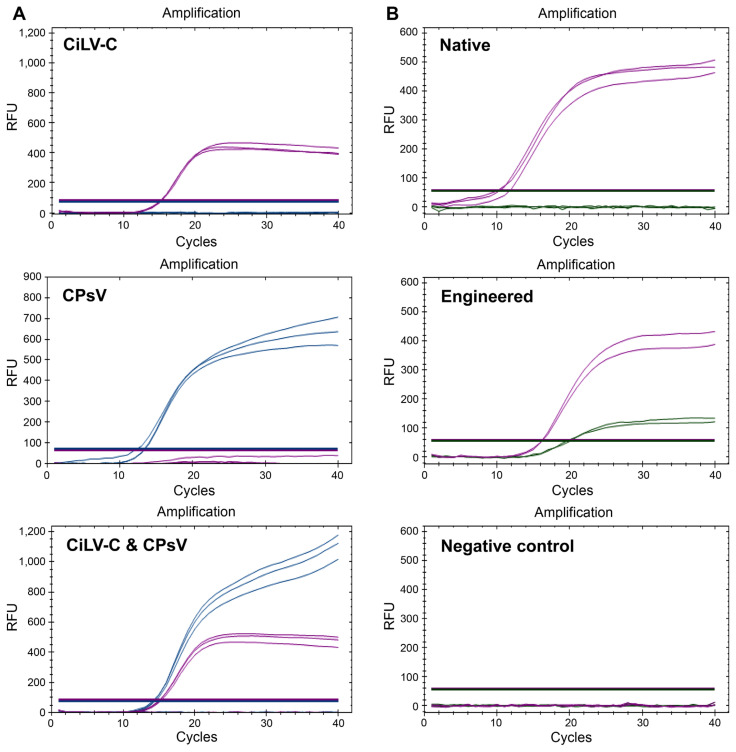
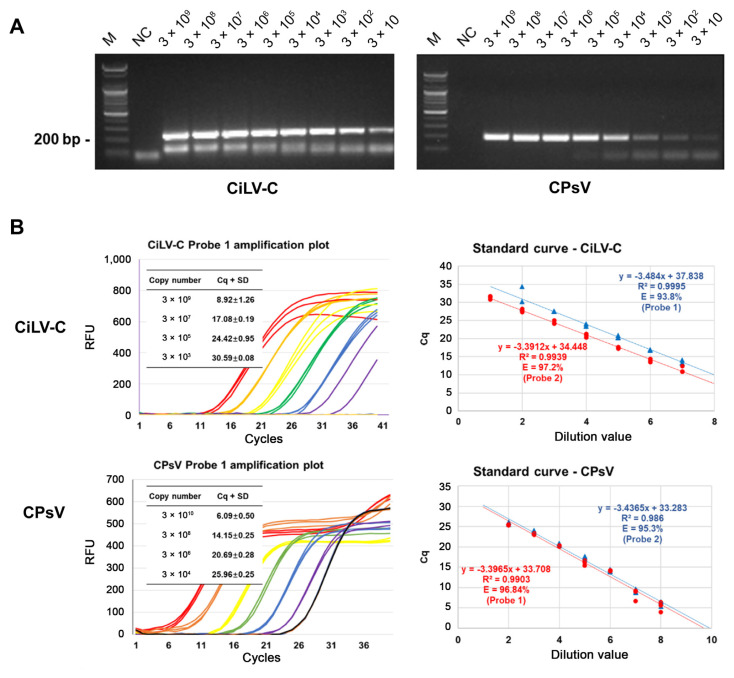
In 2022, citrus fruits were the second most widely produced fruit globally, highlighting their significant role in the fruit industry. However, due to their clonal propagation, these fruits are highly susceptible to viral infections, posing challenges for growers. In response to the booming nursery market, the Korean plant quarantine station reported over 80 million sapling stocks, with 15% being discarded after rigorous inspection due to contamination or disease. As the global nursery trade continues to expand, there is an urgent need for a fast and accurate diagnostic tool to ensure the health of plant stocks. In this study, we developed a TaqMan-based real-time reverse transcription-quantitative PCR assay specifically designed to detect two critical citrus viruses: citrus psorosis virus and citrus leprosis virus C. Our assay demonstrated the capability to detect virus sequences with as few as 30 copies, maintaining high PCR efficiency with RNA extracted from both twig and leaf tissues. Additionally, we incorporated an artificial sequence into the positive controls, which effectively served as a marker for detecting potential sample contamination. This comprehensive diagnostic system promises to enhance plant quarantine measures and phytosanitation practices, providing a reliable and efficient solution to safeguard citrus crops from viral threats.
2022年,柑橘类水果是全球产量第二高的水果,凸显了它们在水果产业中的重要作用。然而,由于其克隆繁殖,这些水果极易受到病毒感染,给种植者带来了挑战。针对蓬勃发展的苗圃市场,韩国植物检疫站报告了超过8000万株树苗库存,其中15%在经过严格检查后因污染或病害而被丢弃。随着全球苗圃贸易的持续扩张,迫切需要一种快速准确的诊断工具来确保植物库存的健康。在本研究中,我们开发了一种基于TaqMan的实时逆转录定量PCR检测方法,专门用于检测两种关键的柑橘病毒:柑橘鳞皮病毒和柑橘麻风病毒C。我们的检测方法能够检测低至30个拷贝的病毒序列,对从嫩枝和叶片组织中提取的RNA保持高PCR效率。此外,我们在阳性对照中加入了人工序列,有效地作为检测潜在样品污染的标记。这种全面的诊断系统有望加强植物检疫措施和植物卫生实践,为保护柑橘作物免受病毒威胁提供可靠而有效的解决方案。