Key Laboratory of Biology and Genetic Improvement of Horticultural Crops, Ministry of Agriculture, Key Laboratory of Horticultural Plant Biology (Ministry of Education) Huazhong Agricultural University, Wuhan, Hubei 430070, P.R. China.
Plant Commun. 2020 Dec 30;2(1):100138. doi: 10.1016/j.xplc.2020.100138. eCollection 2021 Jan 11.
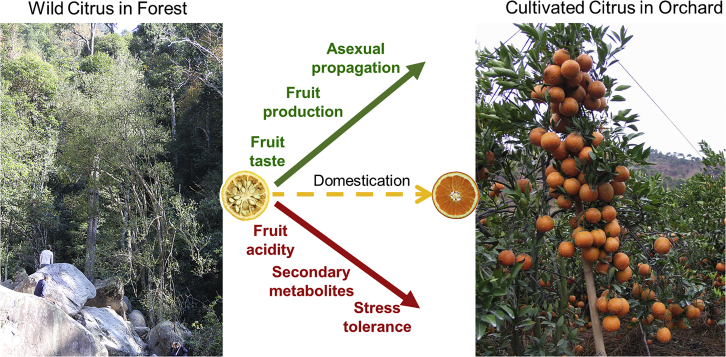
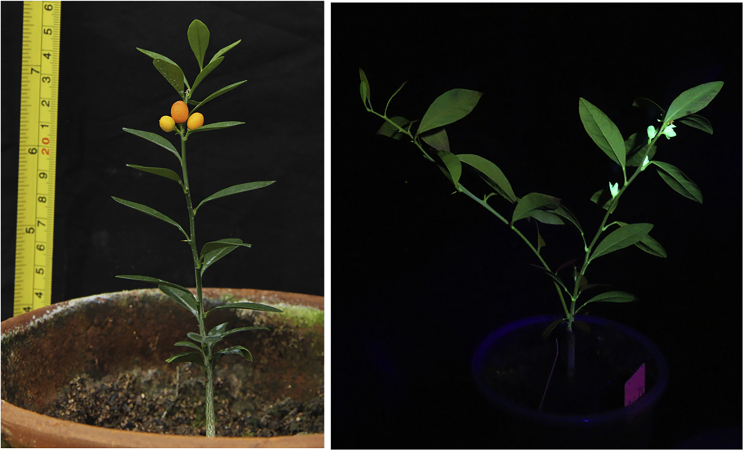
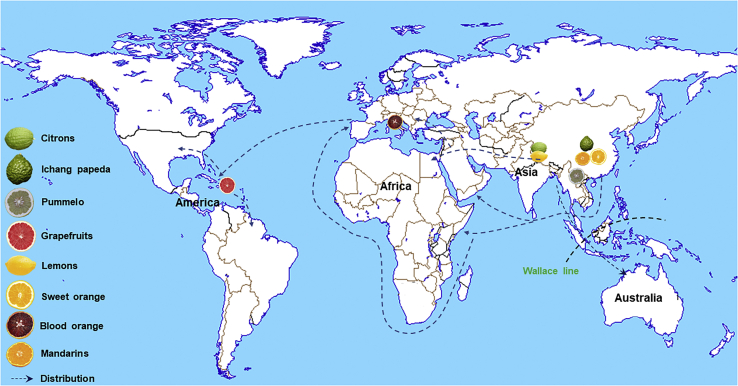
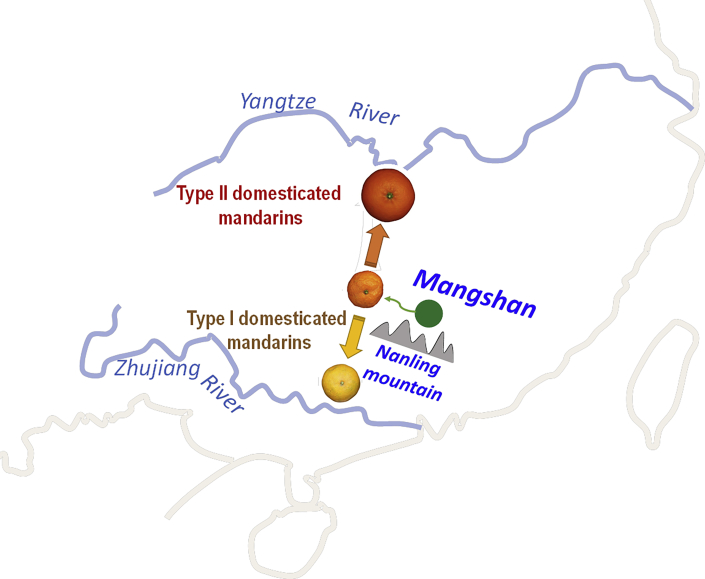
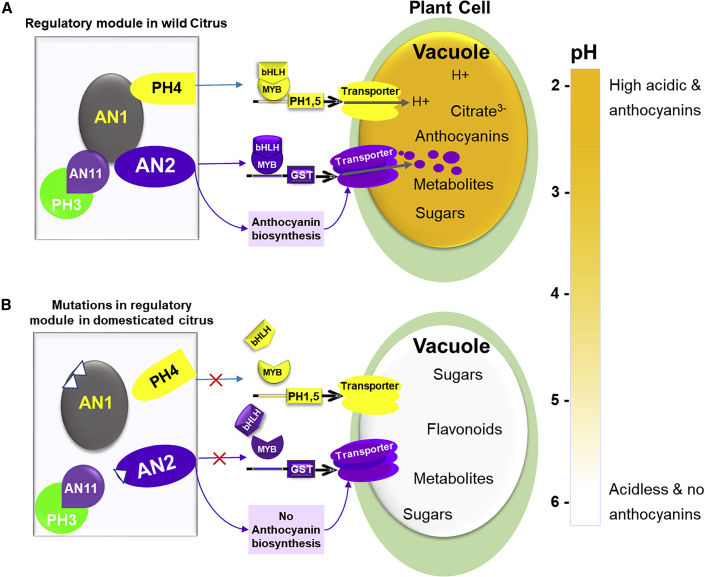
Citrus originated in Southeast Asia, and it has become one of the most important fruit crops worldwide. Citrus has a long and obscure domestication history due to its clonal propagation, long life cycle, wide sexual compatibility, and complex genetic background. As the genomic information of both wild and cultivated citrus becomes available, their domestication history and underlying traits or genes are becoming clear. This review outlines the genomic features of wild and cultivated species. We propose that the reduction of citric acid is a critical trait for citrus domestication. The genetic model representing the change during domestication may be associated with a regulatory complex known as WD-repeat-MYB-bHLH-WRKY (WMBW), which is involved in acidification and anthocyanin accumulation. The reduction in or loss of anthocyanins may be due to a hitchhiking effect of fruit acidity selection, in which mutation occurs in the common regulator of these two pathways in some domesticated types. Moreover, we have summarized the domestication traits and candidate genes for breeding purposes. This review represents a comprehensive summary of the genes controlling key traits of interest, such as acidity, metabolism, and disease resistance. It also sheds light on recent advances in early flowering from transgenic studies and provides a new perspective for fast breeding of citrus. Our review lays a foundation for future research on fruit acidity, flavor, and disease resistance in citrus.
柑橘起源于东南亚,现已成为全球最重要的水果作物之一。由于其无性繁殖、生命周期长、性亲和性广以及遗传背景复杂,柑橘的驯化历史悠久而模糊。随着野生和栽培柑橘基因组信息的不断丰富,其驯化历史和潜在的性状或基因逐渐清晰。本文概述了野生和栽培柑橘的基因组特征。我们提出,柠檬酸的减少是柑橘驯化的一个关键性状。代表驯化过程中变化的遗传模型可能与一个称为 WD-重复-MYB-bHLH-WRKY(WMBW)的调控复合物有关,该复合物参与酸化和花青素积累。花青素的减少或丧失可能是由于果实酸度选择的 hitchhiking 效应,在某些驯化类型中,这两条途径的共同调控因子发生了突变。此外,我们还总结了用于育种目的的驯化性状和候选基因。本文综述了控制柑橘关键性状(如酸度、代谢和抗病性)的基因,为柑橘果实酸度、风味和抗病性的研究提供了参考。同时,本文还介绍了从转基因研究中获得的早期开花的最新进展,为柑橘的快速育种提供了新的视角。本文为未来柑橘果实酸度、风味和抗病性的研究奠定了基础。