Tyralla Sandra, Zimmermann Eckart
Institute for Experimental Psychology, Heinrich Heine University, Düsseldorf, Germany.
J Vis. 2024 Dec 2;24(13):6. doi: 10.1167/jov.24.13.6.
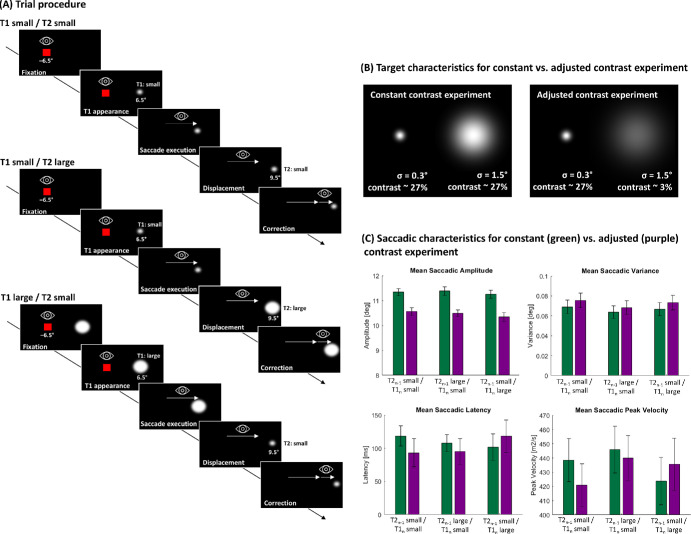
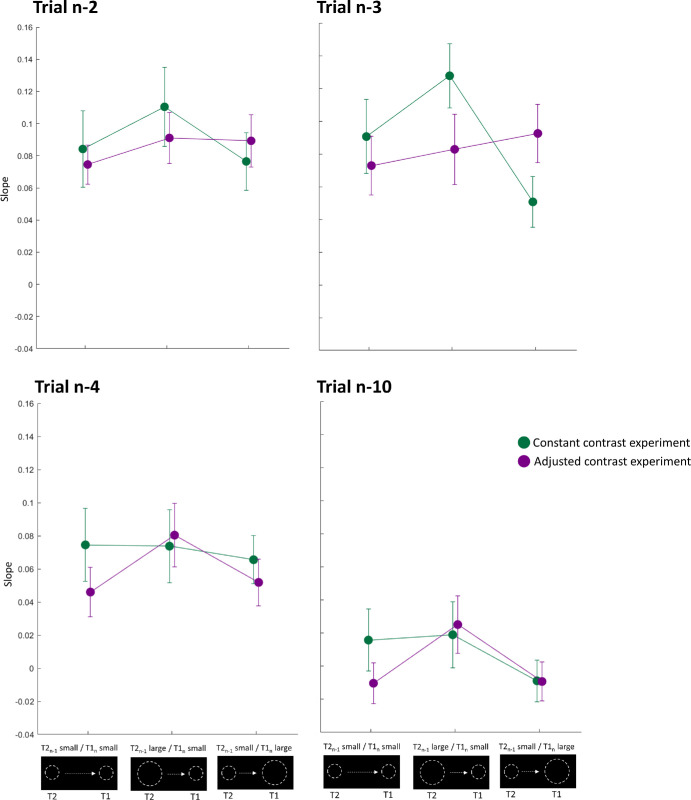
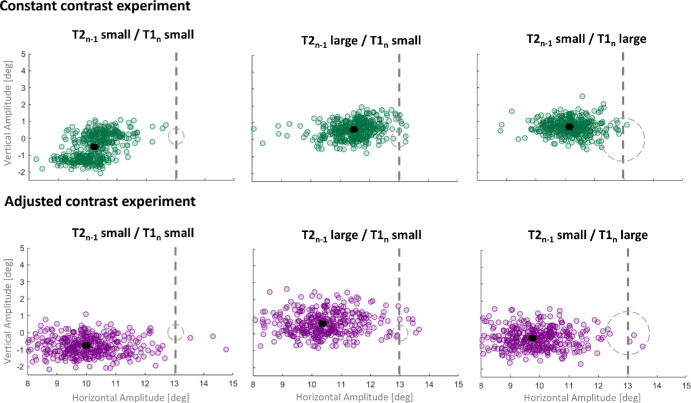
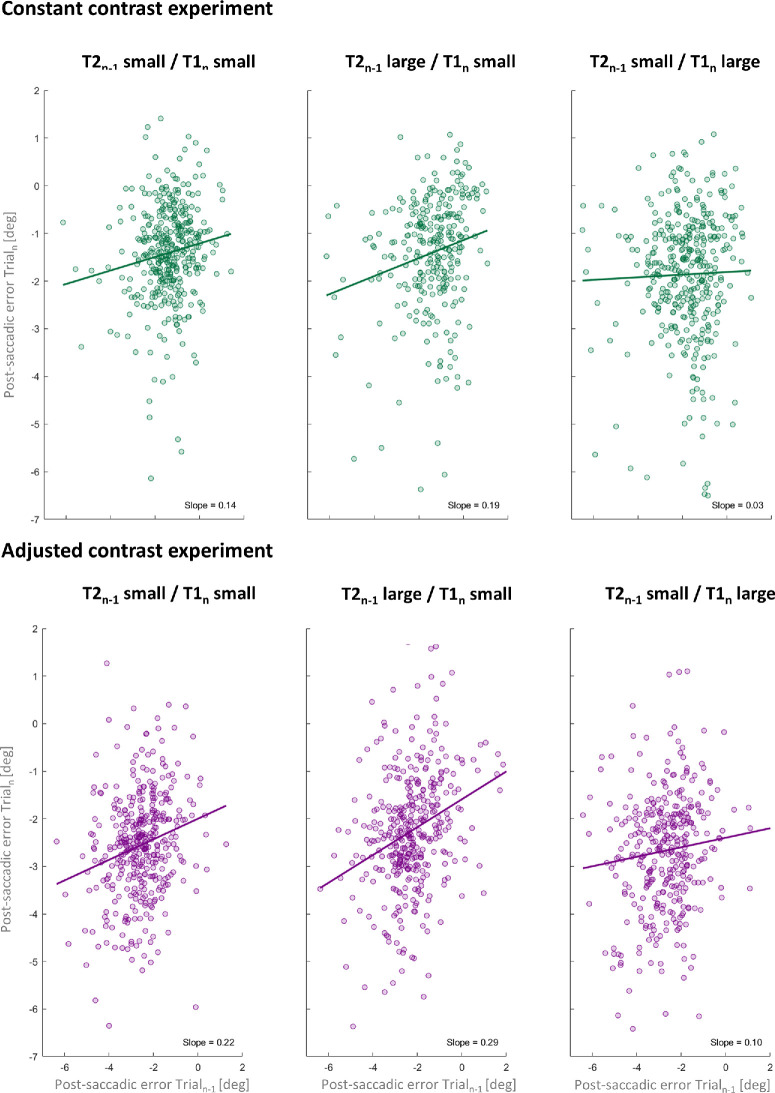
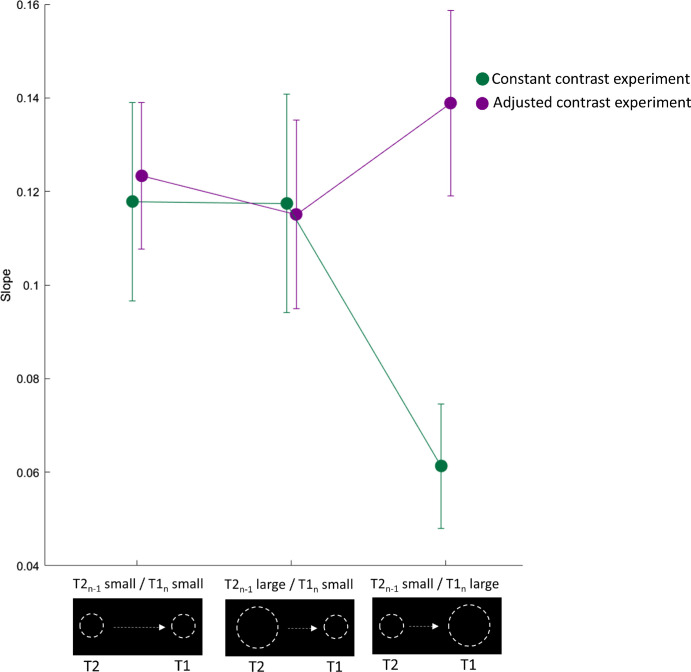
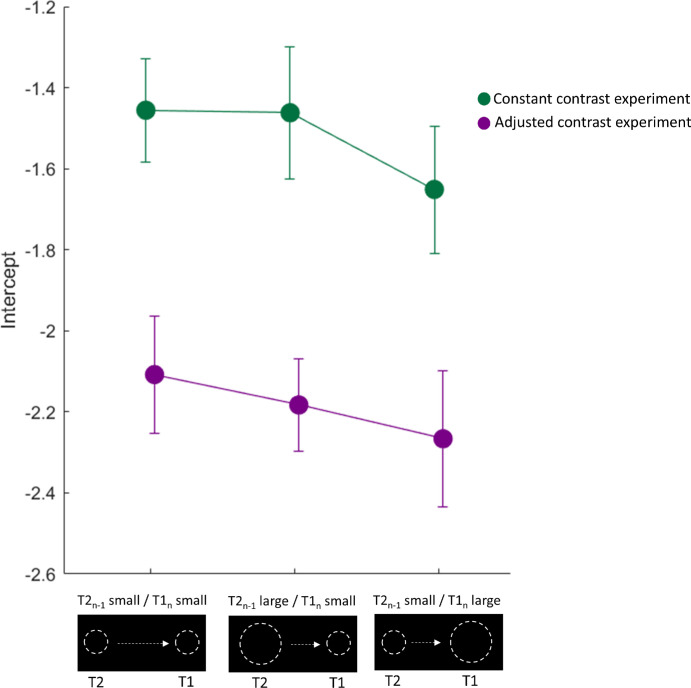
In order to bring stimuli of interest into our central field of vision, we perform saccadic eye movements. After every saccade, the error between the predicted and actual landing position is monitored. In the laboratory, artificial post-saccadic errors are created by displacing the target during saccade execution. Previous research found that even a single post-saccadic error induces immediate amplitude changes to minimize that error. The saccadic amplitude adjustment could result from a recalibration of the saccade target representation. We asked if recalibration follows an integration scheme in which the impact magnitude of the previous post-saccadic target location depends on the certainty of the current target. We asked subjects to perform saccades to Gaussian blobs as targets, the visuospatial certainty of which we manipulated by changing its spatial constant. In separate sessions, either the pre-saccadic or post-saccadic target was uncertain. Additionally, we manipulated the contrast to further decrease certainty, changing the spatial constant mid-saccade. We found saccade-by-saccade amplitude reductions only with a currently uncertain target, a previously certain one, and a constant target contrast. We conclude that the features of the pre-saccadic target (i.e., size and contrast) determine the extent to which post-saccadic error shapes upcoming saccade amplitudes.
为了将感兴趣的刺激引入我们的中央视野,我们会进行快速眼动。每次快速眼动后,都会监测预测着陆位置与实际着陆位置之间的误差。在实验室中,通过在快速眼动执行过程中移动目标来制造人为的眼跳后误差。先前的研究发现,即使是单个眼跳后误差也会立即引起幅度变化,以最小化该误差。快速眼动幅度调整可能是由于对快速眼动目标表征的重新校准。我们询问重新校准是否遵循一种整合方案,即前一个眼跳后目标位置的影响大小取决于当前目标的确定性。我们要求受试者对高斯模糊斑点作为目标进行快速眼动,我们通过改变其空间常数来操纵其视觉空间确定性。在不同的实验环节中,要么扫视前目标不确定,要么扫视后目标不确定。此外,我们操纵对比度以进一步降低确定性,在扫视过程中改变空间常数。我们发现,只有当当前目标不确定、先前目标确定且目标对比度恒定时,才会逐次出现快速眼动幅度减小的情况。我们得出结论,扫视前目标的特征(即大小和对比度)决定了眼跳后误差对即将到来的快速眼动幅度的影响程度。