Wardhani Puspita I, Musiyam Muhammad, Wibowo Yunus A, Rahmadana Aries Dwi W, Utami Sri, Maulana Edwin
Department of Geography Education, Faculty of Teacher Training and Education, Universitas Muhammadiyah Surakarta, Sukoharjo, Indonesia.
CV Geo Art Science, Sleman, Indonesia.
Jamba. 2024 Nov 29;16(1):1769. doi: 10.4102/jamba.v16i1.1769. eCollection 2024.
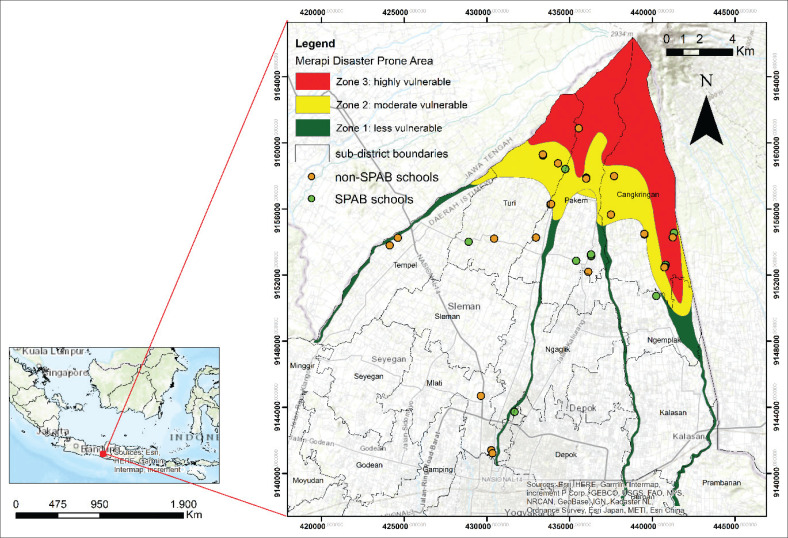
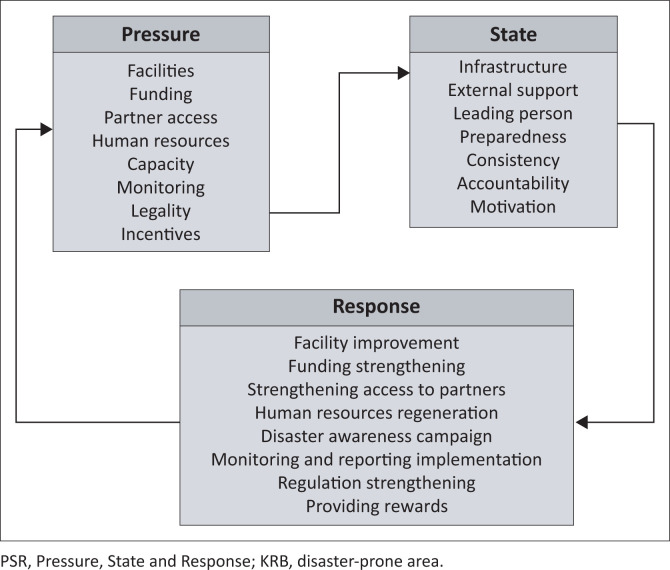
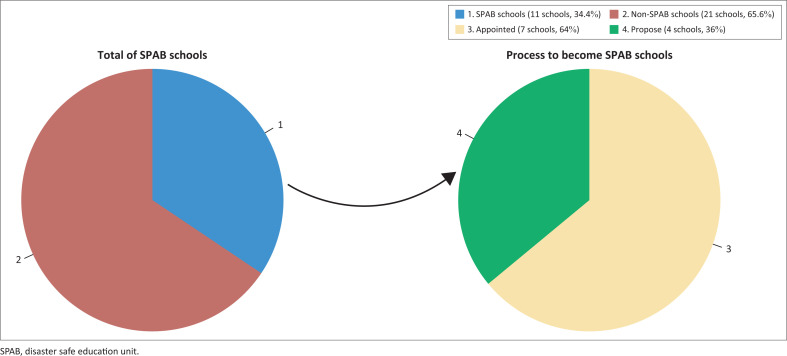
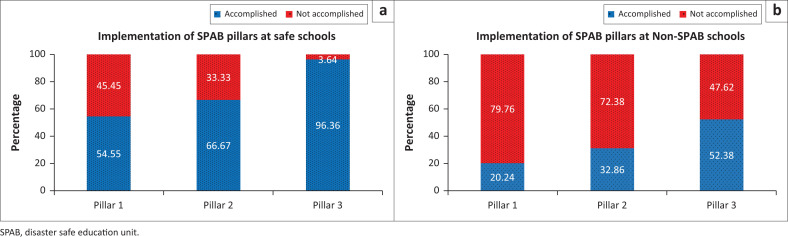
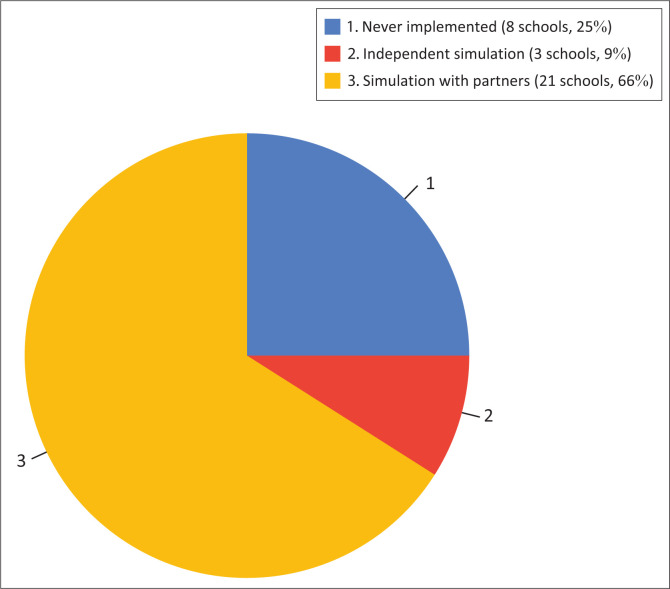
Disaster Safe Education Unit (SPAB), also known globally as Comprehensive Safe School (CSS), aims to improve school residents' resilience. Three pillars of SPAB have been established, but their implementation, to date, has not shown satisfactory results. This study aims to evaluate the implementation of the SPAB programme in the disaster-prone area (KRB) of Merapi Vulcano in Sleman, Yogyakarta, Indonesia. Data collection was conducted using a field survey combined with in-depth interviews. Overall, the study focussed on the 32 schools in the KRB Merapi. The SPAB implementation was evaluated by considering the Pressure-State-Response (PSR) indicator. The study results showed that not all schools in KRB Merapi implemented the SPAB programme. Safe schools have not fully implemented the three pillars of SPAB. Pillar 3 had the highest rate (96.40%) of implementation in safe schools, whereas Pillar 1 had the lowest (54.5%). Legality, funding and human resources are the critical plausible explanations for why the SPAB pillars have not been implemented well. These problems affect school infrastructure, the capacity of educators, consistency and school motivation in implementing SPAB programme.
The response to overcome these issues is strengthening regulations related to SPAB implementation. Strong regulations will provide space for funding components to increase the capacity of school residents, improve infrastructure, as well as increase school motivation. Stakeholders can utilise these findings to formulate more robust regulatory formulations for implementing SPAB in other KRB zones with similar typologies.
灾害安全教育部(SPAB),在全球也被称为综合安全学校(CSS),旨在提高学校居民的复原力。SPAB的三大支柱已经确立,但迄今为止,其实施效果并不理想。本研究旨在评估SPAB项目在印度尼西亚日惹市斯莱曼默拉皮火山灾害易发地区(KRB)的实施情况。数据收集采用实地调查与深入访谈相结合的方式。总体而言,该研究聚焦于KRB默拉皮地区的32所学校。通过考虑压力-状态-响应(PSR)指标对SPAB的实施情况进行评估。研究结果表明,KRB默拉皮地区并非所有学校都实施了SPAB项目。安全学校尚未完全落实SPAB的三大支柱。支柱3在安全学校中的实施率最高(96.40%),而支柱1的实施率最低(54.5%)。合法性、资金和人力资源是SPAB支柱未得到有效实施的关键合理解释。这些问题影响学校基础设施、教育工作者能力、实施SPAB项目的连贯性和学校积极性。
克服这些问题的对策是加强与SPAB实施相关的规定。强有力的规定将为资金投入提供空间,以增强学校居民的能力、改善基础设施,并提高学校积极性。利益相关者可利用这些研究结果,为在其他具有类似类型的KRB地区实施SPAB制定更有力的监管方案。