Liebisch Marita, Wolf Gunter
Department of Internal Medicine III, University Hospital Jena, Jena, Germany.
Glomerular Dis. 2024 Nov 13;4(1):211-226. doi: 10.1159/000541923. eCollection 2024 Jan-Dec.
Diabetic kidney disease (DKD) is a global health issue. Epigenetic changes play an important role in the pathogenesis of this disease.
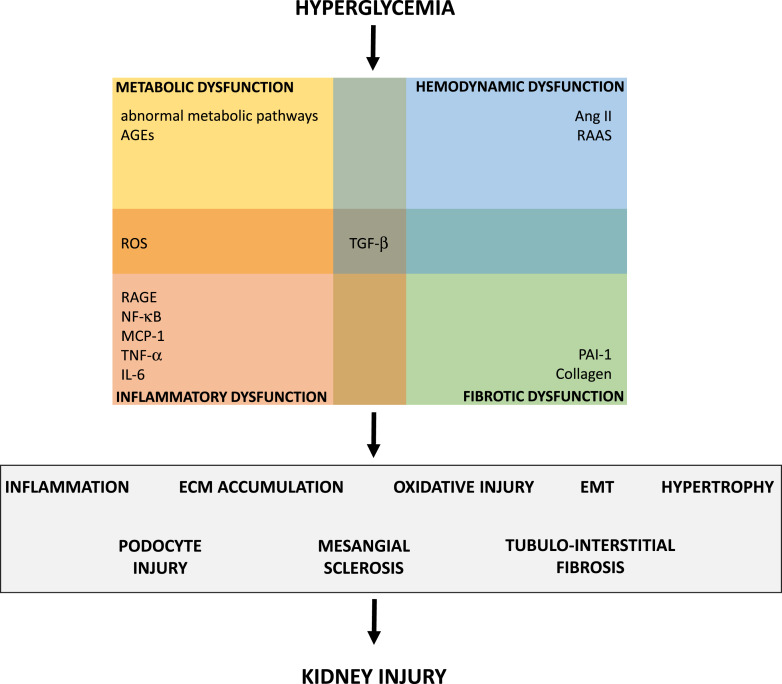
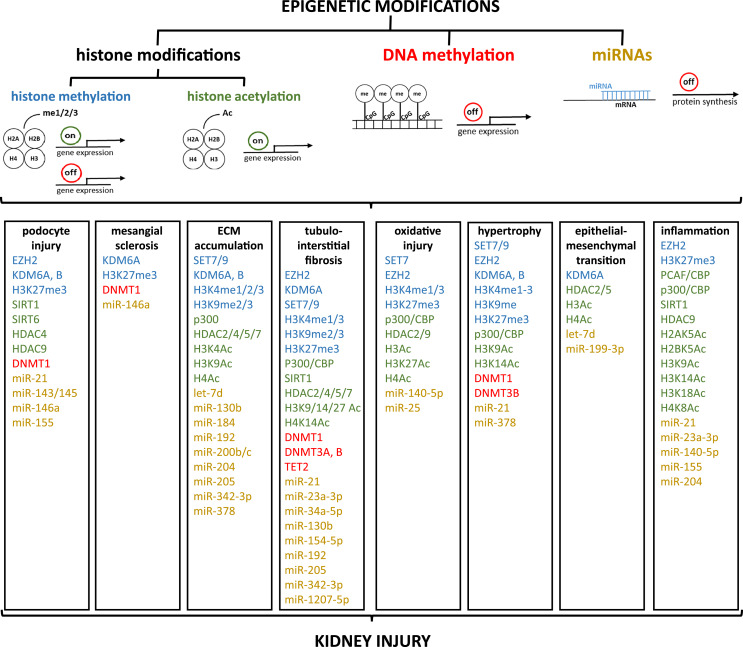
DKD is currently the leading cause of kidney failure worldwide. Although much is known about the pathophysiology of DKD, the research field of epigenetics is relatively new. Several recent studies have demonstrated that diabetes-induced dysregulation of epigenetic mechanisms alters the expression of pathological genes in kidney cells. If these changes persist for a long time, the so-called "metabolic memory" could be established. In this review, we highlight diabetes-induced epigenetic modifications associated with DKD. While there is a substantial amount of literature on epigenetic changes, only a few studies describe the underlying molecular mechanisms. Detailed analyses have shown that epigenetic changes play an important role in known pathological features of DKD, such as podocyte injury, fibrosis, accumulation of extracellular matrix, or oxidative injury, all of which contribute to the pathophysiology of disease. The transforming growth factor-β plays a key role as it is involved in all-mentioned epigenetic types of regulation.
Epigenetic is crucial for the development and progression of DKD, but the detailed molecular mechanisms have to be further analyzed more in detail.
糖尿病肾病(DKD)是一个全球性的健康问题。表观遗传变化在该疾病的发病机制中起重要作用。
DKD目前是全球肾衰竭的主要原因。尽管对DKD的病理生理学已有很多了解,但表观遗传学研究领域相对较新。最近的几项研究表明,糖尿病引起的表观遗传机制失调会改变肾细胞中病理基因的表达。如果这些变化长期持续,可能会建立所谓的“代谢记忆”。在本综述中,我们重点介绍与DKD相关的糖尿病诱导的表观遗传修饰。虽然有大量关于表观遗传变化的文献,但只有少数研究描述了潜在的分子机制。详细分析表明,表观遗传变化在DKD的已知病理特征中起重要作用,如足细胞损伤、纤维化、细胞外基质积累或氧化损伤,所有这些都有助于疾病的病理生理学。转化生长因子-β起着关键作用,因为它参与了上述所有表观遗传调控类型。
表观遗传学对DKD的发生和发展至关重要,但详细的分子机制有待进一步深入分析。