Loeffler Ivonne, Ziller Nadja
Department of Internal Medicine III, Jena University Hospital, Friedrich Schiller University, 07747 Jena, Germany.
J Clin Med. 2023 Apr 12;12(8):2834. doi: 10.3390/jcm12082834.
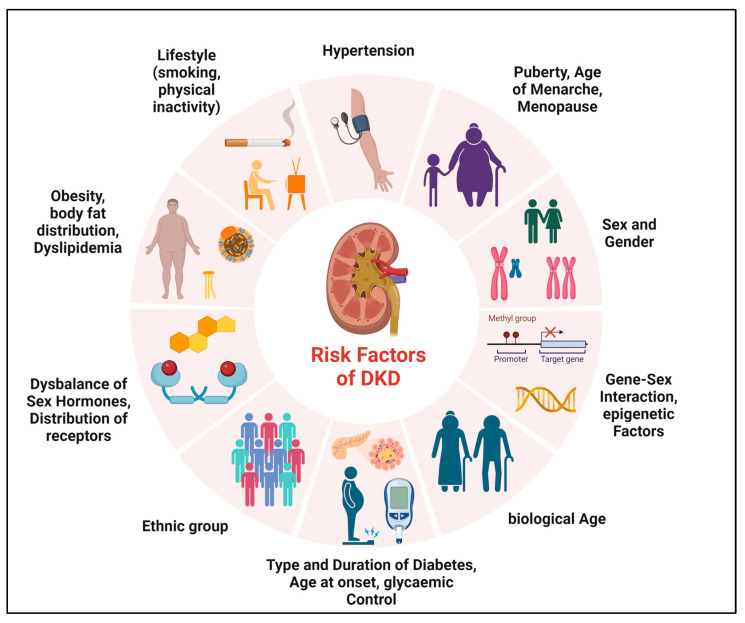
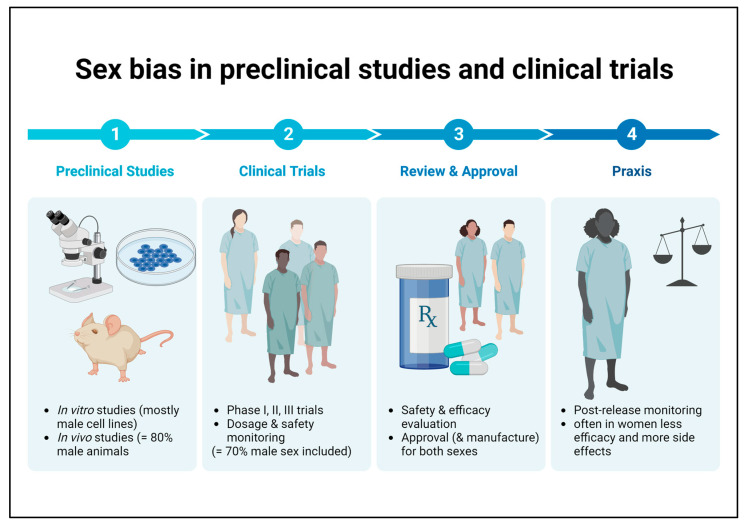
Differences between the sexes exist in many diseases, and in most cases, being a specific sex is considered a risk factor in the development and/or progression. This is not quite so clear in diabetic kidney disease (DKD), the development and severity of which depends on many general factors, such as the duration of diabetes mellitus, glycemic control, and biological risk factors. Similarly, sex-specific factors, such as puberty or andro-/menopause, also determine the microvascular complications in both the male and female sex. In particular, the fact that diabetes mellitus itself influences sex hormone levels, which in turn seem to be involved in renal pathophysiology, highlights the complexity of the question of sex differences in DKD. The major objective of this review is to summarize and simplify the current knowledge on biological sex-related aspects in the development/progression but also treatment strategies of human DKD. It also highlights findings from basic preclinical research that may provide explanations for these differences.
许多疾病存在性别差异,在大多数情况下,特定性别被视为疾病发生和/或进展的一个风险因素。在糖尿病肾病(DKD)中,情况并非如此清晰,其发生和严重程度取决于许多一般因素,如糖尿病病程、血糖控制以及生物学风险因素。同样,特定性别的因素,如青春期或雄激素/更年期,也决定了男性和女性的微血管并发症。特别是,糖尿病本身会影响性激素水平,而性激素水平似乎又参与肾脏病理生理学,这凸显了DKD中性别差异问题的复杂性。本综述的主要目的是总结并简化目前关于人类DKD发生/进展过程中与生物学性别相关方面的知识以及治疗策略。它还强调了基础临床前研究的发现,这些发现可能为这些差异提供解释。