Xi Li, Cheng Ruoqian, Zhang Miaoying, Pei Zhou, Ye Jiangfeng, Zhao Zhuhui
Department of Endocrinology and Inherited Metabolic Diseases, Children's Hospital of Fudan University, National Children's Medical Center, Shanghai, China.
Institute of Molecular and Cell Biology, Agency for Science, Technology and Research, Singapore, Singapore.
Transl Pediatr. 2024 Nov 30;13(11):1959-1971. doi: 10.21037/tp-24-265. Epub 2024 Nov 26.
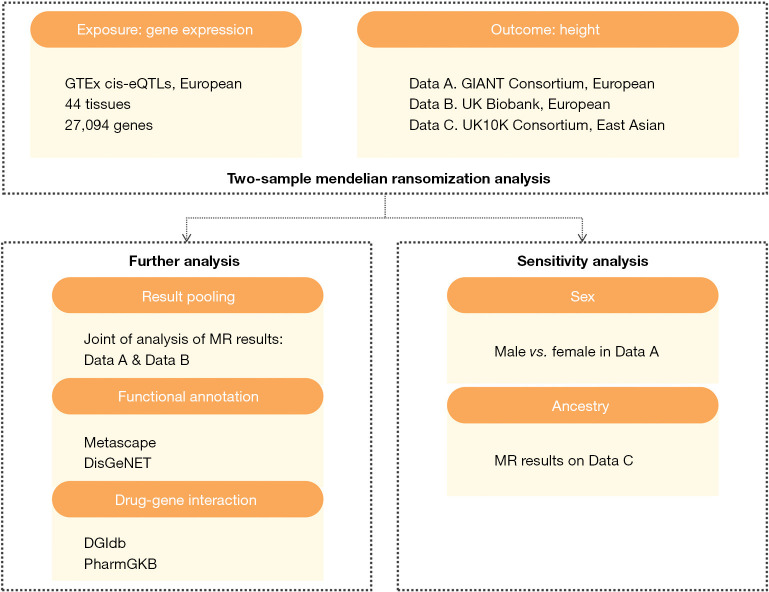
Mendelian randomization (MR) has been used to identify drug targets in many conditions. Height is a classic complex trait affected by genetic and early-life environmental factors. No systematic screening has been conducted to identify drugs that interact with height. We investigated the causal relationship between genes and height, and systematically screened for interactive drugs that may promote or delay growth.
We performed MR using summary statistics from the Genetic Investigation of ANthropometric Traits consortium (N=253,288), the UK Biobank (N=461,950), and the BioBank Japan Project (N=159,095). Gene expression-single-nucleotide polymorphism associations represented by cis-expression quantitative trait loci data were obtained from the Genotype-Tissue Expression study and were used as genetic instruments. We performed annotation and enrichment analyses of the genes. Interactive drugs were identified through drug-gene interactions.
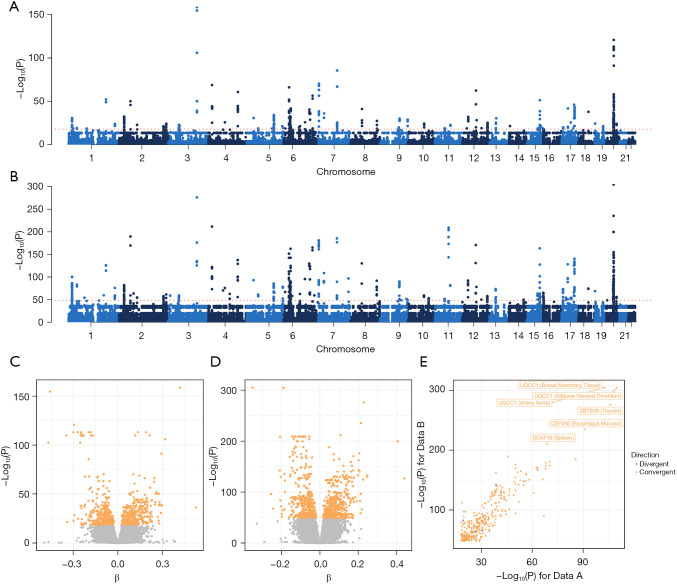
Of the 27,094 genes screened, 209 had causal associations with height, including genes associated with height and short stature phenotypes (, , , , and ), genes associated with height in a few studies (, , , , and ), and genes without previous evidence ( and ). Enrichment analysis showed that transcriptional regulation by was the most enriched pathway. Interactive drugs were identified, including amoxicillin, atenolol, infliximab, colchicine, propionyl-L-carnitine, BMN-111, and tamoxifen, which were known to have a positive effect on height. We also identified drugs that had a negative effect on height, including antineoplastic drugs, corticosteroids, and antiepileptic drugs. Moreover, many interactive drugs have not been previously reported to be associated with height.
Our results suggest that many genes have causal effects on height. By interrogating drug-gene interactions, interactive drugs have been identified as having both positive and negative effects on growth, which would help make clinical decisions.
孟德尔随机化(MR)已被用于在多种情况下识别药物靶点。身高是一种受遗传和早期生活环境因素影响的经典复杂性状。尚未进行系统筛查以识别与身高相互作用的药物。我们研究了基因与身高之间的因果关系,并系统地筛选了可能促进或延缓生长的相互作用药物。
我们使用来自人体测量性状遗传调查联盟(N = 253,288)、英国生物银行(N = 461,950)和日本生物银行项目(N = 159,095)的汇总统计数据进行孟德尔随机化。由顺式表达定量性状位点数据表示的基因表达-单核苷酸多态性关联来自基因型-组织表达研究,并用作遗传工具。我们对基因进行了注释和富集分析。通过药物-基因相互作用识别相互作用药物。
在筛选的27,094个基因中,209个与身高存在因果关联,包括与身高和身材矮小表型相关的基因(、、、、和)、在一些研究中与身高相关的基因(、、、、和)以及以前没有证据的基因(和)。富集分析表明,由进行的转录调控是最富集的途径。识别出了相互作用药物,包括阿莫西林、阿替洛尔、英夫利昔单抗、秋水仙碱、丙酰-L-肉碱、BMN-111和他莫昔芬,已知这些药物对身高有积极影响。我们还识别出了对身高有负面影响的药物,包括抗肿瘤药物、皮质类固醇和抗癫痫药物。此外,许多相互作用药物以前未被报道与身高有关。
我们的结果表明,许多基因对身高有因果影响。通过研究药物-基因相互作用,已识别出对生长有正负影响的相互作用药物,这将有助于做出临床决策。