Pandey Sakshi, Rahut Dil Bahadur, Araki Tetsuya
Graduate School of Agricultural and Life Sciences, The University of Tokyo, Tokyo, Japan.
Asian Development Bank Institute, Tokyo, Japan.
PLoS One. 2024 Dec 10;19(12):e0311092. doi: 10.1371/journal.pone.0311092. eCollection 2024.
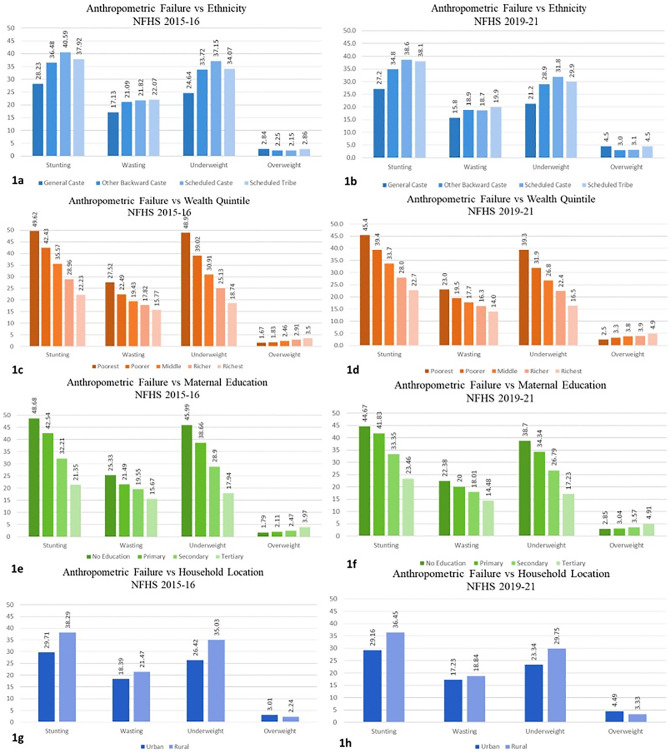
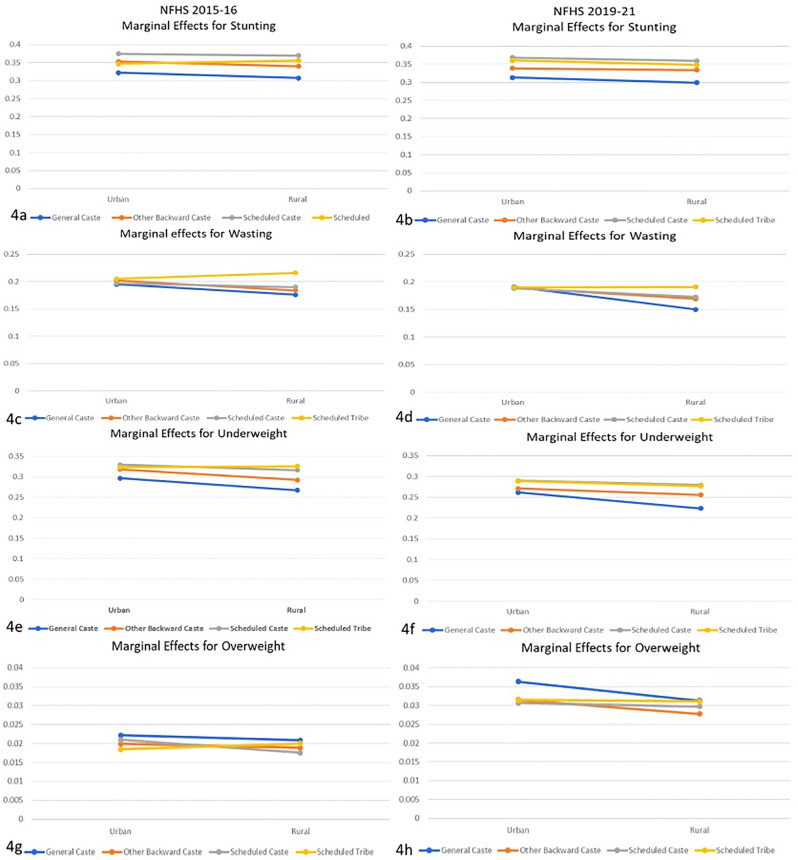
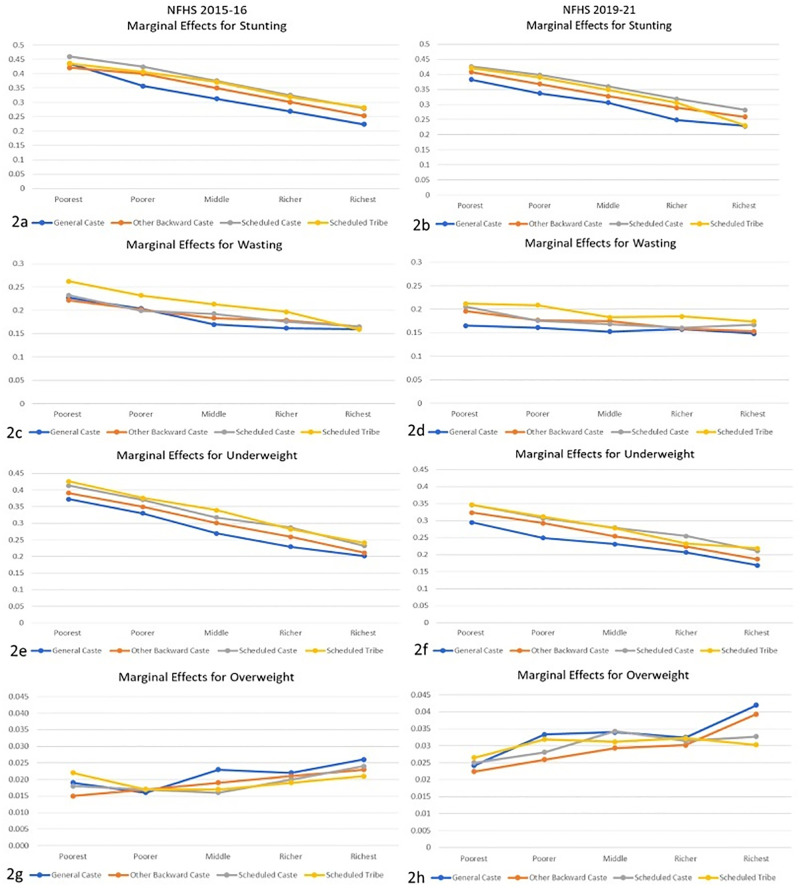
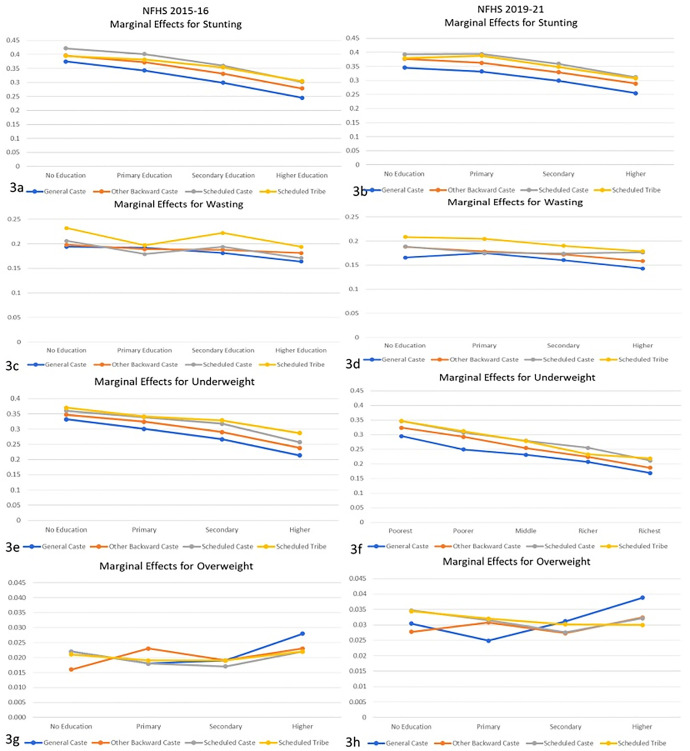
Socioeconomic inequalities are known to negatively impact anthropometric outcomes among children, particularly in developing countries. This study, therefore, assesses the gap in anthropometric outcomes of children 6-59 months along the ethnicity-based social groups in India using the National Family Heath Survey 2015-16 and 2019-21. The paper utilizes logistic regression models, the exogenous switching treatment effect regression (ESTER) model, and the Blinder-Oaxaca Model to disentangle the role of ethnicity (referred to as caste in India) in influencing child anthropometric outcomes while accounting for socio/economic factors. Approximately 35% of children in the sample were stunted and 20% wasted. Result indicates that despite the progress made in reducing child undernutrition between the two survey periods, there is a higher risk of chronic growth faltering (stunting) and underweight in socially disadvantageous groups, and these ethnicity-based disparities exist independent of education and household economic status. To improve children's nutritional status, India needs to develop new nutrition strategies prioritizing double-duty action due to the persistence of undernutrition and rising overweight/obesity among children. The study suggests a need for a distinguished understanding of the underlying causes of chronic and acute forms of malnourishment, and separate interventions are required to reduce the disparities among disadvantaged groups, particularly in tribal communities.
众所周知,社会经济不平等会对儿童的人体测量结果产生负面影响,尤其是在发展中国家。因此,本研究利用2015 - 16年和2019 - 21年的全国家庭健康调查,评估了印度6至59个月儿童在基于种族的社会群体中人体测量结果的差距。本文使用逻辑回归模型、外生转换处理效应回归(ESTER)模型和布林德-奥克萨卡模型,在考虑社会/经济因素的同时,剖析种族(在印度称为种姓)在影响儿童人体测量结果方面的作用。样本中约35%的儿童发育迟缓,20%的儿童消瘦。结果表明,尽管在两个调查期之间减少儿童营养不良方面取得了进展,但社会弱势群体中慢性生长发育迟缓(发育迟缓)和体重不足的风险更高,而且这些基于种族的差异独立于教育和家庭经济状况而存在。为了改善儿童的营养状况,由于儿童营养不良持续存在且超重/肥胖问题不断增加,印度需要制定新的营养战略,优先采取双重行动。该研究表明,需要对慢性和急性营养不良的根本原因有不同的认识,并且需要采取不同的干预措施来减少弱势群体,特别是部落社区之间的差距。