Nakagami Atsuki, Mao Qiyue, Horitani Masaki, Kodera Masahito, Kitagishi Hiroaki
Department of Molecular Chemistry and Biochemistry, Faculty of Science and Engineering, Doshisha University, 1-3 Tatara Miyakodani, Kyotanabe-city, Kyoto, 610-0321, Japan.
Department of Applied Biochemistry and Food Science, Faculty of Agriculture, Saga University, 1 Honjo-machi, Saga, 840-8502, Japan.
Sci Rep. 2024 Dec 10;14(1):29371. doi: 10.1038/s41598-024-80511-1.
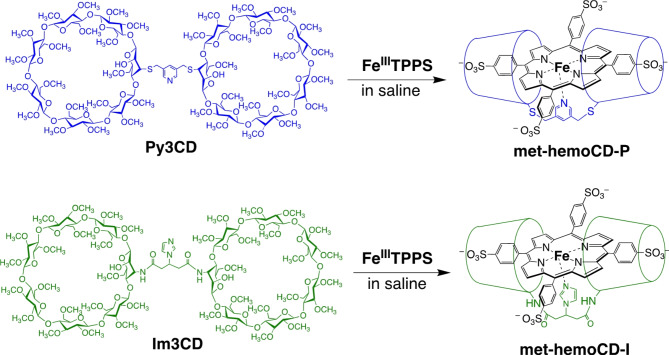
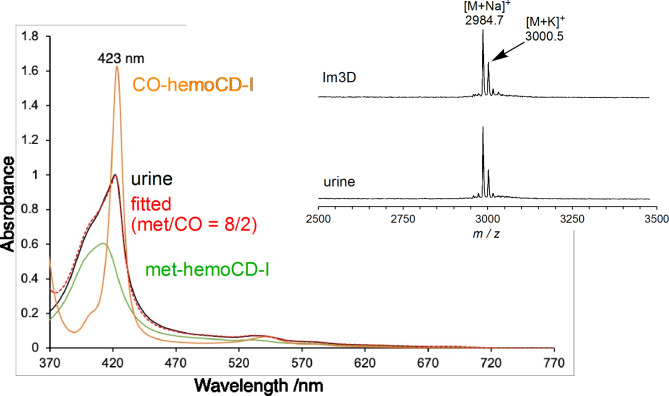
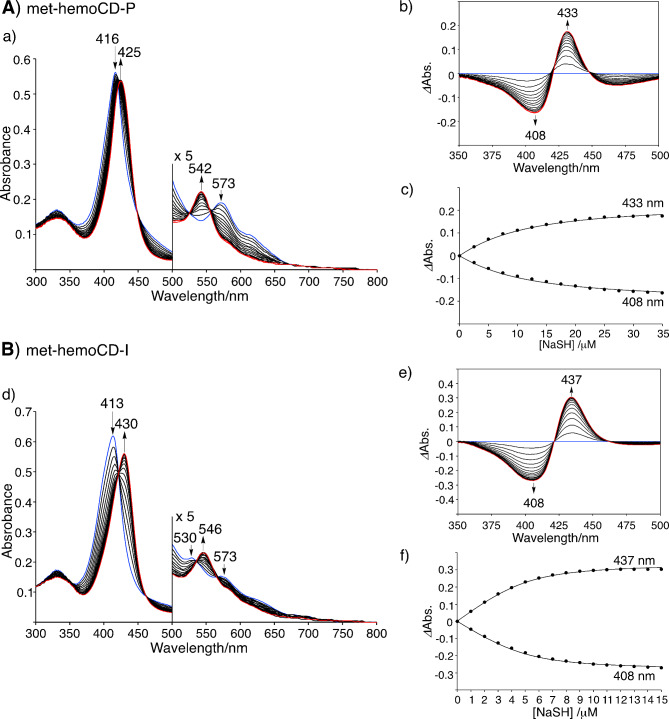
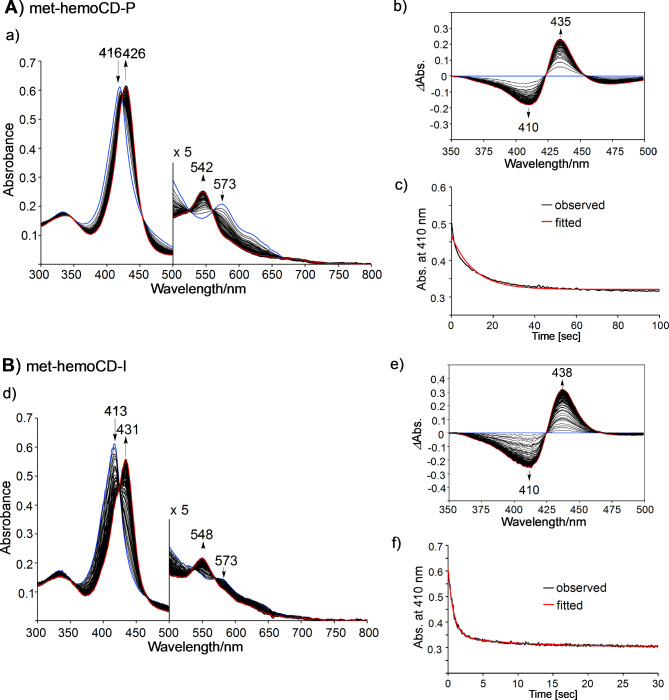
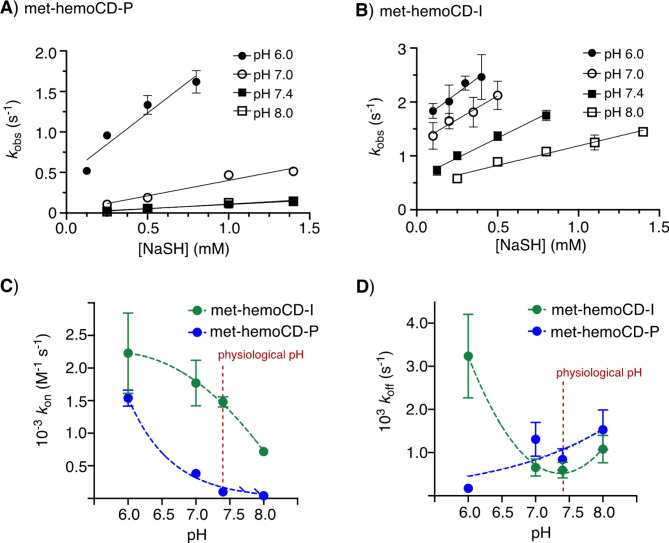
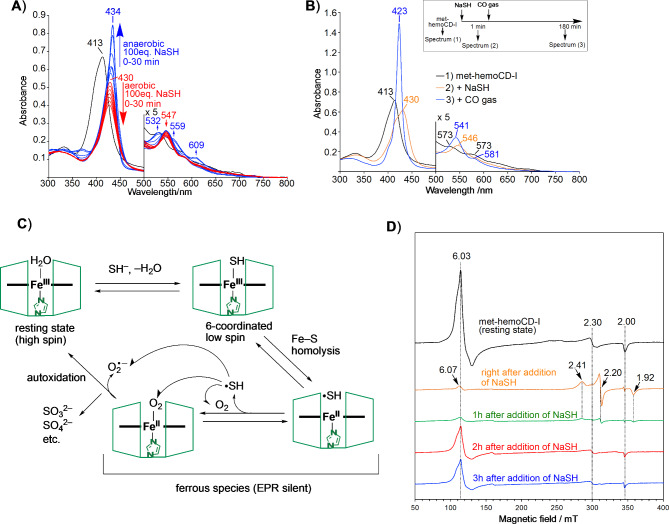
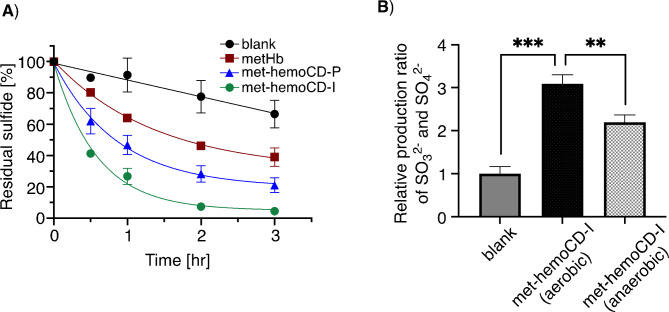
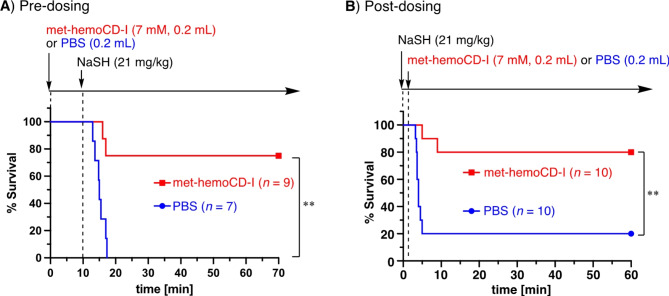
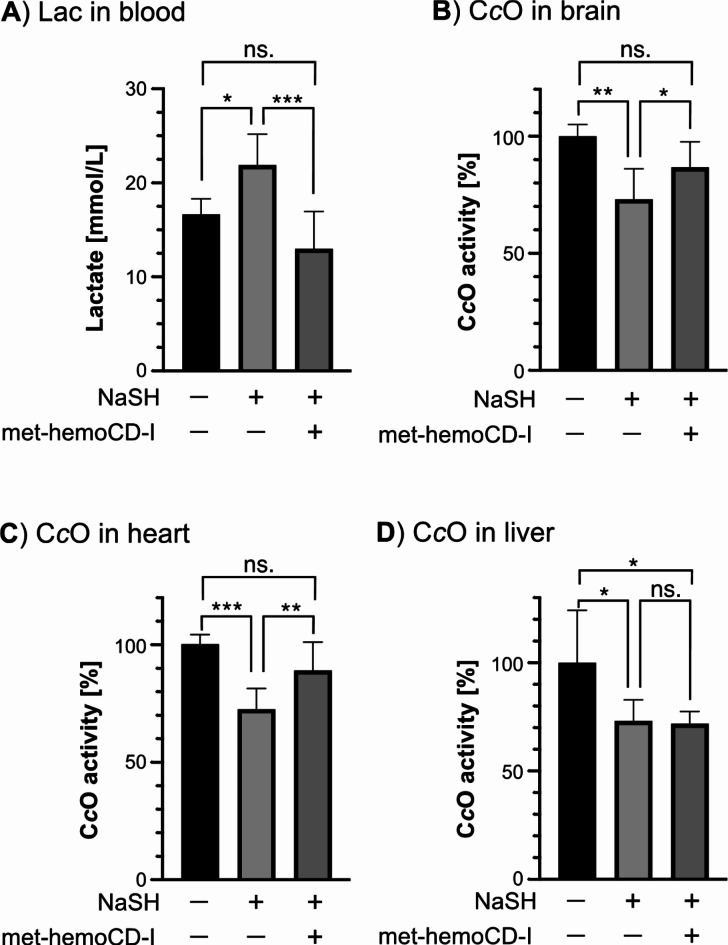
Hydrogen sulfide is a lethal toxic gas that disrupts cellular respiration in the mitochondrial system. Currently, no antidote is available for the clinical treatment of hydrogen sulfide poisoning. In this study, we investigated the function of iron(III)porphyrin complexes as hydrogen sulfide scavengers in water and evaluated their potential use as therapeutic agents for hydrogen sulfide poisoning. The compounds, named met-hemoCD-P and met-hemoCD-I, are composed of iron(III)porphyrin complexed with per-methylated β-cyclodextrin dimers that contain a pyridine (met-hemoCD-P) or imidazole axial fifth ligand that is coordinated to Fe(III) (met-hemoCD-I). These compounds formed stable HS-Fe(III) complexes under physiological conditions, with binding constants of 1.2 × 10 and 2.5 × 10 M for met-hemoCD-P and met-hemoCD-I, respectively. The binding constant of met-hemoCD-I was 10-times higher than that reported for native human met-hemoglobin at pH 7.4 and 25C. Electron paramagnetic resonance (EPR) spectroscopy and HS quantification assays revealed that after SH was coordinated to met-hemoCD-I, it was efficiently converted to nontoxic sulfite and sulfate ions via homolytic cleavage of the HS-Fe(III) bond followed by aerobic oxidation. Mouse animal experiments revealed that the survival rate was significantly improved when NaSH-treated mice were injected with met-hemoCD-I. After the injection, mitochondrial CcO function in brain and heart tissues recovered, and met-hemoCD-I injected was excreted in the urine without chemical decomposition.
硫化氢是一种致命的有毒气体,会破坏线粒体系统中的细胞呼吸。目前,临床上尚无硫化氢中毒的解毒剂。在本研究中,我们研究了铁(III)卟啉配合物在水中作为硫化氢清除剂的功能,并评估了它们作为硫化氢中毒治疗剂的潜在用途。这些化合物,命名为高铁血红素环糊精-P和高铁血红素环糊精-I,由与全甲基化β-环糊精二聚体络合的铁(III)卟啉组成,该二聚体含有与Fe(III)配位的吡啶(高铁血红素环糊精-P)或咪唑轴向第五配体(高铁血红素环糊精-I)。这些化合物在生理条件下形成稳定的HS-Fe(III)配合物,高铁血红素环糊精-P和高铁血红素环糊精-I的结合常数分别为1.2×10和2.5×10 M。高铁血红素环糊精-I的结合常数比pH 7.4和25℃下天然人高铁血红蛋白的报道值高10倍。电子顺磁共振(EPR)光谱和HS定量分析表明,SH与高铁血红素环糊精-I配位后,通过HS-Fe(III)键的均裂裂解,然后进行有氧氧化,有效地转化为无毒的亚硫酸根离子和硫酸根离子。小鼠动物实验表明,用NaSH处理的小鼠注射高铁血红素环糊精-I后,存活率显著提高。注射后,脑和心脏组织中的线粒体细胞色素c氧化酶(CcO)功能恢复,注射的高铁血红素环糊精-I在尿液中排出,无化学分解。