Jones Nick A R, Gaffney Kirstin, Gardella Giacomo, Rowe Annie, Spence-Jones Helen C, Munson Amelia, Houslay Tom M, Webster Mike M
Department of Animal Physiology, University of Bayreuth, Universitätsstraße 30, 95447, Bayreuth, Germany.
Centre for Social Learning and Cognitive Evolution, School of Biology, University of St Andrews, St Andrews, Fife, KY16 9TH, United Kingdom.
Behav Ecol. 2024 Nov 25;36(1):arae097. doi: 10.1093/beheco/arae097. eCollection 2025 Jan-Feb.
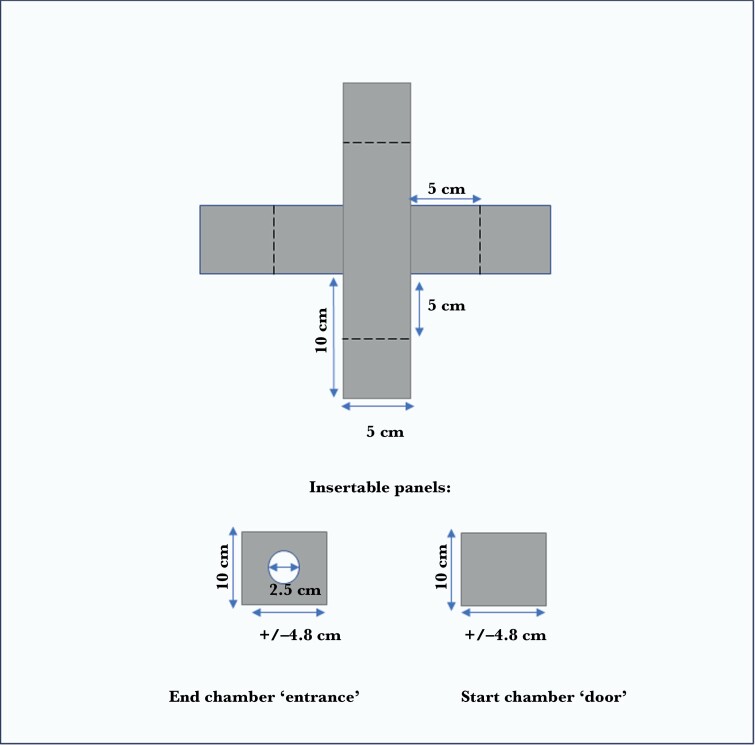
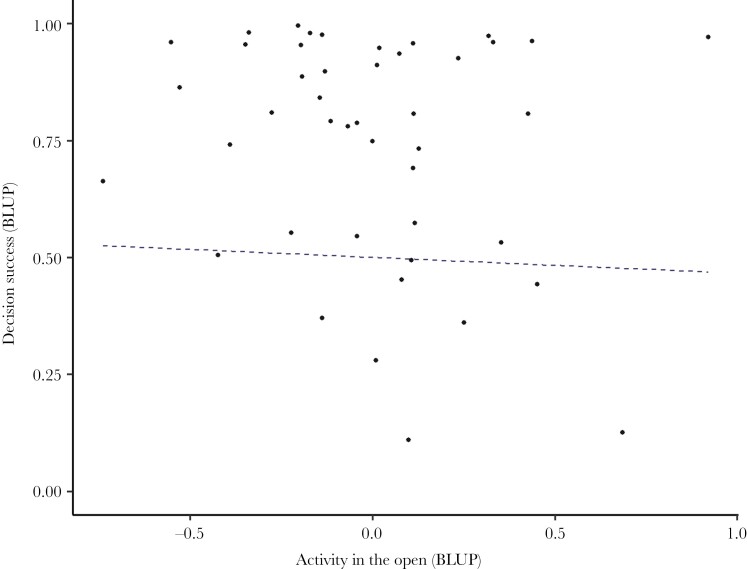
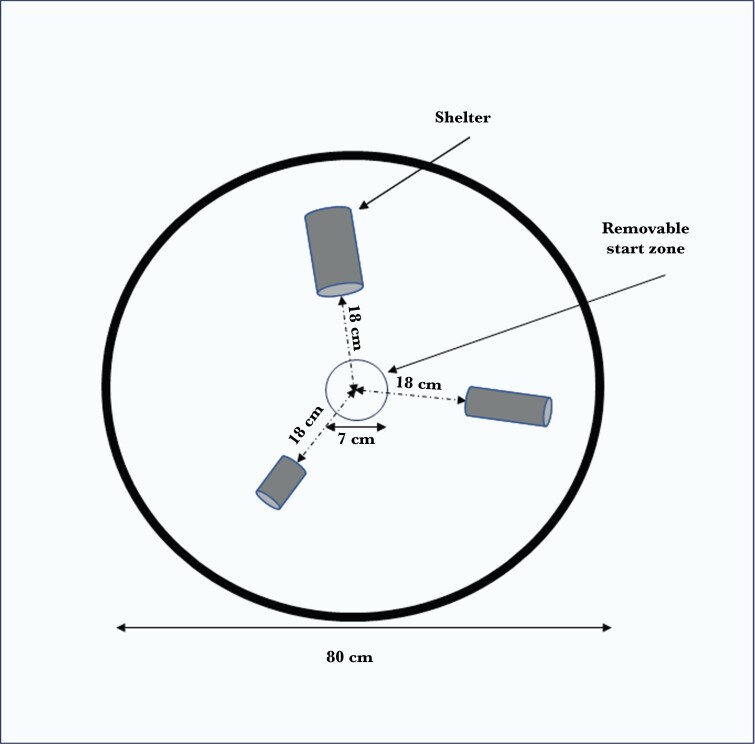
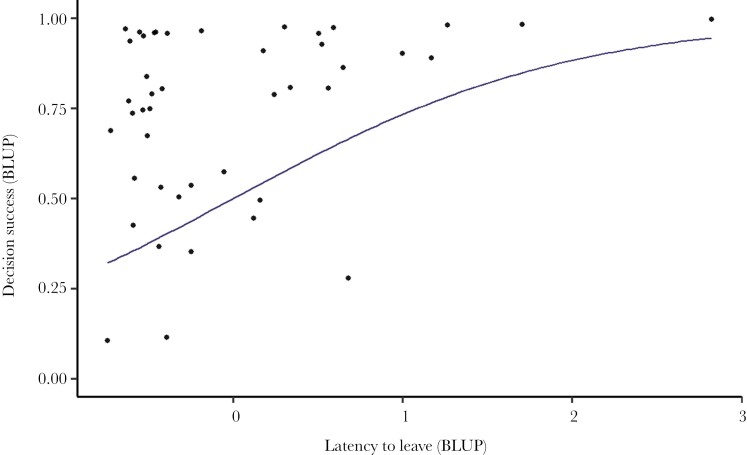
The "cognitive styles" hypothesis suggests that individual differences in behavior are associated with variation in cognitive performance via underlying speed-accuracy trade-offs. While this is supported, in part, by a growing body of evidence, some studies did not find the expected relationships between behavioral type and cognitive performance. In some cases, this may reflect methodological limitations rather than the absence of a true relationship. The physical design of the testing arena and the number of choices offered in an assay can hinder our ability to detect inter-individual differences in cognitive performance. Here, we re-investigated the cognitive styles hypothesis in threespine stickleback (), adapting the maze design of a previous study which found no cost to decision success by faster (bolder) individuals. We used a similar design but increased the size of the maze and incorporated an additional choice in the form of a third maze arm. We found, in accordance with cognitive style expectations, that individuals who were consistently slower to emerge from the start chamber made fewer errors than fish that emerged faster. Activity in an open field test, however, did not show evidence of a relationship with decision success, possibly due to the low number of repeated observations per fish in this separate assay. Our results provide further empirical support for the cognitive styles hypothesis and highlight important methodological aspects to consider in studies of inter-individual differences in cognition.
“认知风格”假说表明,行为上的个体差异通过潜在的速度 - 准确性权衡与认知表现的变化相关联。虽然这在一定程度上得到了越来越多证据的支持,但一些研究并未发现行为类型与认知表现之间的预期关系。在某些情况下,这可能反映的是方法上的局限性,而非真正不存在这种关系。测试场地的物理设计以及实验中提供的选择数量可能会妨碍我们检测认知表现个体差异的能力。在此,我们对三刺鱼重新研究了认知风格假说,采用了先前一项研究的迷宫设计,该研究发现行动更快(更大胆)的个体在决策成功方面没有代价。我们使用了类似的设计,但增大了迷宫的尺寸,并以第三条迷宫臂的形式增加了一个额外的选择。我们发现,与认知风格预期一致,从起始室出来始终较慢的个体比出来较快的鱼犯错更少。然而,旷场试验中的活动并未显示出与决策成功存在关联的证据,这可能是由于在这个单独的实验中每条鱼的重复观察次数较少。我们的结果为认知风格假说提供了进一步的实证支持,并突出了在研究认知个体差异时需要考虑的重要方法学方面。