Nakabo Shuichiro, Sandoval-Heglund Donavon, Hanata Norio, Brooks Stephen, Hoffmann Victoria, Zhang Mingzeng, Ambler William, Manna Zerai, Poncio Elaine, Hasni Sarfaraz, Islam Shamima, Dell'Orso Stefania, Kaplan Mariana J
Systemic Autoimmunity Branch, National Institute of Arthritis and Musculoskeletal and Skin Diseases (NIAMS), National Institutes of Health (NIH), Bethesda, MD, United States.
Biodata Mining and Discovery Section, NIAMS, NIH, Bethesda, MD, United States.
Front Immunol. 2024 Nov 27;15:1465185. doi: 10.3389/fimmu.2024.1465185. eCollection 2024.
An important pathogenic role for neutrophils in systemic lupus erythematosus (SLE) has been proposed. Neutrophils that lack brain and muscle aryl hydrocarbon receptor nuclear translocator-like 1 (), one of the clock genes, are defective in aging and proinflammatory responses. We assessed the role of in clinical and immunologic manifestations of murine lupus and in human SLE neutrophils.
Myeloid-conditional knockout mice ( ) and wild type (WT) were treated with epicutaneous TLR7/8 agonist (imiquimod; IMQ) for 6 weeks to induce a lupus phenotype. Upon euthanasia, immune responses, autoantibodies and renal manifestations were evaluated. NET formation and gene expression of bone marrow (BM)-derived murine neutrophils were evaluated. expression was quantified in SLE neutrophils and compared with clinical disease.
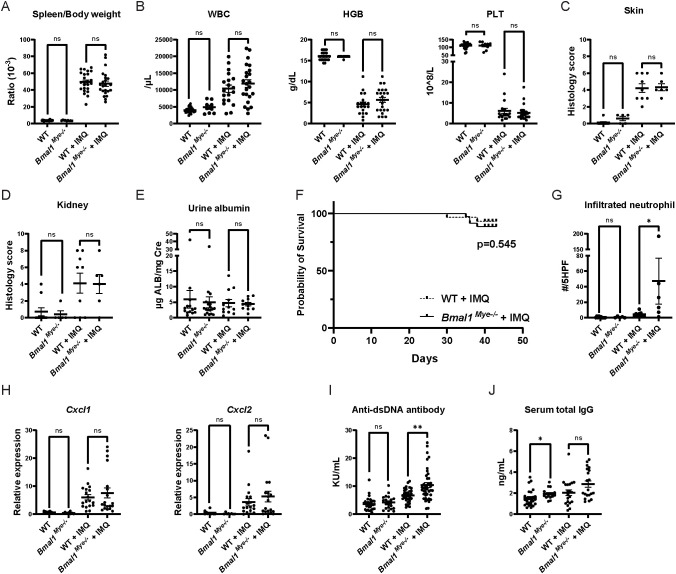
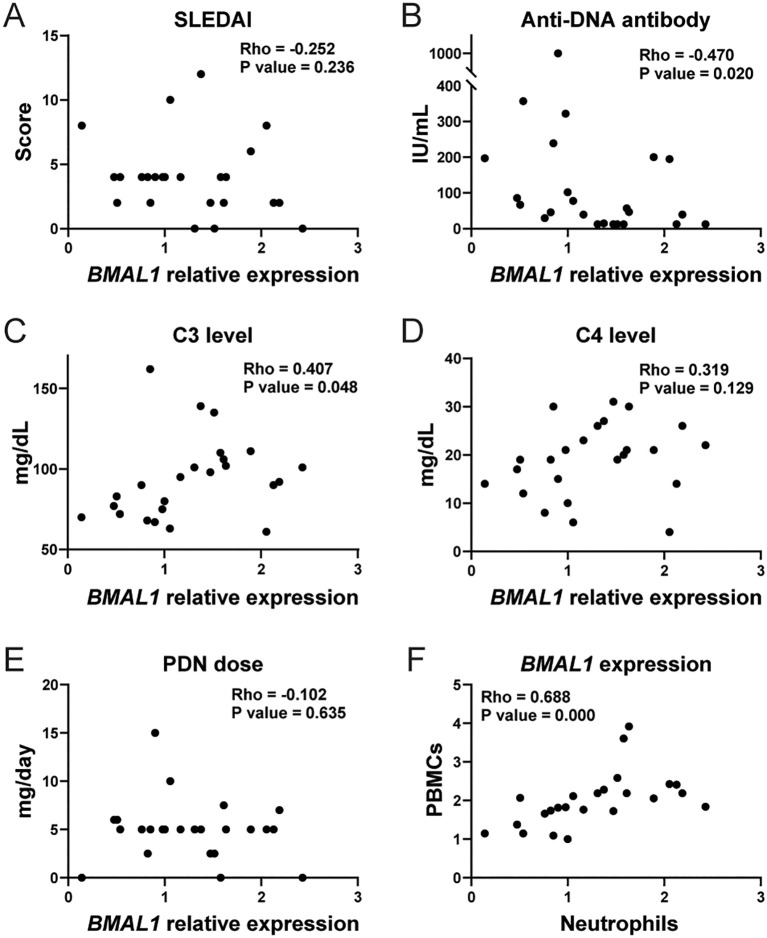
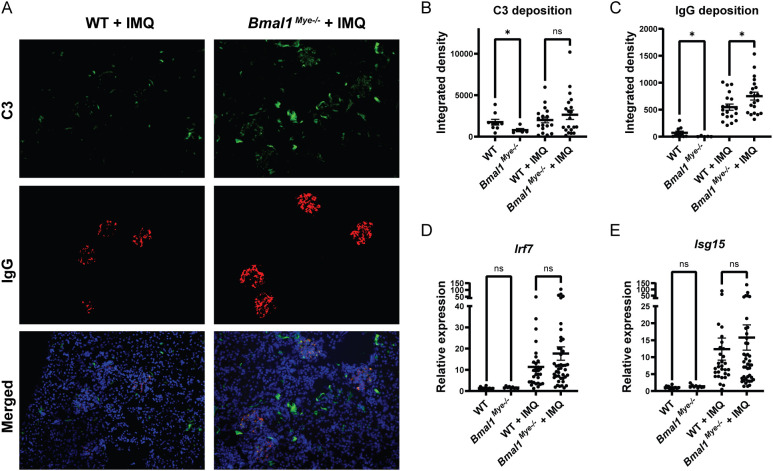
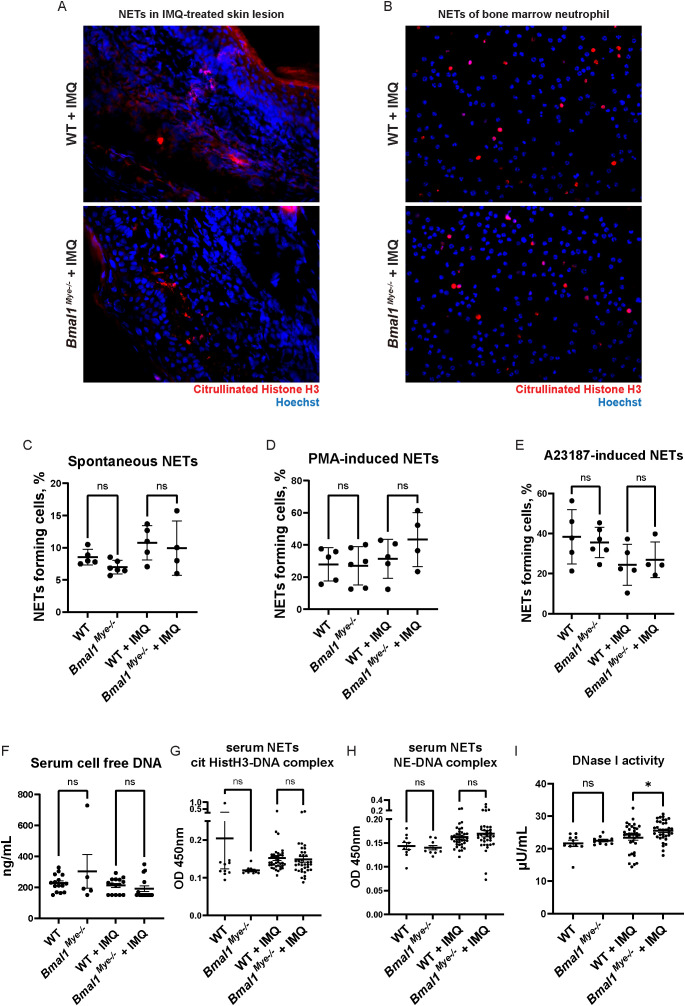
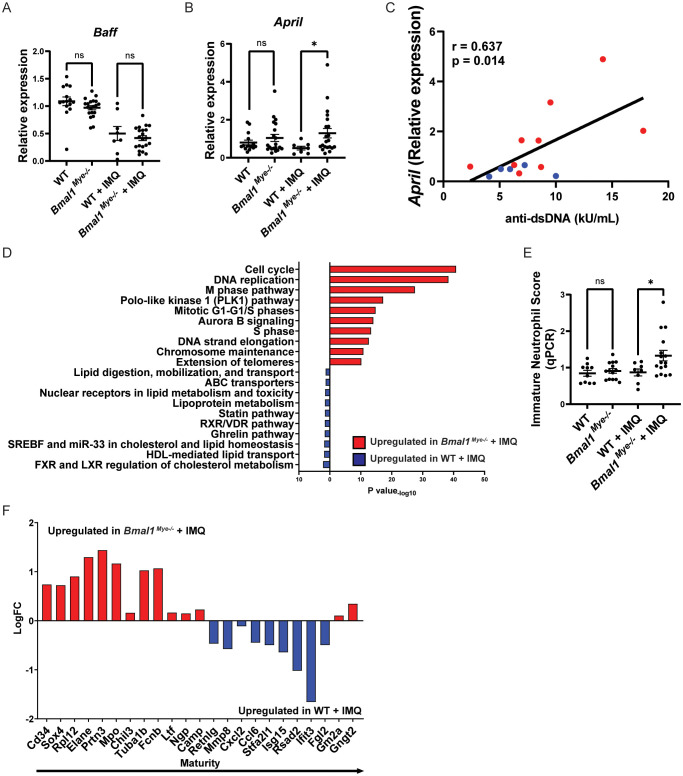
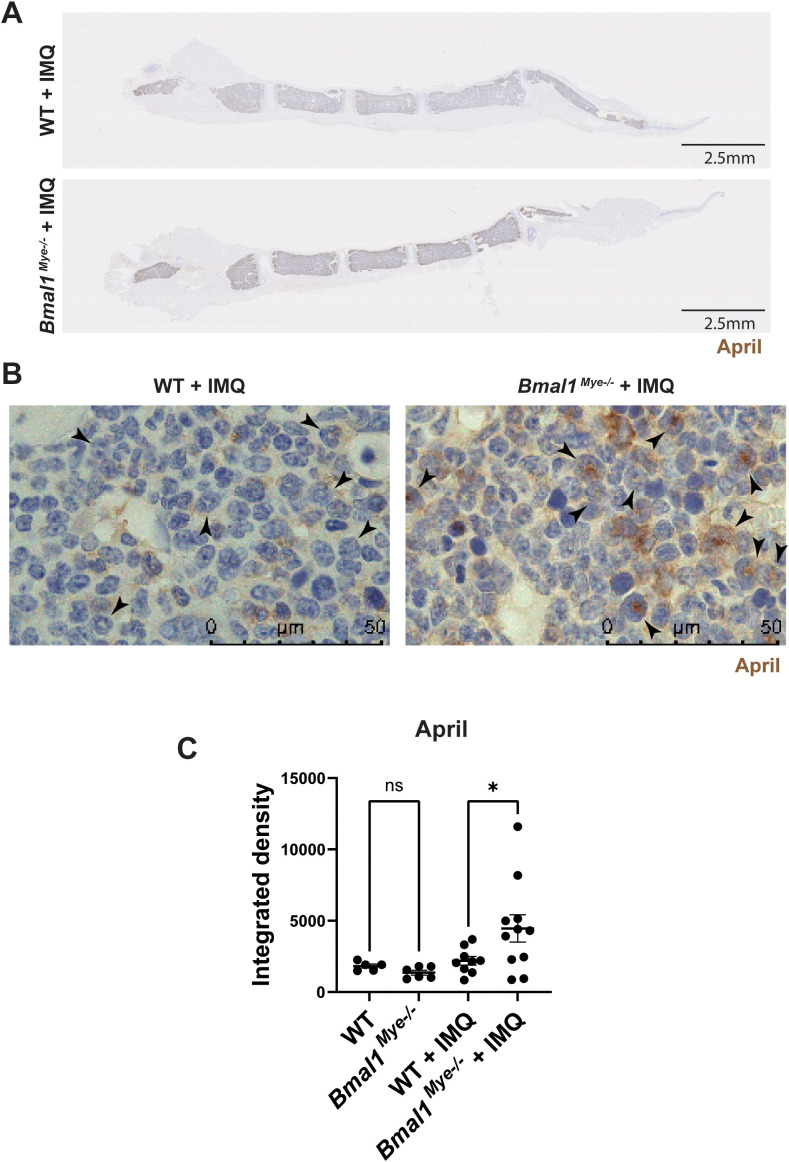
IMQ-treated and WT displayed comparable systemic inflammation. While renal function did not differ, serum anti-dsDNA levels and renal immune complex deposition were significantly increased in . While no differences were observed in NET formation, expression levels of in BM neutrophils were significantly higher in . Bulk RNA-sequence data showed that BM neutrophils in IMQ-treated were relatively immature when compared with IMQ-treated WT. BM showed an enhanced April protein expression in mice. levels in human SLE peripheral blood neutrophils correlated positively with serum C3 and negatively with serum anti-dsDNA levels.
is associated with lower disease activity in SLE. These results indicate that perturbation in the circadian rhythm of neutrophils can have pathogenic consequences in SLE.
已有研究提出中性粒细胞在系统性红斑狼疮(SLE)中具有重要的致病作用。缺乏生物钟基因之一的脑和肌肉芳烃受体核转运体样蛋白1( )的中性粒细胞在衰老和促炎反应方面存在缺陷。我们评估了 在小鼠狼疮的临床和免疫表现以及人类SLE中性粒细胞中的作用。
用表皮TLR7/8激动剂(咪喹莫特;IMQ)处理髓系条件性 基因敲除小鼠( )和野生型(WT)小鼠6周,以诱导狼疮表型。安乐死后,评估免疫反应、自身抗体和肾脏表现。评估骨髓(BM)来源的小鼠中性粒细胞的中性粒细胞胞外陷阱(NET)形成和基因表达。对SLE中性粒细胞中的 表达进行定量,并与临床疾病进行比较。
经IMQ处理的 和WT表现出相当的全身炎症。虽然肾功能没有差异,但 组的血清抗双链DNA水平和肾脏免疫复合物沉积显著增加。虽然在NET形成方面未观察到差异,但 组BM中性粒细胞中的 表达水平显著更高。批量RNA测序数据显示,与经IMQ处理的WT相比,经IMQ处理的 组中的BM中性粒细胞相对不成熟。BM显示 小鼠中A增殖诱导配体(APRIL)蛋白表达增强。人类SLE外周血中性粒细胞中的 水平与血清C3呈正相关,与血清抗双链DNA水平呈负相关。
与SLE中较低的疾病活动度相关。这些结果表明,中性粒细胞昼夜节律的紊乱在SLE中可能具有致病后果。