Tandon Aanchal, Srivastava Abhinav, Singh Priyanka, Jaiswal Rohit, Saha Sonali, Bordoloi Bharadwaj
Department of Oral Pathology, Sardar Patel Post Graduate Institute of Dental and Medical Sciences, Lucknow, Uttar Pradesh, India.
Department of Oral and Maxillofacial Surgery, Sardar Patel Post Graduate Institute of Dental and Medical Sciences, Lucknow, Uttar Pradesh, India.
Int J Clin Pediatr Dent. 2024 Sep;17(9):993-998. doi: 10.5005/jp-journals-10005-2917.
and play an important role in the etiopathogenesis and progression of dental caries (DC). Their quantification and identification may be helpful for epidemiological and early intervention measures.
We conducted the study to evaluate the colony counts of and with the location of DC and correlate their prevalence with the age of the patient.
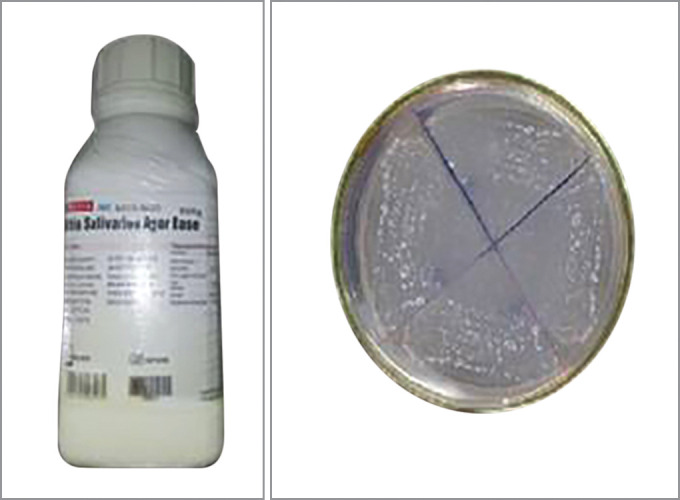
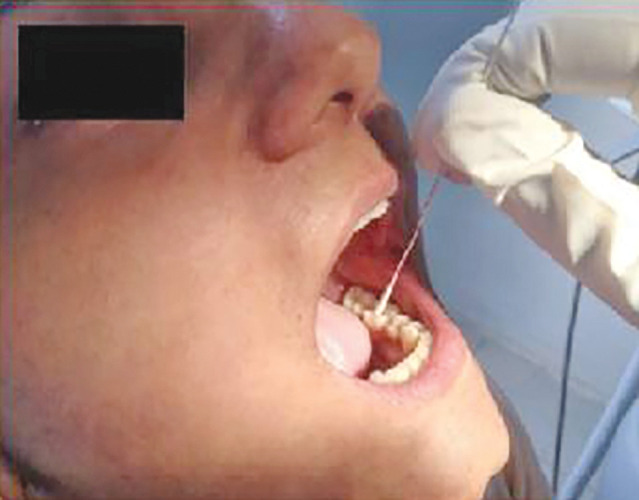
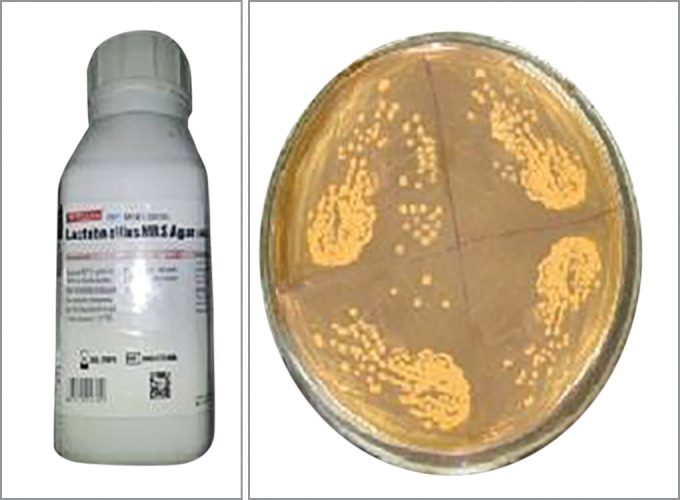
The study population comprised 60 patients with DC. They were divided into two groups according to age, and each group was further divided into three subgroups based on involvement of enamel, dentin, and pulp by DC. The swab samples were collected, and organisms were isolated using Mitis Salivarius Bacitracin (MSB) Agar and MRS Agar. Manual counting of colonies on plates illuminated by transmitted light was done. Results were summarized and analyzed statistically.
The caries prevalence was found to be higher in children, with females being more affected. In both groups, posterior teeth were more affected, and occlusal/incisal surface caries were more common. The mean colony count of (61.3%) and (63.4%) was significantly higher in group I compared to group II. In both groups, the mean colony counts of were higher in enamel, followed by dentin and pulp. In contrast, in both groups, the mean colony counts of were higher in pulp, followed by dentin and enamel.
Bacterial colony counts may help in taking specific measures against specific organisms and thereby prevent the development of new carious lesions.
Tandon A, Srivastava A, Singh P, Beyond Decay: Exploring the Age-associated Variations in and in Dental Caries. Int J Clin Pediatr Dent 2024;17(9):993-998.
[细菌名称1]和[细菌名称2]在龋齿(DC)的病因发病机制和进展中起重要作用。对它们进行定量和鉴定可能有助于采取流行病学和早期干预措施。
我们开展本研究以评估[细菌名称1]和[细菌名称2]的菌落计数与DC发生部位的关系,并将它们的患病率与患者年龄相关联。
研究人群包括60例DC患者。根据年龄将他们分为两组,每组再根据DC对釉质、牙本质和牙髓的累及情况进一步分为三个亚组。采集拭子样本,使用轻唾唾液杆菌杆菌肽(MSB)琼脂和[细菌名称2]的MRS琼脂分离微生物。通过透射光照射平板对菌落进行人工计数。对结果进行汇总并进行统计学分析。
发现儿童龋齿患病率更高,女性受影响更严重。在两组中,后牙受影响更严重,咬合面/切缘面龋齿更常见。与第二组相比,第一组中[细菌名称1](61.3%)和[细菌名称2](63.4%)的平均菌落计数显著更高。在两组中,[细菌名称1]在釉质中的平均菌落计数更高,其次是牙本质和牙髓。相反,在两组中,[细菌名称2]在牙髓中的平均菌落计数更高,其次是牙本质和釉质。
细菌菌落计数可能有助于针对特定微生物采取特定措施,从而预防新龋损的形成。
坦登A,斯里瓦斯塔瓦A,辛格P,[文章标题]。《国际临床儿科牙科学杂志》2024年;17(9):993 - 998。