Huang Zhihai, Xu Peisheng, Hess David C, Zhang Quanguang
Department of Neurology, Medical College of Georgia, Augusta University, 1120 15th Street, Augusta, GA, 30912, USA.
Department of Pharmacology, Toxicology and Neuroscience, Louisiana State University Health Sciences Center, 1501 Kings Highway, Shreveport, LA, 71103, USA.
Transl Neurodegener. 2024 Dec 12;13(1):61. doi: 10.1186/s40035-024-00457-2.
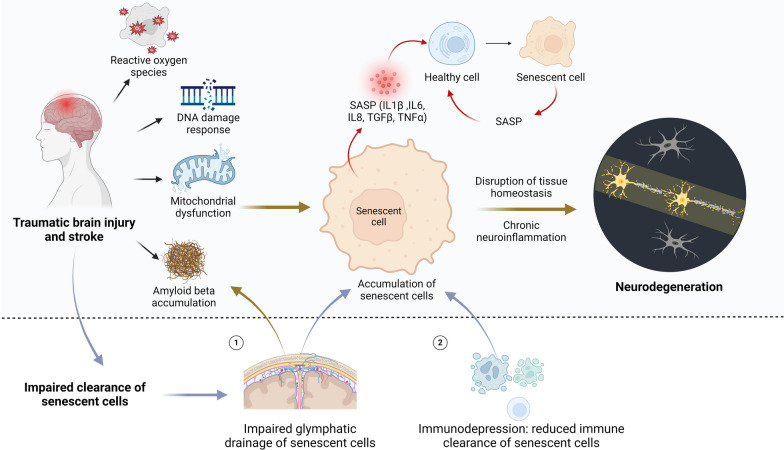
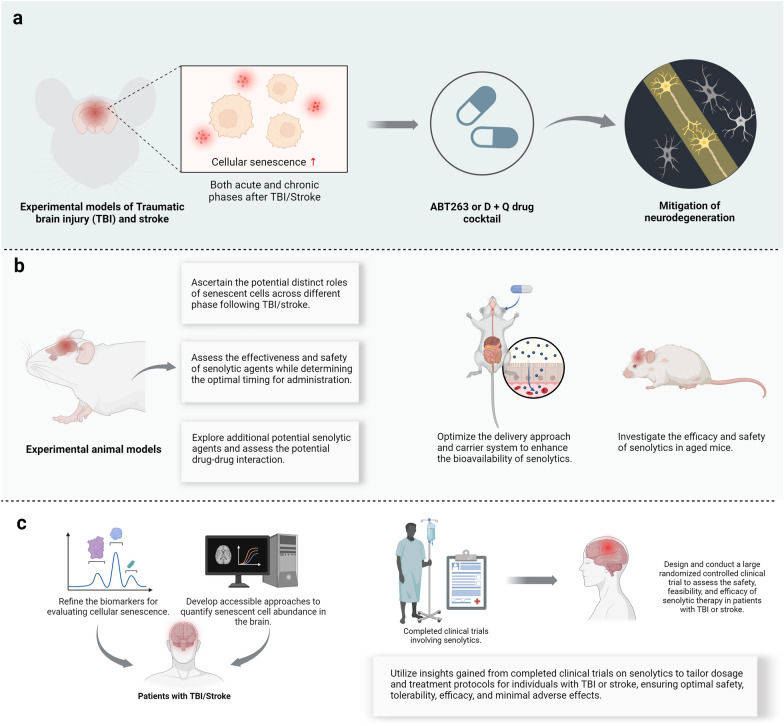
Traumatic brain injury (TBI) and stroke pose major health challenges, impacting millions of individuals globally. Once considered solely acute events, these neurological conditions are now recognized as enduring pathological processes with long-term consequences, including an increased susceptibility to neurodegeneration. However, effective strategies to counteract their devastating consequences are still lacking. Cellular senescence, marked by irreversible cell-cycle arrest, is emerging as a crucial factor in various neurodegenerative diseases. Recent research further reveals that cellular senescence may be a potential driver for secondary neurodegeneration following brain injury. Herein, we synthesize emerging evidence that TBI and stroke drive the accumulation of senescent cells in the brain. The rationale for targeting senescent cells as a therapeutic approach to combat neurodegeneration following TBI/stroke is outlined. From a translational perspective, we emphasize current knowledge and future directions of senolytic therapy for these neurological conditions.
创伤性脑损伤(TBI)和中风构成了重大的健康挑战,影响着全球数百万人。这些神经疾病曾一度仅被视为急性事件,如今则被公认为是具有长期后果的持续性病理过程,包括神经退行性变易感性增加。然而,仍缺乏有效应对其毁灭性后果的策略。以不可逆的细胞周期停滞为特征的细胞衰老,正成为各种神经退行性疾病的关键因素。最近的研究进一步表明,细胞衰老可能是脑损伤后继发性神经退行性变的潜在驱动因素。在此,我们综合了新出现的证据,即TBI和中风会促使大脑中衰老细胞的积累。概述了将衰老细胞作为治疗TBI/中风后神经退行性变的治疗方法的基本原理。从转化医学的角度,我们强调了针对这些神经疾病的衰老细胞溶解疗法的当前知识和未来方向。