Soto Vicente, Tyson-Carr John, Kokmotou Katerina, Roberts Hannah, Byrne Adam, Hewitt Danielle, Fallon Nicholas, Giesbrecht Timo, Stancak Andrej
Department of Psychology, University of Liverpool, Liverpool, United Kingdom.
School of Psychology, Centre of Social and Cognitive Neuroscience, Universidad Adolfo Ibáñez, Santiago, Chile.
Front Neurosci. 2024 Nov 28;18:1492427. doi: 10.3389/fnins.2024.1492427. eCollection 2024.
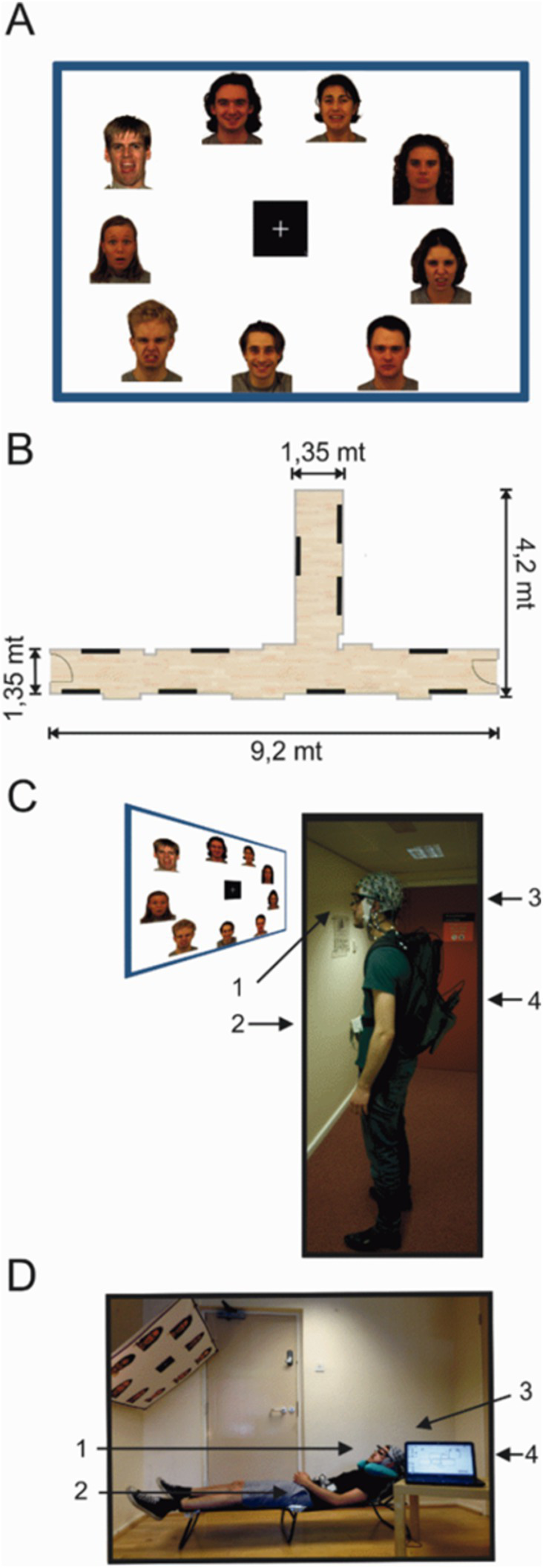
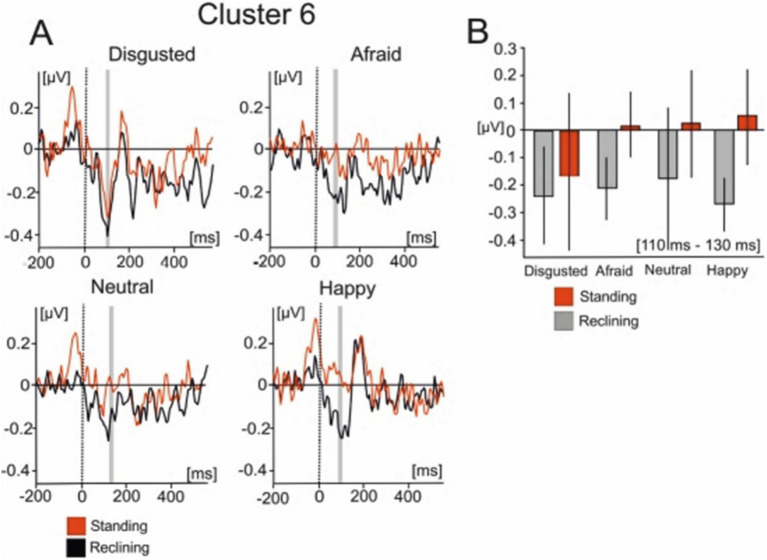
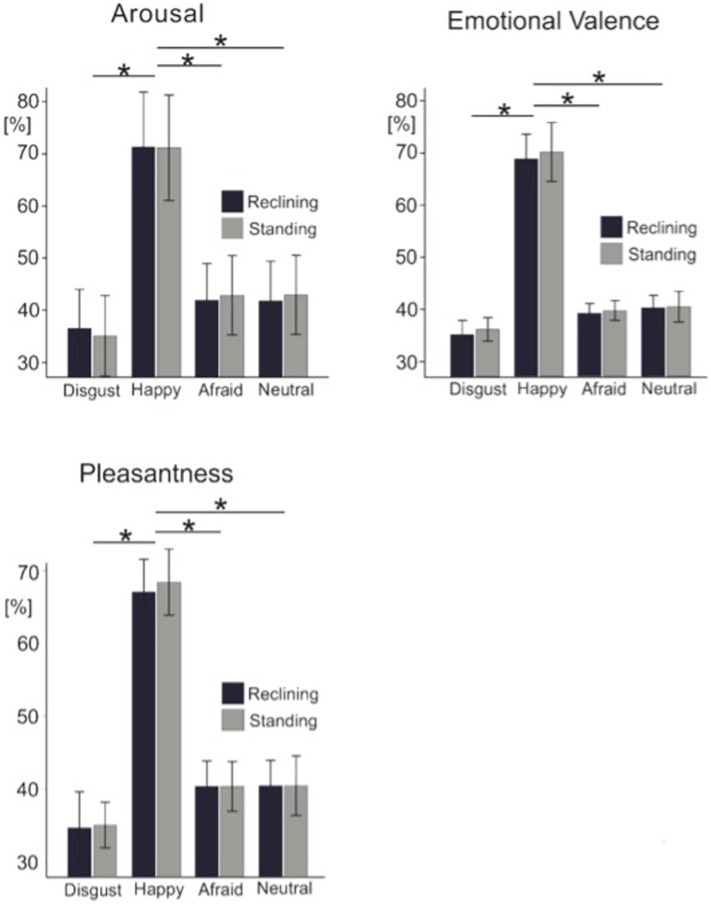
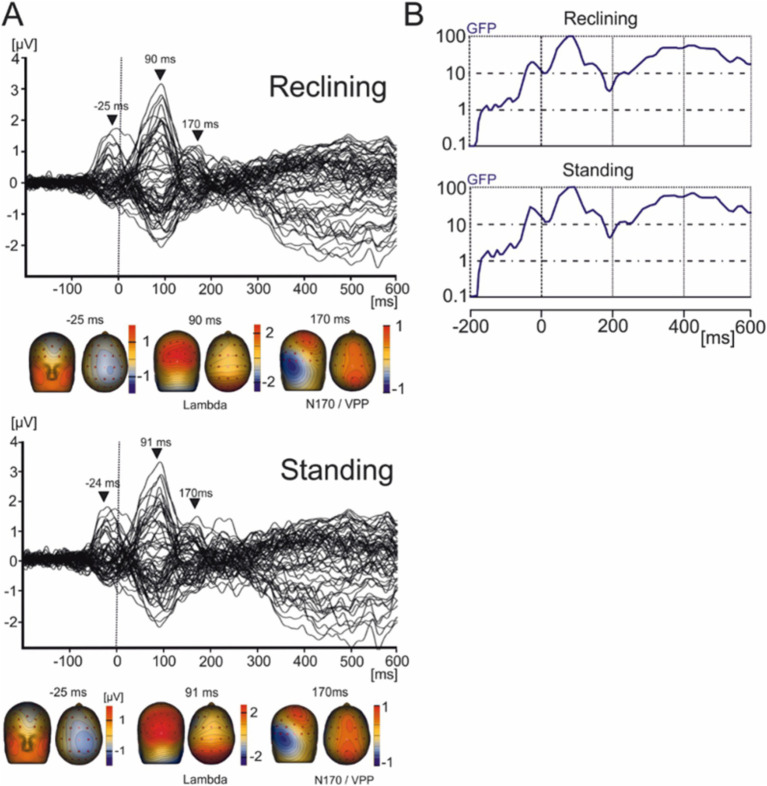
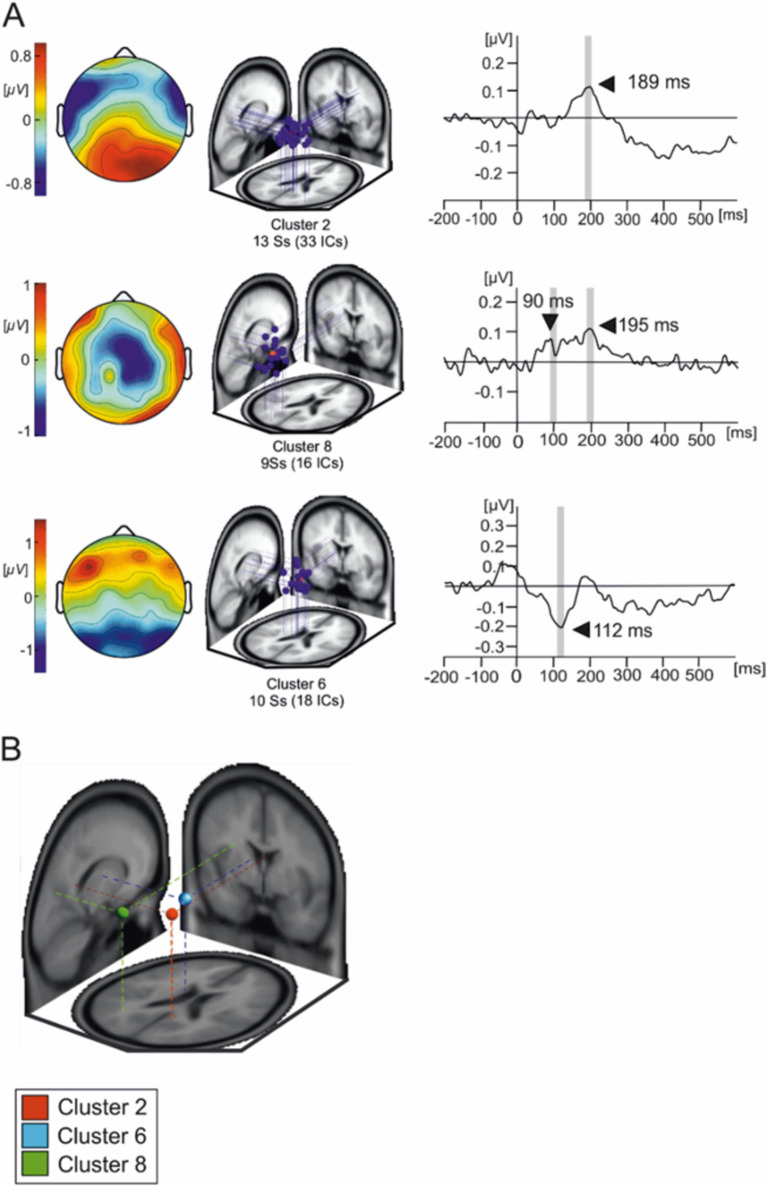
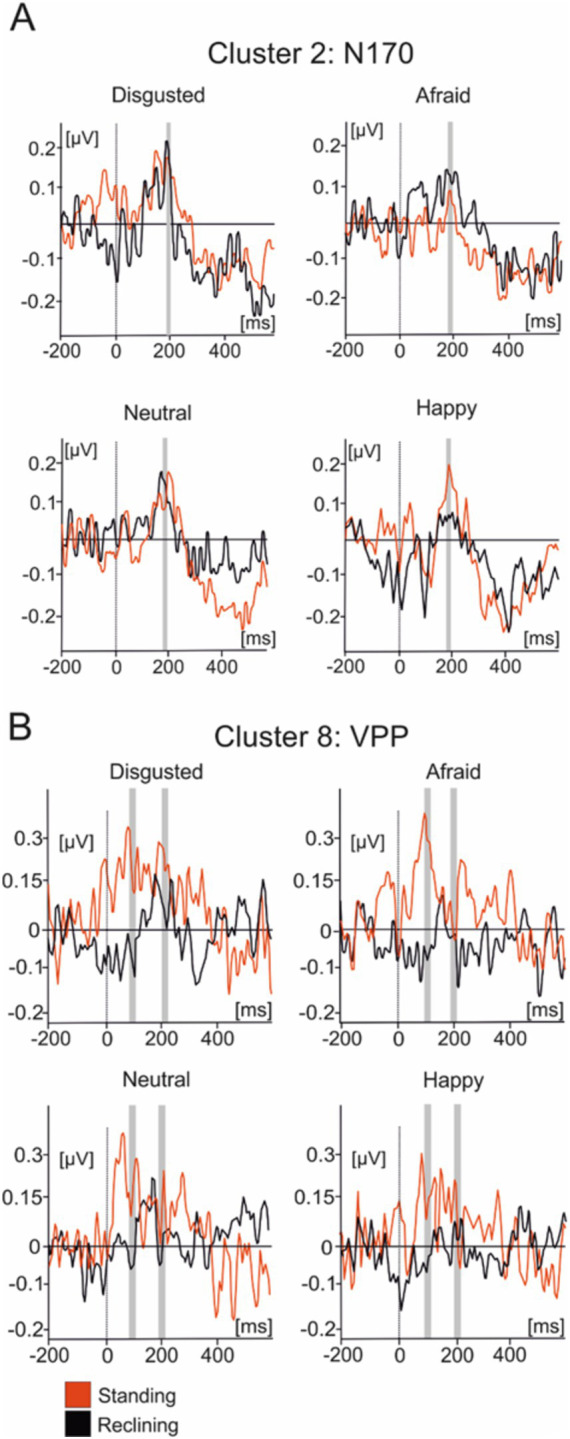
Brain imaging performed in natural settings is known as mobile brain and body imaging (MoBI). One of the features which distinguishes MoBI and laboratory-based experiments is the body posture. Previous studies pointed to mechanical, autonomic, cortical and cognitive differences between upright stance and sitting or reclining. The purpose of this study was to analyse effects of posture on eye-movement related potentials (EMRP) recorded during free viewing of human faces. A 64-channel wireless EEG was recorded from 14 participants in either standing or reclining postures while they freely viewed pictures of emotional faces displaying fear, anger, sadness, and a neutral emotional state. Eye tracking data was used to insert triggers corresponding to the instant at which the gaze first landed on a face. Spatial filtering of the EEG data was performed using a group independent component analysis (ICA). Grand average EMRPs displayed the post-saccadic lambda component and the face-sensitive N170/vertex positive potential (VPP) complex. The lambda component but not the N170 component was stronger during reclining than upright posture. Emotional expression of faces showed no effects on EMRP components or subjective ratings. Results suggest that posture primarily affects early components of EMRPs recorded using wireless EEG recordings during free viewing of faces. Thus, findings from evoked potential data obtained in seated individuals, e.g., in laboratory experiments, should be interpreted with caution in MoBI experiments with posture affecting primarily the early latency component.
在自然环境中进行的脑成像被称为移动脑体成像(MoBI)。区分MoBI和基于实验室的实验的特征之一是身体姿势。先前的研究指出了直立姿势与坐或躺姿势之间在机械、自主神经、皮层和认知方面的差异。本研究的目的是分析姿势对在自由观看人脸过程中记录的眼动相关电位(EMRP)的影响。在14名参与者以站立或躺卧姿势自由观看显示恐惧、愤怒、悲伤和中性情绪状态的情绪面孔图片时,使用64通道无线脑电图进行记录。眼动追踪数据用于插入与注视首次落在脸上的瞬间相对应的触发信号。使用组独立成分分析(ICA)对脑电图数据进行空间滤波。总体平均EMRP显示出扫视后λ成分和面部敏感的N170/顶点正电位(VPP)复合体。躺卧时的λ成分比直立姿势时更强,但N170成分没有差异。面部的情绪表达对EMRP成分或主观评分没有影响。结果表明,姿势主要影响在自由观看面部过程中使用无线脑电图记录的EMRP的早期成分。因此,在坐位个体(例如在实验室实验中)获得的诱发电位数据的结果,在姿势主要影响早期潜伏期成分的MoBI实验中应谨慎解释。