Fargeas Marine, Fauvernier Mathieu, Tauber Marie, Seneschal Julien, Verdu Virginie, Bourrel Bouttaz Magali, Hacard Florence, Darrigade Anne-Sophie, Nosbaum Audrey
Hospices Civils de Lyon, South of Lyon Hospital, Allergology and Clinical Immunology Department, Pierre-Bénite, France.
Hospices Civils de Lyon, Hospital South of Lyon, Biostatistics and Bioinformatics Department, Pierre-Bénite, France.
Acta Derm Venereol. 2024 Dec 12;104:adv41184. doi: 10.2340/actadv.v104.41184.
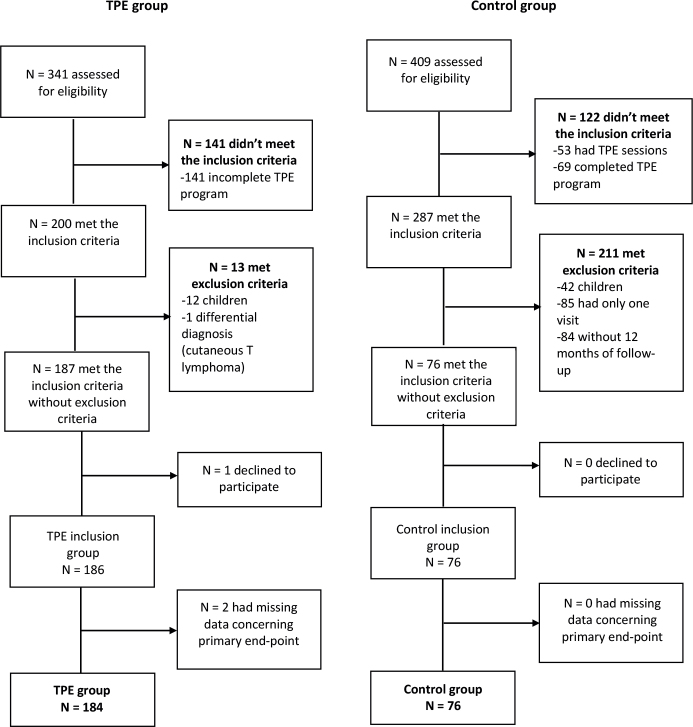
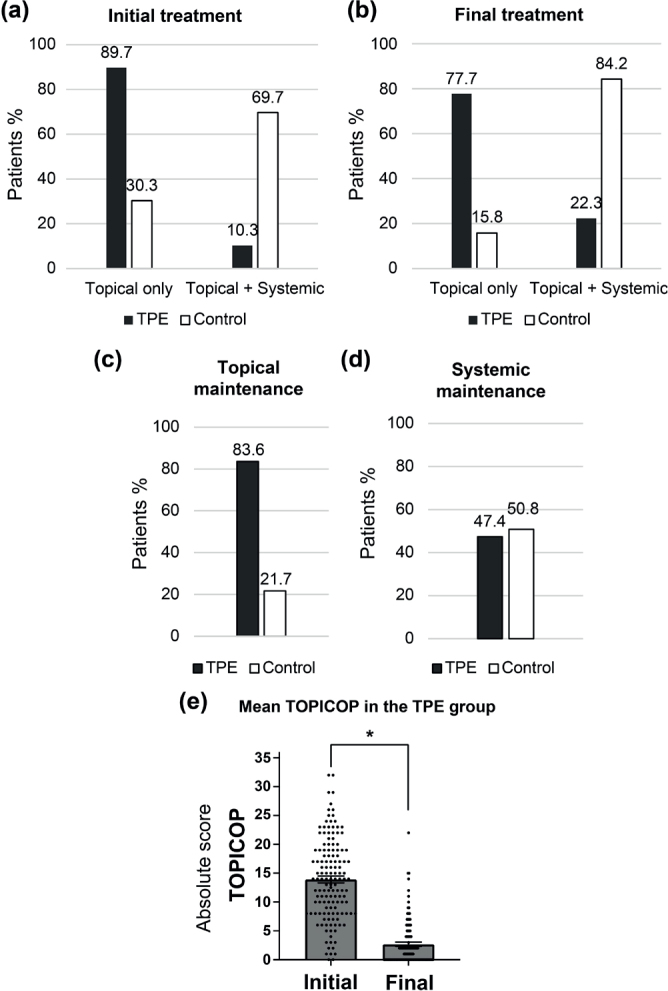
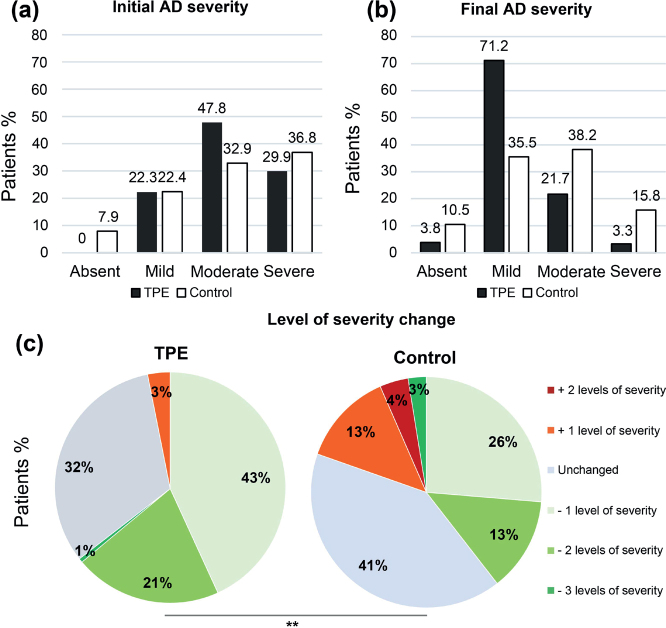
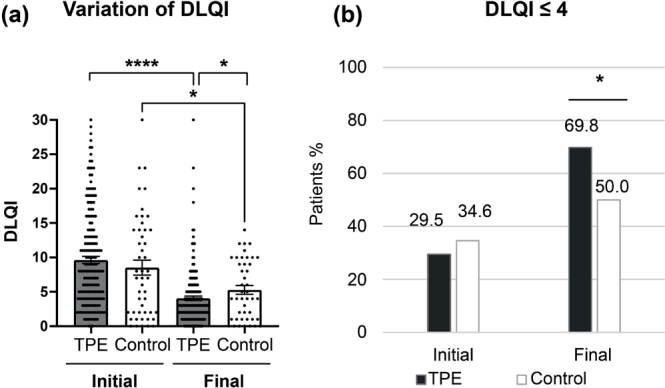
In the era of biological treatments and small molecules, this study assessed therapeutic patient education (TPE) in managing adult atopic dermatitis (AD), focusing on disease severity, quality of life, and the use of systemic treatments. This multicentre study included 260 adult AD patients, with 184 undergoing a full TPE programme and 76 control patients. Evaluations included disease severity, quality of life (DLQI), and systemic treatment use. The primary goal was to measure AD improvement, with secondary goals assessing DLQI score changes and systemic treatment use. AD severity improved in 64.7% of TPE patients vs 45.7% of controls (p = 0.008). The mean DLQI score dropped by 5.7 points in the TPE group vs 2.4 points in controls (p = 0.006). Additionally, 69.8% of TPE patients had a DLQI score ≤ 4/30 compared with 50% of controls (p = 0.025). Regarding therapeutics, 83.6% of patients naive to systemic treatment at inclusion were maintained exclusively under topical treatment vs 21.7% in the control group. The likelihood of needing systemic treatment was 66% in controls vs 6% in the TPE group. TPE enhances AD severity and quality of life, ensures better disease control, and reduces systemic treatment use, highlighting its importance in managing adult AD.
在生物治疗和小分子药物的时代,本研究评估了治疗性患者教育(TPE)在成人特应性皮炎(AD)管理中的作用,重点关注疾病严重程度、生活质量和全身治疗的使用情况。这项多中心研究纳入了260例成年AD患者,其中184例接受了完整的TPE计划,76例为对照组患者。评估内容包括疾病严重程度、生活质量(DLQI)和全身治疗的使用情况。主要目标是衡量AD的改善情况,次要目标是评估DLQI评分变化和全身治疗的使用情况。64.7%的TPE患者AD严重程度得到改善,而对照组为45.7%(p = 0.008)。TPE组的平均DLQI评分下降了5.7分,而对照组下降了2.4分(p = 0.006)。此外,69.8%的TPE患者DLQI评分≤4/30,而对照组为50%(p = 0.025)。在治疗方面,纳入时未接受过全身治疗的患者中,83.6%仅接受局部治疗,而对照组为21.7%。对照组需要全身治疗的可能性为66%,而TPE组为6%。TPE可提高AD严重程度和生活质量,确保更好地控制疾病,并减少全身治疗的使用,凸显了其在成人AD管理中的重要性。