Celiker Emine, Woodrow Charlie, Guadayol Òscar, Davranoglou Leonidas-Romanos, Schlepütz Christian M, Mortimer Beth, Taylor Graham K, Humphries Stuart, Montealegre-Z Fernando
School of Engineering, University of Leicester, Leicester, United Kingdom.
Department of Ecology and Genetics, Uppsala University, Uppsala, Sweden.
PLoS Comput Biol. 2024 Dec 13;20(12):e1012641. doi: 10.1371/journal.pcbi.1012641. eCollection 2024 Dec.
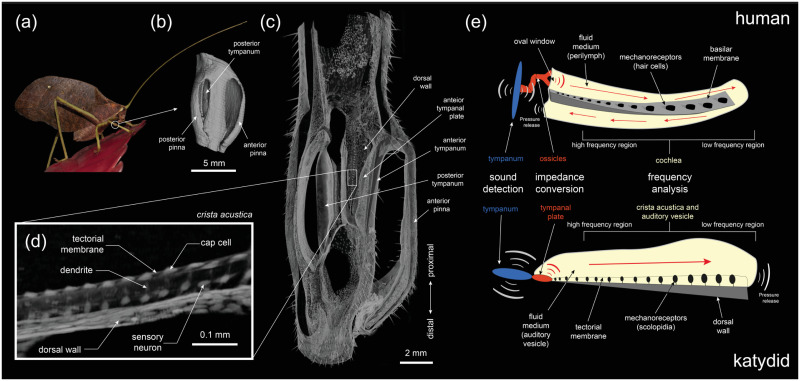
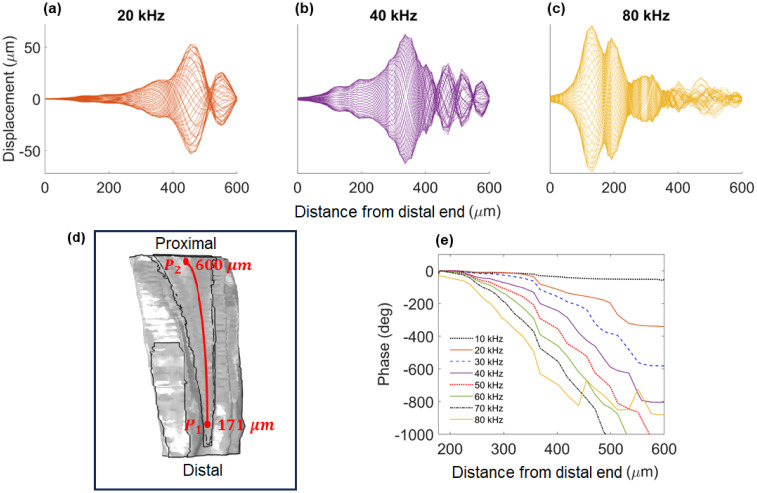
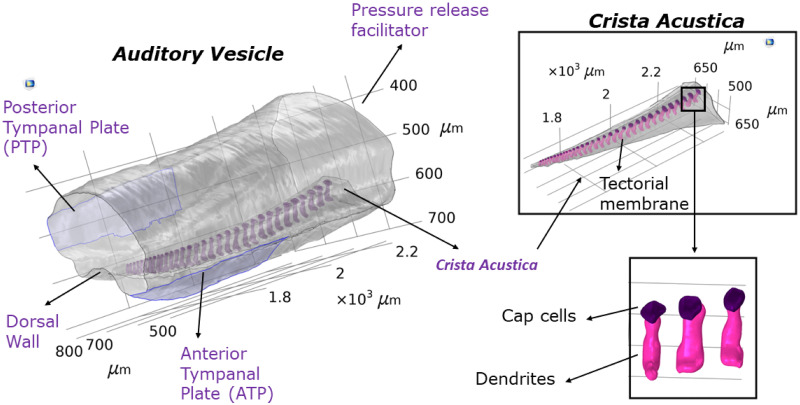
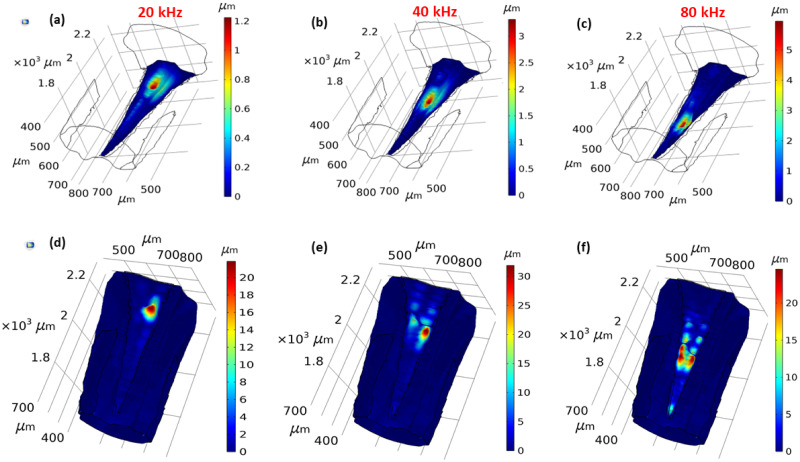
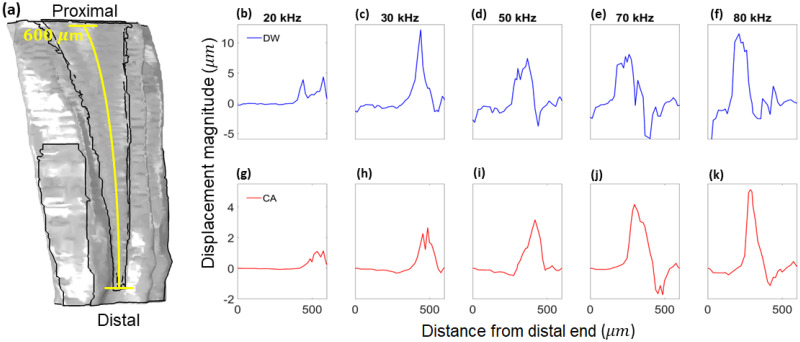
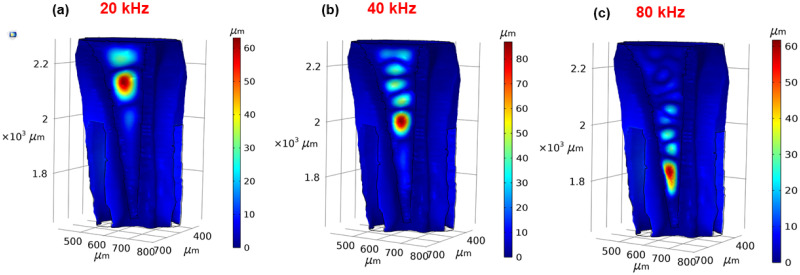
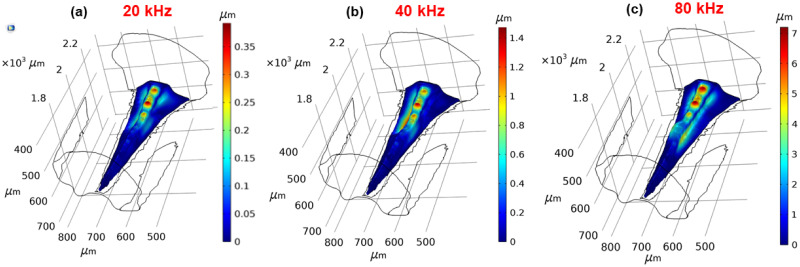
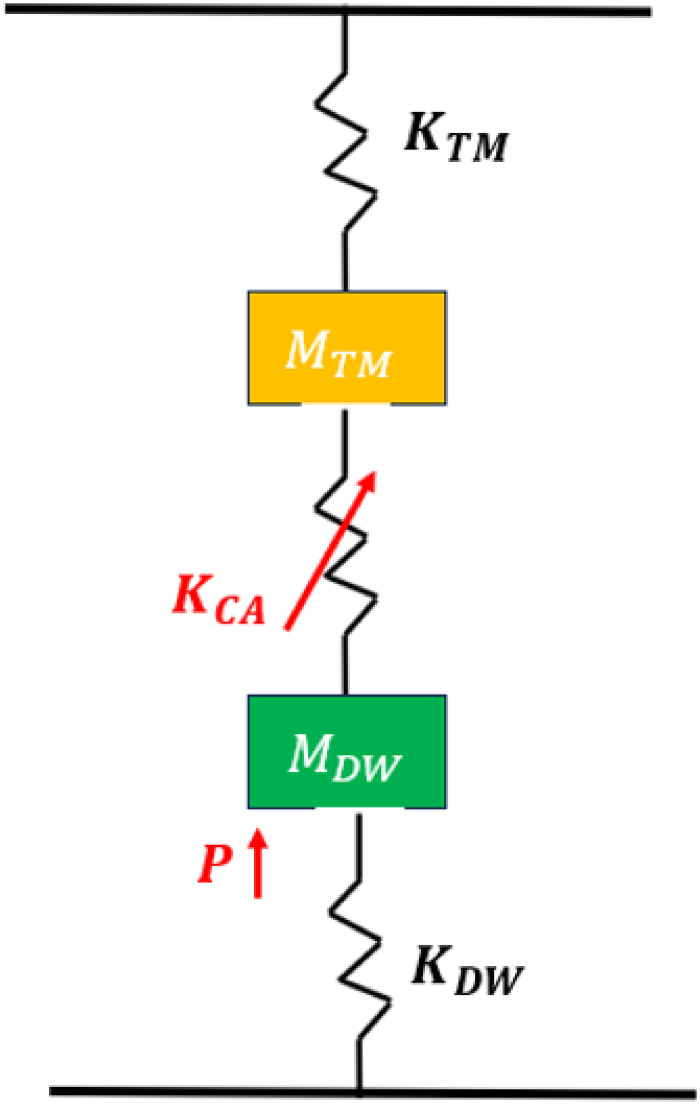
Mammalian hearing operates on three basic steps: 1) sound capturing, 2) impedance conversion, and 3) frequency analysis. While these canonical steps are vital for acoustic communication and survival in mammals, they are not unique to them. An equivalent mechanism has been described for katydids (Insecta), and it is unique to this group among invertebrates. The katydid inner ear resembles an uncoiled cochlea, and has a length less than 1 mm. Their inner ears contain the crista acustica, which holds tonotopically arranged sensory cells for frequency mapping via travelling waves. The crista acustica is located on a curved triangular surface formed by the dorsal wall of the ear canal. While empirical recordings show tonotopic vibrations in the katydid inner ear for frequency analysis, the biophysical mechanism leading to tonotopy remains elusive due to the small size and complexity of the hearing organ. In this study, robust numerical simulations are developed for an in silico investigation of this process. Simulations are based on the precise katydid inner ear geometry obtained by synchrotron-based micro-computed tomography, and empirically determined inner ear fluid properties for an accurate representation of the underlying mechanism. We demonstrate that the triangular structure below the hearing organ drives the tonotopy and travelling waves in the inner ear, and thus has an equivalent role to the mammalian basilar membrane. This reveals a stronger analogy between the inner ear basic mechanical networks of two organisms with ancient evolutionary differences and independent phylogenetic histories.
1)声音捕获,2)阻抗转换,以及3)频率分析。虽然这些典型步骤对哺乳动物的声学交流和生存至关重要,但并非哺乳动物所特有。人们已经描述了一种类似的机制存在于螽斯(昆虫纲)中,并且在无脊椎动物中这是该类群独有的。螽斯的内耳类似于一个未卷曲的耳蜗,长度小于1毫米。它们的内耳包含听嵴,其中含有按音调拓扑排列的感觉细胞,用于通过行波进行频率映射。听嵴位于由耳道后壁形成的弯曲三角形表面上。虽然实证记录显示螽斯内耳中存在用于频率分析的音调拓扑振动,但由于听觉器官体积小且结构复杂,导致音调拓扑的生物物理机制仍然难以捉摸。在这项研究中,我们开发了强大的数值模拟,用于对这一过程进行计算机模拟研究。模拟基于通过基于同步加速器的微观计算机断层扫描获得的精确螽斯内耳几何结构,以及根据经验确定的内耳流体特性,以准确呈现潜在机制。我们证明,听觉器官下方的三角形结构驱动内耳中的音调拓扑和行波,因此与哺乳动物的基底膜具有同等作用。这揭示了两种具有古老进化差异和独立系统发育历史的生物在内耳基本机械网络之间存在更强的相似性。