Pontes João Guilherme de Moraes, Nani João Victor Silva, Correia Banny Silva Barbosa, Carneiro Costa Tássia Brena Barroso, Stanisic Danijela, Hayashi Mirian A F, Tasic Ljubica
Laboratório de Química Biológica (LQB), Departamento de Química Orgânica, Instituto de Química, and INCT-Bio (CNPq), Universidade Estadual de Campinas (UNICAMP), Campinas, SP 13083-970, Brazil.
Instituto Nacional de Ciência e Tecnologia Translacional em Medicina (INCT-TM, CNPq), Ribeirão Preto 14026, Brazil.
ACS Omega. 2024 Nov 25;9(49):48480-48487. doi: 10.1021/acsomega.4c07072. eCollection 2024 Dec 10.
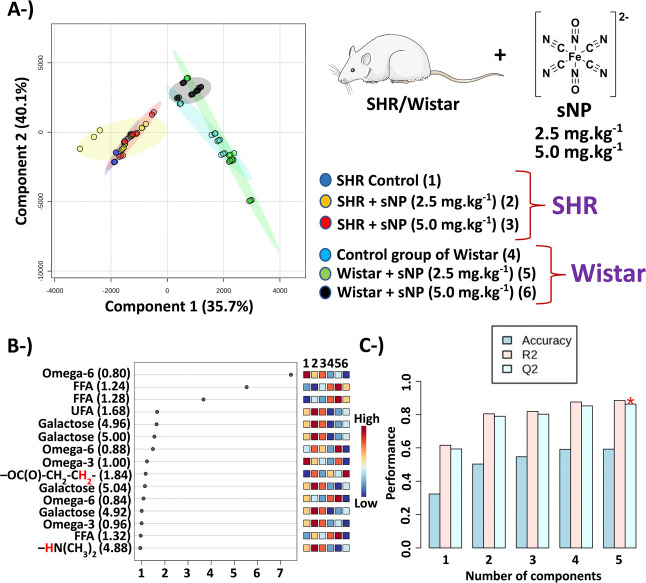
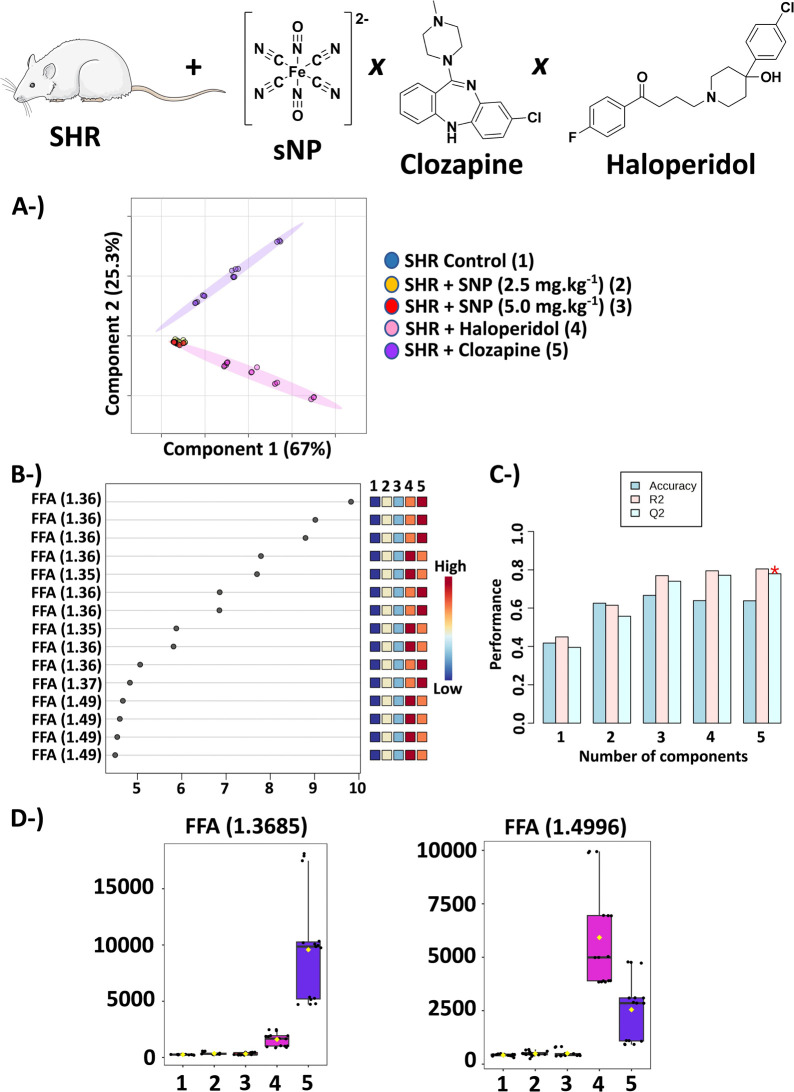
Schizophrenia (SCZ) is a multifactorial mental illness with limited knowledge concerning pathogenesis, contributing to the lack of effective therapies. More recently, the use of a nitric oxide donor named sodium nitroprusside (sNP) was suggested as a potential therapeutic drug for the treatment of SCZ. Despite the mixed results regarding the effectiveness of the sNP in reducing SCZ symptoms, successful trials on sNP in treatment-resistant SCZ were published. We have also demonstrated the power of evaluating the lipidic profiles of human clinical and animal model samples to identify the biomarkers of the pharmacological response to the diagnosis of mental disorders. Aim of this work is to evaluate the sNP effects in an animal model for SCZ studies through lipidomic profiles assessed by magnetic resonance spectroscopy (NMR). Lipidic profiling of serum from these animals indicated a more pronounced effect of sNP on lipids in the 0.50-6.00 ppm spectral region. Chemometric analysis also indicated an approximation of the lipidic profiling of SCZ animal model rats treated with sNP compared to that of the control group. In addition, we have compared the sNP treatment with other antipsychotics classically used in the clinic, such as haloperidol and clozapine, and the sNP treatment evaluated herein confirms the potential of sNP for the treatment of SCZ.
精神分裂症(SCZ)是一种多因素导致的精神疾病,其发病机制尚不清楚,这导致缺乏有效的治疗方法。最近,一种名为硝普钠(sNP)的一氧化氮供体被认为是治疗SCZ的潜在治疗药物。尽管关于sNP减轻SCZ症状有效性的结果不一,但已发表了关于sNP治疗难治性SCZ的成功试验。我们还证明了评估人类临床和动物模型样本脂质谱以识别精神障碍诊断中药理反应生物标志物的能力。这项工作的目的是通过磁共振波谱(NMR)评估的脂质组学谱来评估sNP在SCZ研究动物模型中的作用。这些动物血清的脂质谱分析表明,sNP对0.50 - 6.00 ppm光谱区域的脂质有更显著的影响。化学计量学分析还表明,与对照组相比,用sNP治疗的SCZ动物模型大鼠的脂质谱更接近。此外,我们将sNP治疗与临床上经典使用的其他抗精神病药物(如氟哌啶醇和氯氮平)进行了比较,本文评估的sNP治疗证实了sNP治疗SCZ的潜力。