Kindschuh William F, Austin George I, Meydan Yoli, Park Heekuk, Urban Julia A, Watters Emily, Pollak Susan, Saade George R, Chung Judith, Mercer Brian M, Grobman William A, Haas David M, Silver Robert M, Serrano Myrna, Buck Gregory A, McNeil Rebecca, Nandakumar Renu, Reddy Uma, Wapner Ronald J, Kav Aya Brown, Uhlemann Anne-Catrin, Korem Tal
Program for Mathematical Genomics, Department of Systems Biology, Columbia University Irving Medical Center, New York, NY, USA.
Department of Biomedical Informatics, Columbia University Irving Medical Center, New York, NY, USA.
bioRxiv. 2024 Dec 2:2024.12.01.626267. doi: 10.1101/2024.12.01.626267.
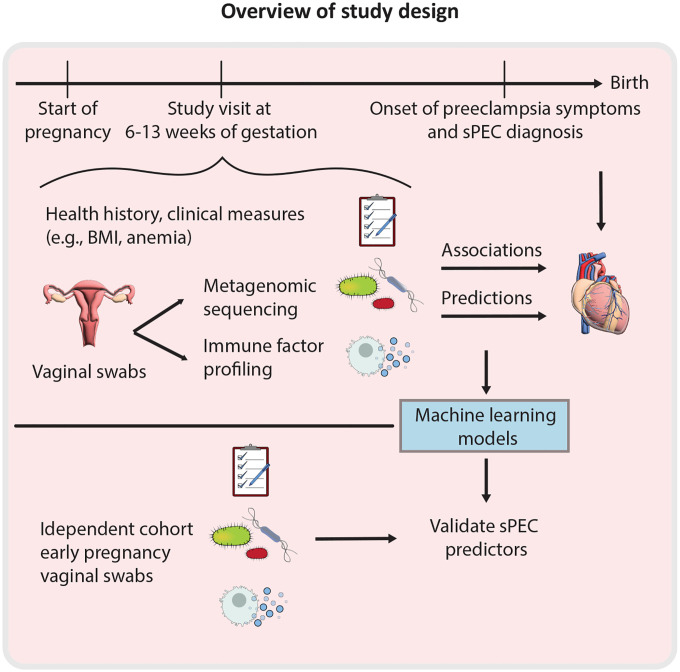
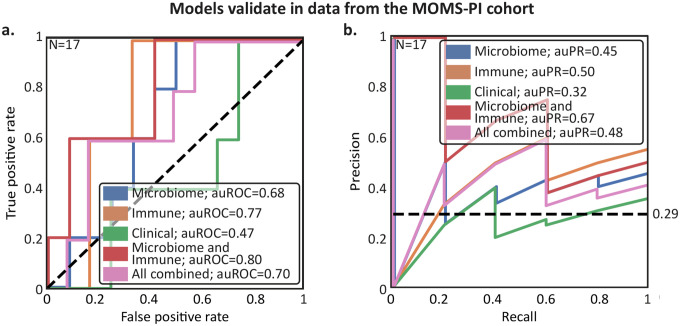
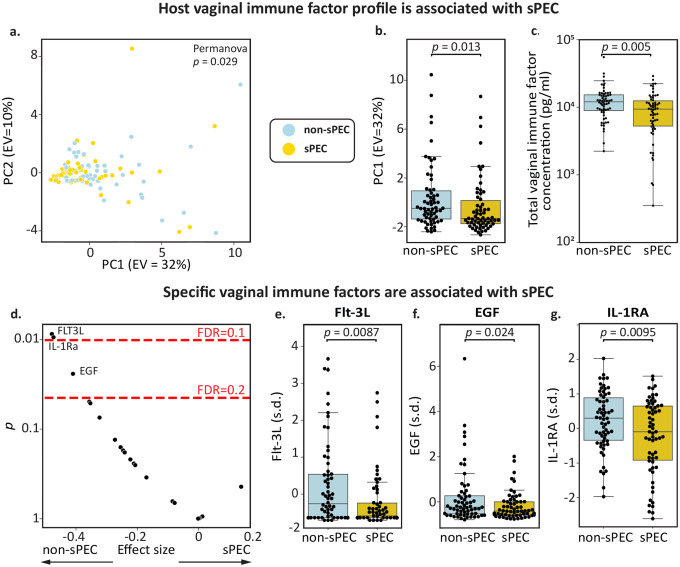
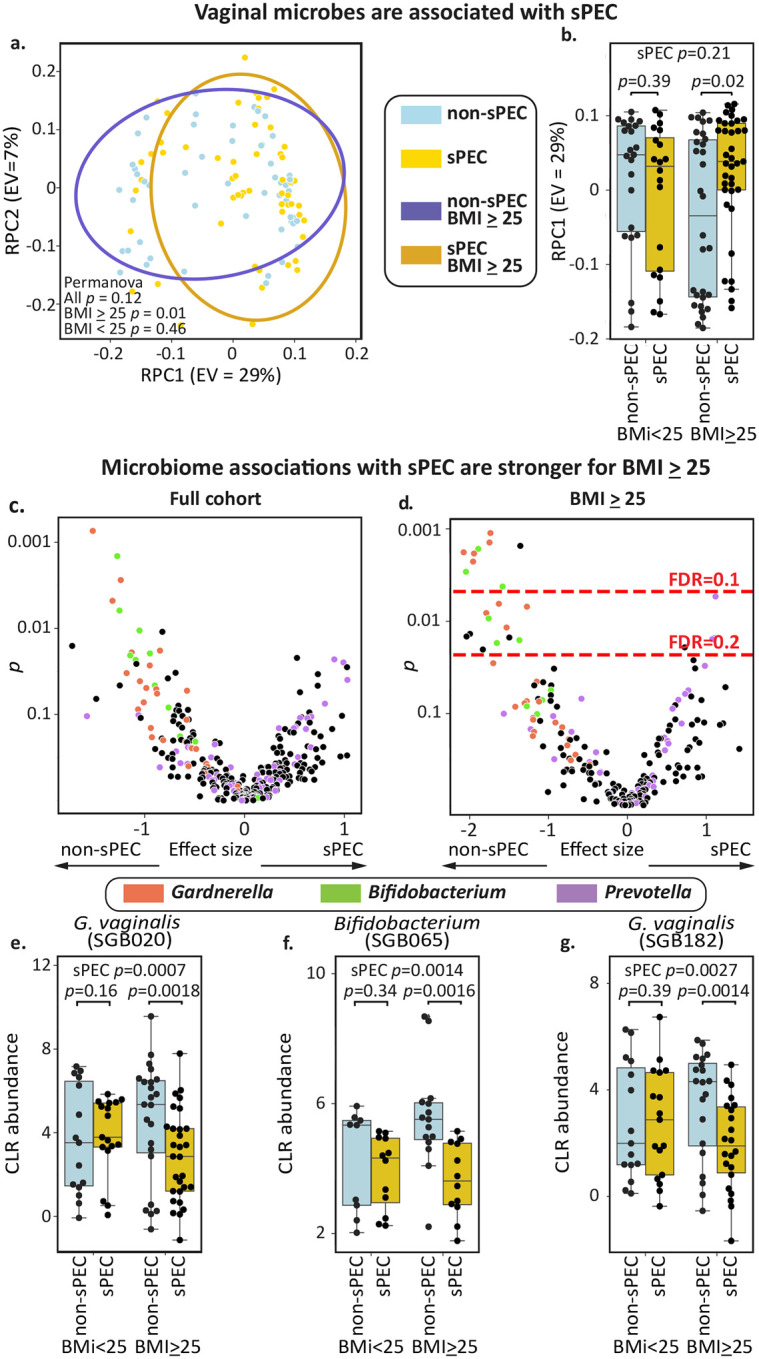
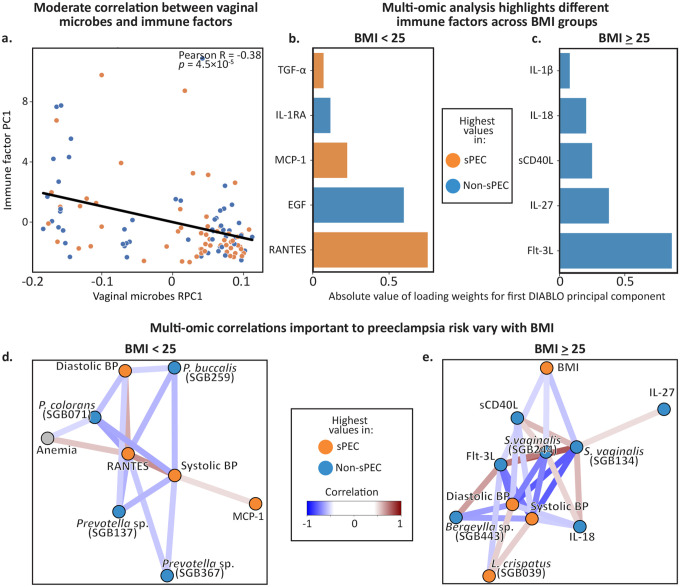
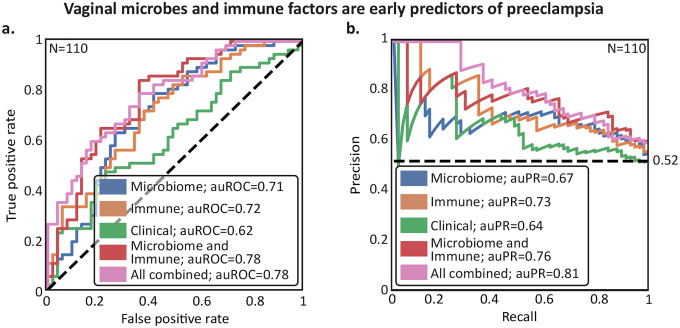
Preeclampsia is a severe obstetrical syndrome which contributes to 10-15% of all maternal deaths. Although the mechanisms underlying systemic damage in preeclampsia-such as impaired placentation, endothelial dysfunction, and immune dysregulation-are well studied, the initial triggers of the condition remain largely unknown. Furthermore, although the pathogenesis of preeclampsia begins early in pregnancy, there are no early diagnostics for this life-threatening syndrome, which is typically diagnosed much later, after systemic damage has already manifested. Here, we performed deep metagenomic sequencing and multiplex immunoassays of vaginal samples collected during the first trimester from 124 pregnant individuals, including 62 who developed preeclampsia with severe features. We identified multiple significant associations between vaginal immune factors, microbes, clinical factors, and the early pathogenesis of preeclampsia. These associations vary with BMI, and stratification revealed strong associations between preeclampsia and spp., , and . Finally, we developed machine learning models that predict the development of preeclampsia using this first trimester data, collected ~5.7 months prior to clinical diagnosis, with an auROC of 0.78. We validated our models using data from an independent cohort (MOMS-PI), achieving an auROC of 0.80. Our findings highlight robust associations among the vaginal microbiome, local host immunity, and early pathogenic processes of preeclampsia, paving the way for early detection, prevention and intervention for this devastating condition.
子痫前期是一种严重的产科综合征,占所有孕产妇死亡的10%-15%。尽管子痫前期全身损伤的机制,如胎盘形成受损、内皮功能障碍和免疫失调,已得到充分研究,但该病的初始触发因素在很大程度上仍不清楚。此外,尽管子痫前期的发病机制在妊娠早期就已开始,但对于这种危及生命的综合征尚无早期诊断方法,通常在全身损伤已经显现后很久才被诊断出来。在这里,我们对124名孕妇在孕早期采集的阴道样本进行了深度宏基因组测序和多重免疫分析,其中包括62名出现重度子痫前期的孕妇。我们确定了阴道免疫因子、微生物、临床因素与子痫前期早期发病机制之间的多个显著关联。这些关联因体重指数而异,分层分析显示子痫前期与 属、 属和 属之间存在强关联。最后,我们开发了机器学习模型,利用这些在临床诊断前约5.7个月收集的孕早期数据来预测子痫前期的发生,曲线下面积为0.78。我们使用来自独立队列(MOMS-PI)的数据验证了我们的模型,曲线下面积为0.80。我们的研究结果突出了阴道微生物群、局部宿主免疫和子痫前期早期致病过程之间的紧密关联,为这种毁灭性疾病的早期检测、预防和干预铺平了道路。