Ye Daniel, Wu Tong, Puri Ankita, Hebert David D, Siegler Maxime A, Hendrich Michael P, Swart Marcel, Garcia-Bosch Isaac
Department of Chemistry, Carnegie Mellon University, Pittsburgh, Pennsylvania 15213, United States.
Johns Hopkins University, Baltimore, Maryland 21218, United States.
Inorg Chem. 2024 Dec 30;63(52):24453-24465. doi: 10.1021/acs.inorgchem.4c03370. Epub 2024 Dec 16.
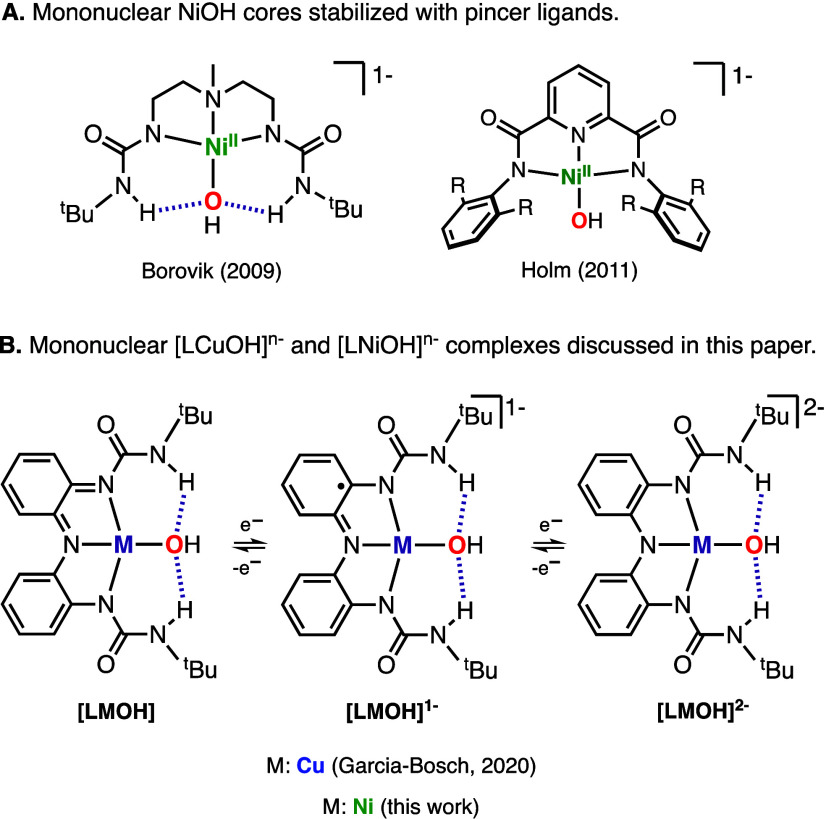
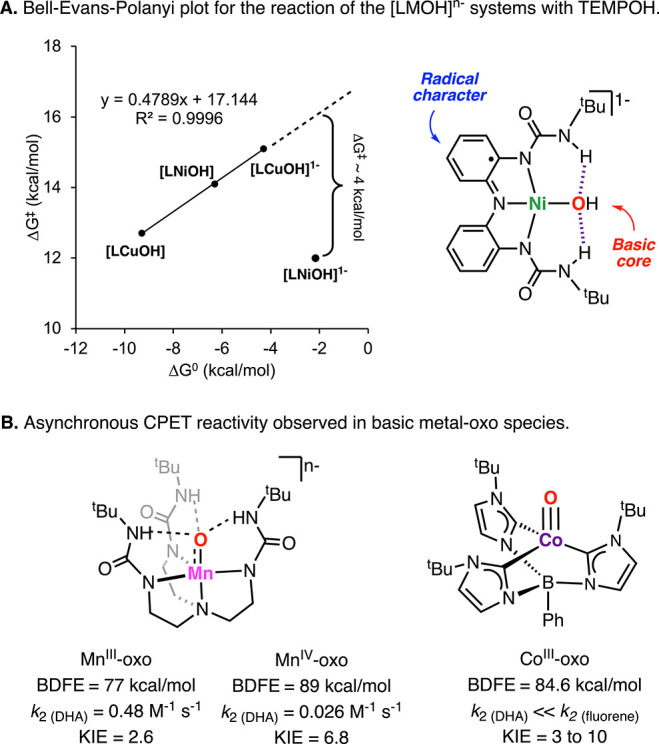
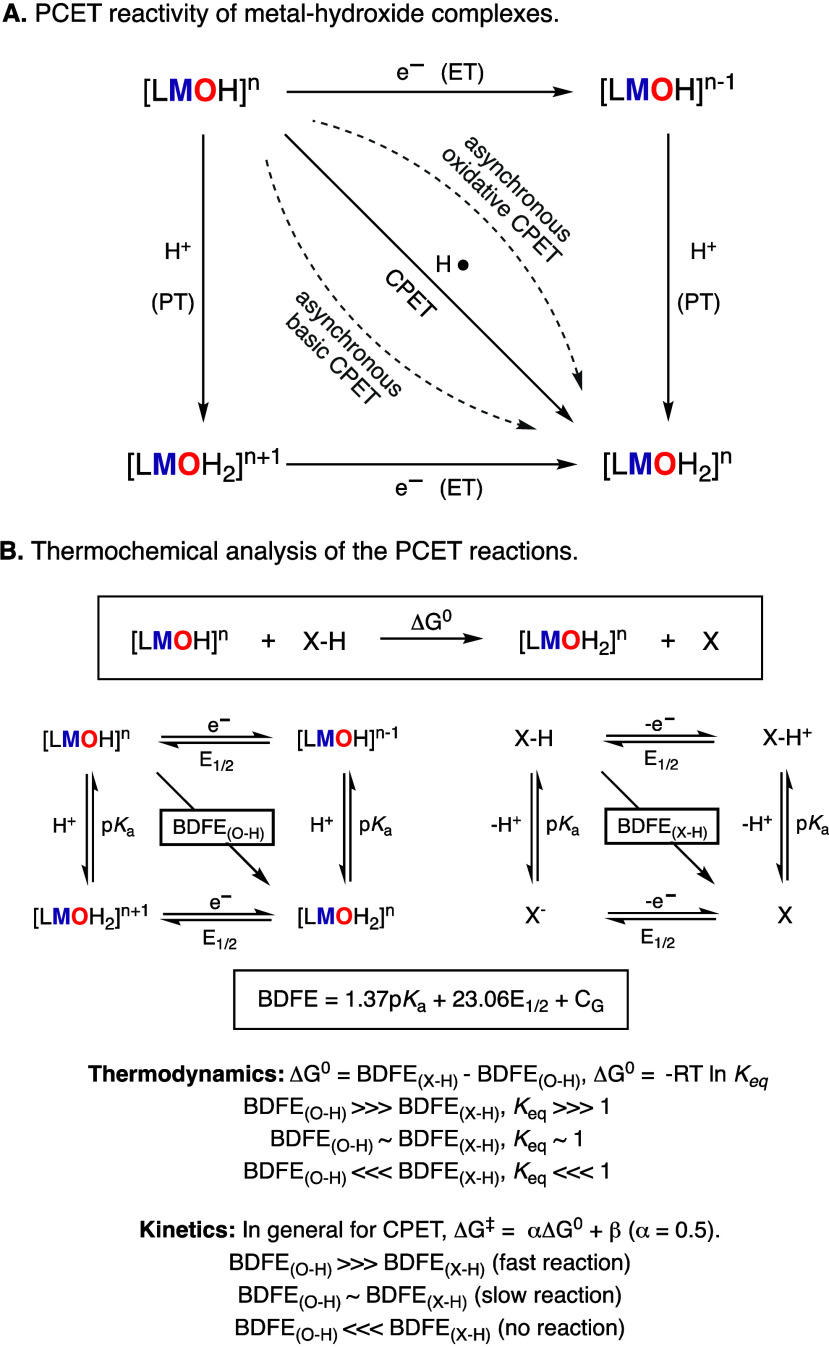
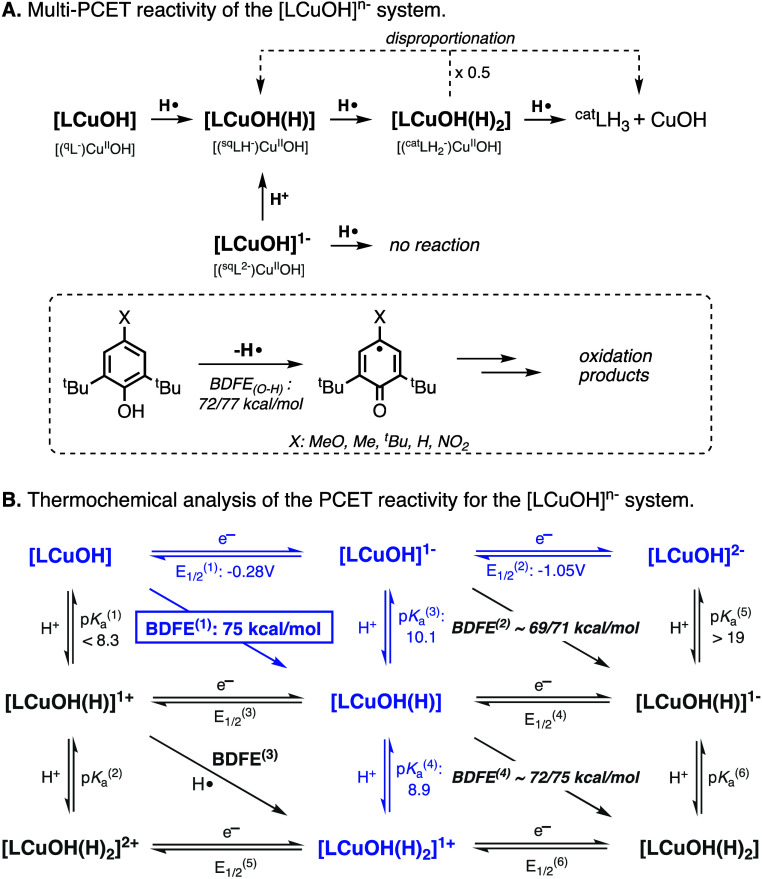
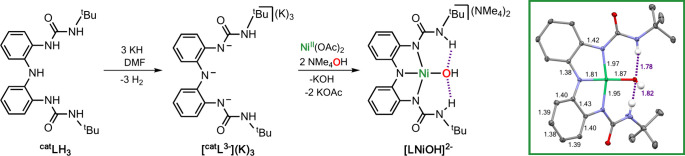
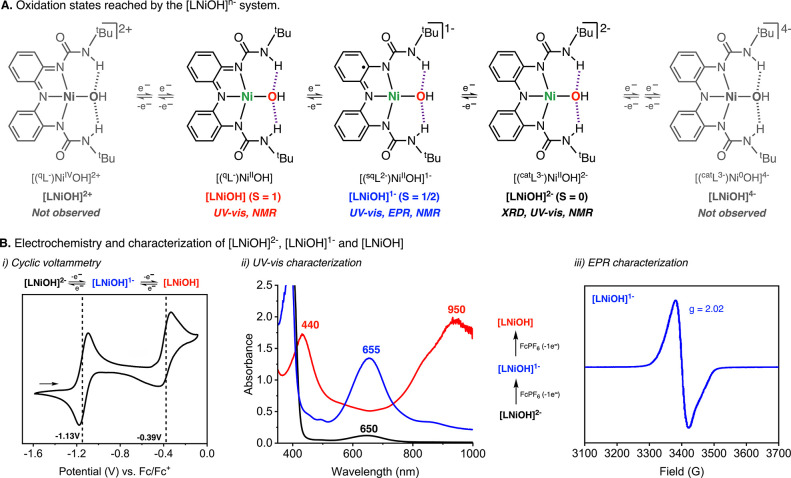
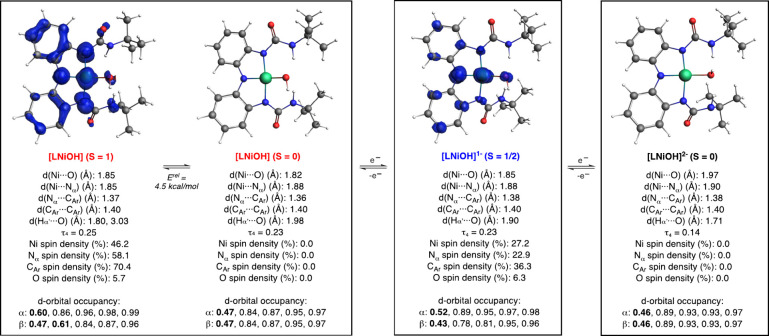
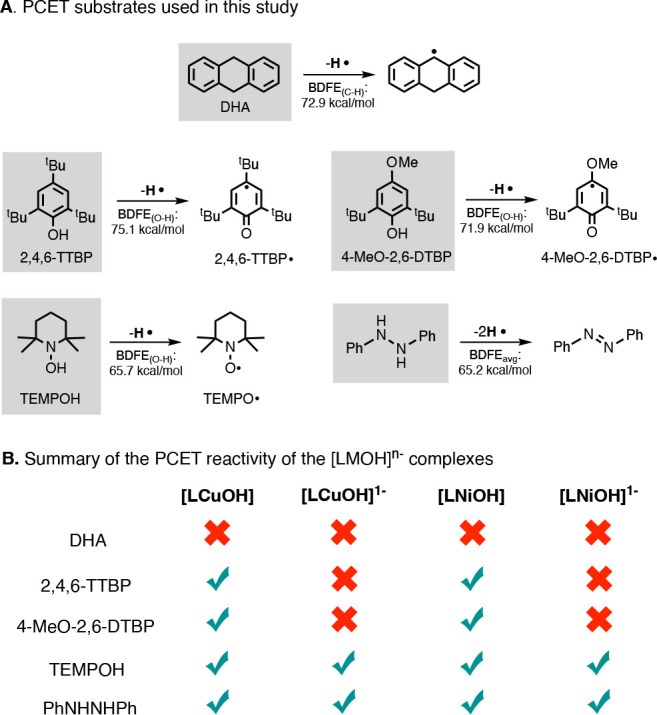
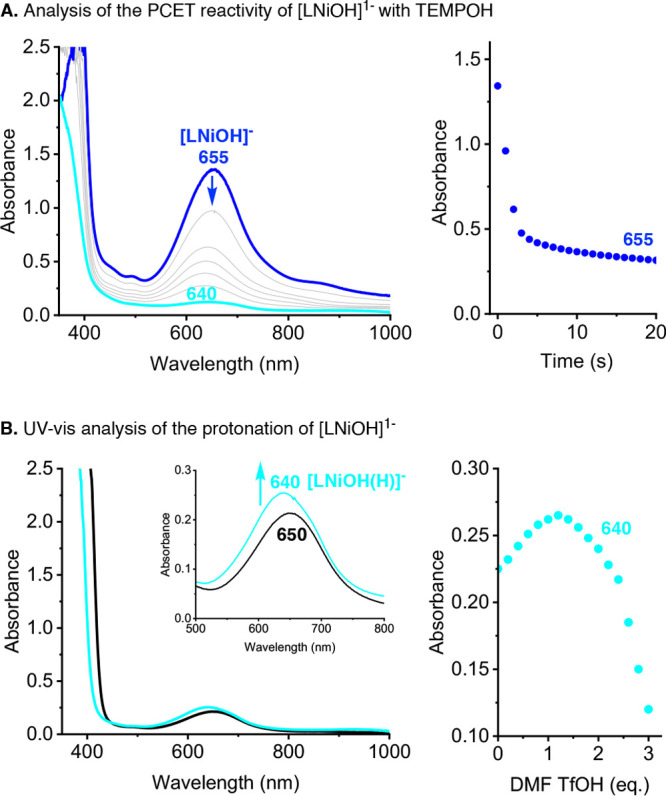
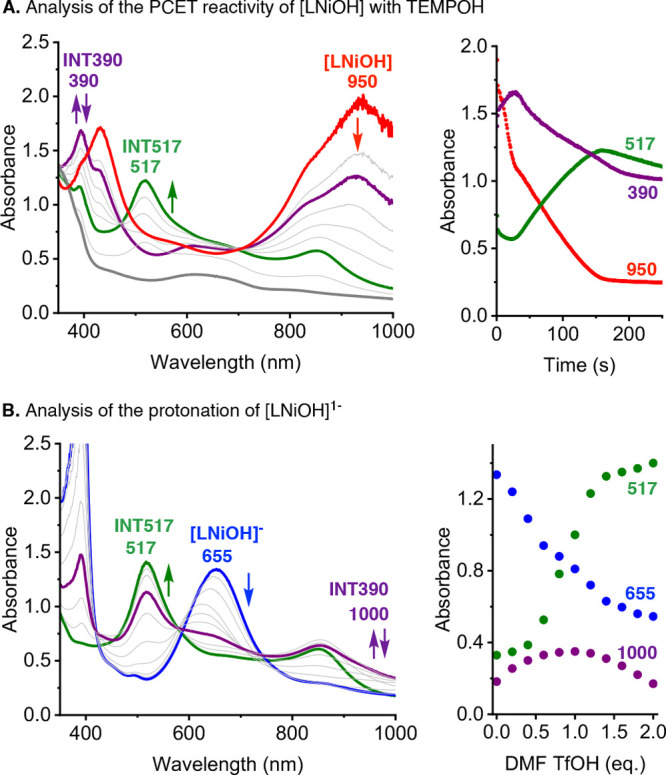
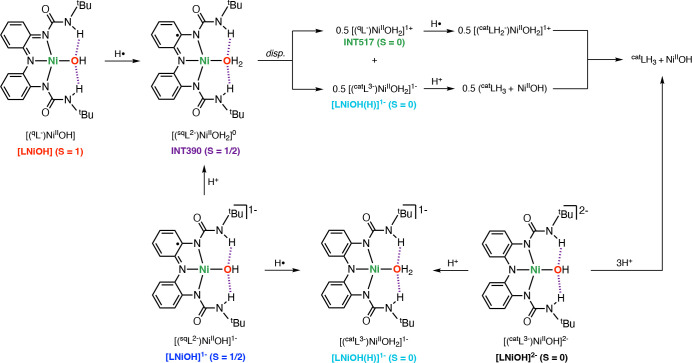
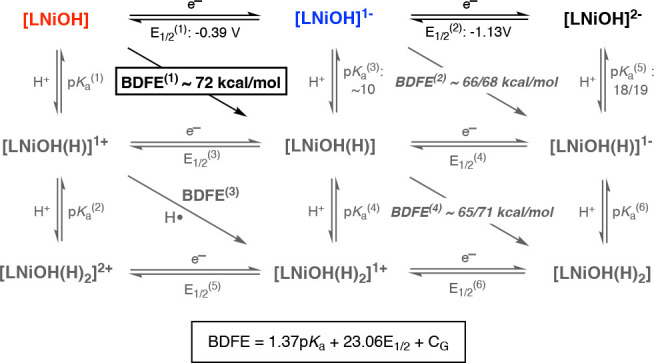
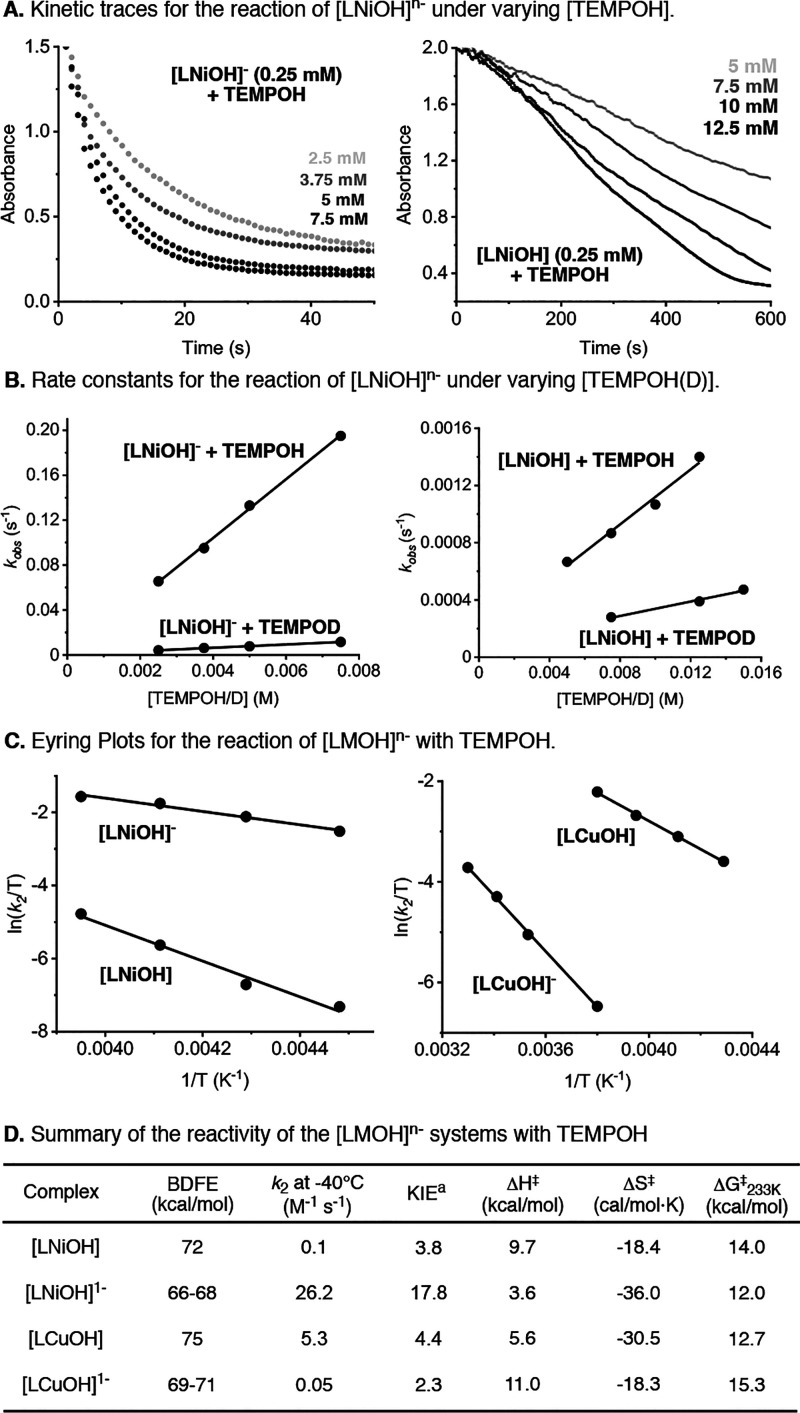
The synthesis, characterization, and reactivity of a NiOH core bearing a tridentate redox-active ligand capable of reaching three molecular oxidation states is presented in this paper. The reduced complex [LNiOH] was characterized by single-crystal X-ray diffraction analysis, depicting a square-planar NiOH core stabilized by intramolecular H-bonding interactions. Cyclic voltammetry measurements indicated that [LNiOH] can be reversibly oxidized to [LNiOH] and [LNiOH] at very negative reduction potentials (-1.13 and -0.39 V vs ferrocene, respectively). The oxidation of [LNiOH] to [LNiOH] and [LNiOH] was accomplished using 1 and 2 equiv of ferrocenium, respectively. Spectroscopic and computational characterization suggest that [LNiOH], [LNiOH], and [LNiOH] are all Ni species in which the redox-active ligand adopts different oxidation states (catecholate-like, semiquinone-like, and quinone-like, respectively). The NiOH species were found to promote H-atom abstraction from organic substrates, with [LNiOH] acting as a 1H/1e oxidant and [LNiOH] as a 2H/2e oxidant. Thermochemical analysis indicated that [LNiOH] was capable of abstracting H atoms from stronger O-H bonds than [LNiOH]. However, the greater thermochemical tendency of [LNiOH] reactivity toward H atoms did not align with the kinetics of the PCET reaction, where [LNiOH] reacted with H-atom donors much faster than [LNiOH]. The unique stereoelectronic structure of [LNiOH] (radical character combined with a basic NiOH core) might account for its enhanced PCET reactivity.
本文介绍了一种带有三齿氧化还原活性配体的NiOH核的合成、表征及反应活性,该配体能够达到三种分子氧化态。还原态配合物[LNiOH]通过单晶X射线衍射分析进行表征,描绘了通过分子内氢键相互作用稳定的平面正方形NiOH核。循环伏安法测量表明,[LNiOH]可以在非常负的还原电位下(分别相对于二茂铁为-1.13和-0.39 V)可逆地氧化为[LNiOH]和[LNiOH]。[LNiOH]分别使用1和2当量的二茂铁鎓氧化为[LNiOH]和[LNiOH]。光谱和计算表征表明,[LNiOH]、[LNiOH]和[LNiOH]都是Ni物种,其中氧化还原活性配体采用不同的氧化态(分别为儿茶酚盐类、半醌类和醌类)。发现NiOH物种能促进从有机底物中夺取氢原子,[LNiOH]作为1H/1e氧化剂,[LNiOH]作为2H/2e氧化剂。热化学分析表明,[LNiOH]能够从比[LNiOH]更强的O-H键中夺取氢原子。然而,[LNiOH]与氢原子反应的更大热化学倾向与PCET反应的动力学不一致,在PCET反应中,[LNiOH]与氢原子供体的反应比[LNiOH]快得多。[LNiOH]独特的立体电子结构(自由基特征与碱性NiOH核相结合)可能解释了其增强的PCET反应活性。