Djaïleb Abdelhadi, Parker Megan-Faye, Lavallée Étienne, Stuible Matthew, Durocher Yves, Thériault Mathieu, Santerre Kim, Gilbert Caroline, Boudreau Denis, Baz Mariana, Masson Jean-Francois, Langlois Marc-André, Trottier Sylvie, Quaglia Daniela, Pelletier Joelle N
Département de Chimie, Université de Montréal, Montréal, Canada.
PROTEO, Regroupement Québécois de Recherche sur la Fonction, L'Ingénierie et les Applications des Protéines, Québec, Canada.
PLoS One. 2024 Dec 16;19(12):e0314499. doi: 10.1371/journal.pone.0314499. eCollection 2024.
Since the onset of the global COVID-19 pandemic in early 2020, numerous studies have been conducted worldwide to understand our immune response to the virus and to vaccination. This study investigates the humoral response elicited by SARS-CoV-2 infection and by vaccination in the poorly studied population of food and retail workers. These occupations were classified as essential by the Public Health Agency of Canada, potentially placing this population at greater risk of infection. Such a risk requires access to reliable and adaptable serological assays that can be rapidly deployed to guide public health strategies. Here we investigate the benefits and limitations of applying adaptable, decentralized tests for population-level immune surveillance in response to a pandemic, even before centralized testing is available.
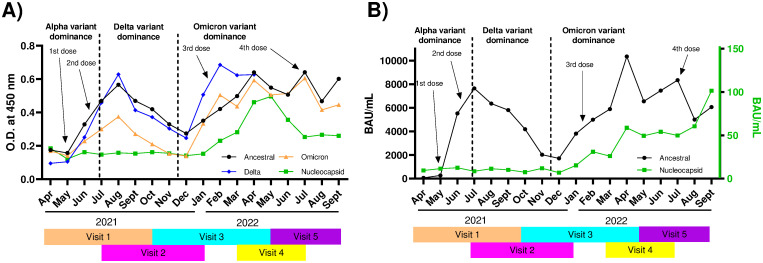
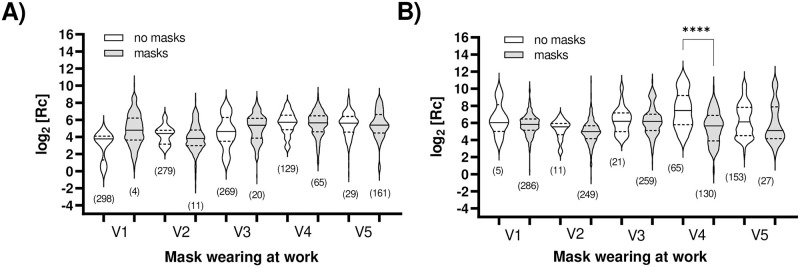
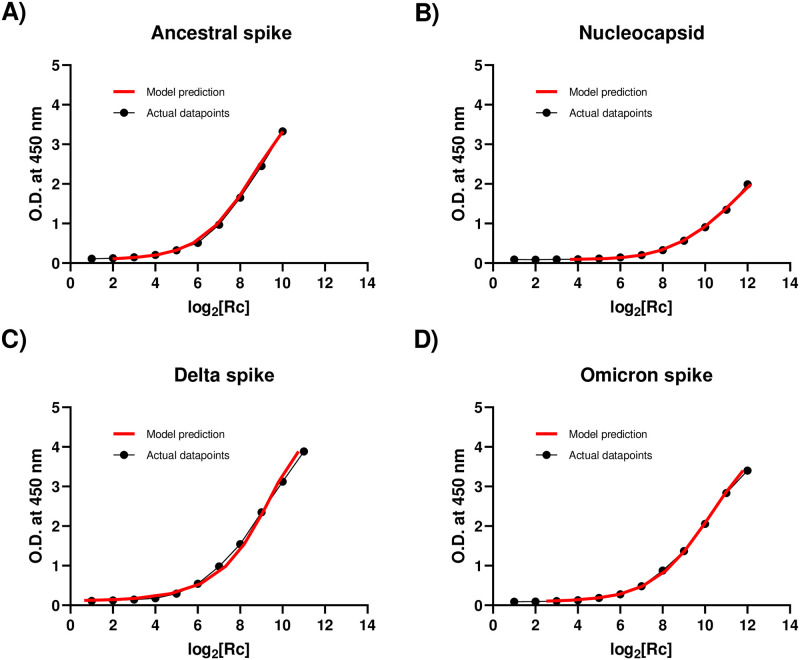
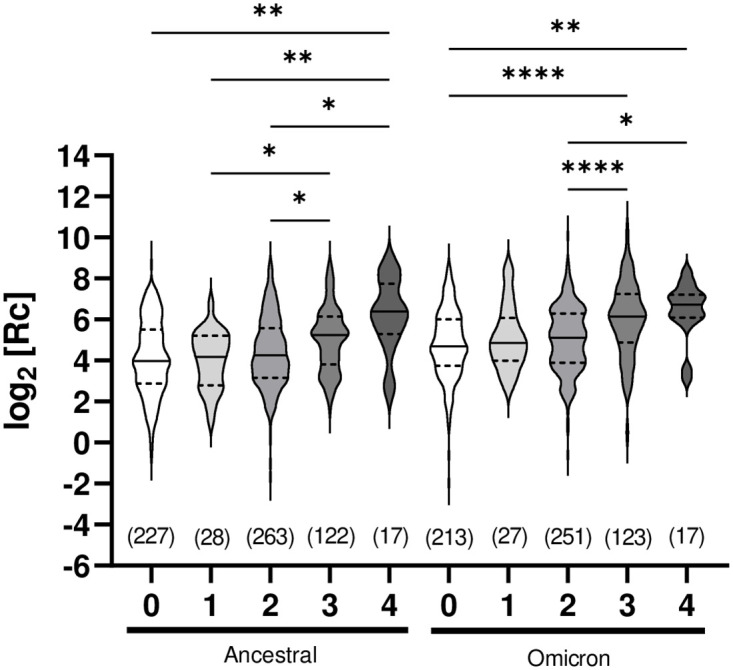
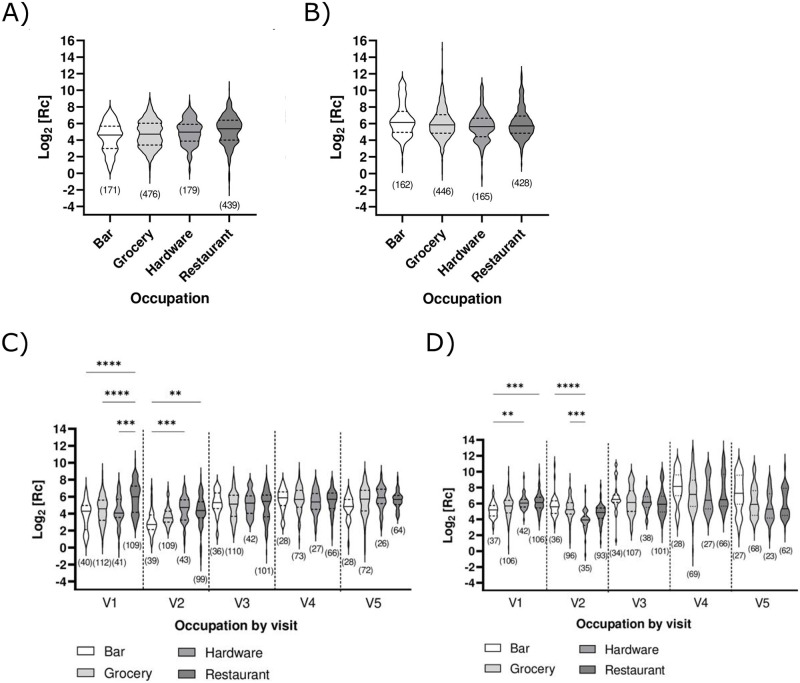
The 1.5-year study period spans from early 2021, when vaccination became available in this region, to mid-2022, following the emergence of the first Omicron variants. The cohort of 304 food and retail workers was recruited in the Québec City area. Participants attended five evenly spaced visits, providing blood samples as well as information on SARS-CoV-2 symptoms or risk factors, prior antigen or PCR test results and vaccination status, as well as work-related risk factors and protective measures. Parallel COVID-19 serological assays were performed using both a standardized chemiluminescent ELISA assay at the centralized platform operated in partnership with the Public Health Agency of Canada, and a semi-automated in-house colorimetric ELISA assay developed at our decentralized site. The YES/NO determination of SARS-CoV-2 vaccine seroconversion and/or infection events using the SARS-CoV-2 ancestral spike protein and nucleocapsid protein validated coherence of the centralized and decentralized assays. The flexibility of the decentralized assays allowed broadening the study to determine cross-reactivity of IgG directed against the spike protein of the SARS-CoV-2 Delta and Omicron VOCs, and IgM directed against the ancestral spike and nucleocapsid proteins. The nature of the data obtained in the decentralized assays allowed treatment with a recently developed mathematical transformation to obtain normal distribution, enabling ANOVA-Welsh statistical analysis. Although no significant differences were observed in humoral response as related to BMI, age, level of education, or chronic illnesses in this cohort of workers, statistically higher levels of vaccine-induced antibodies were observed for restaurant workers and hardware store workers in the early stages of the study, compared to workers in bars and grocery stores and in non-smokers versus smokers.
This work highlights the importance of developing adaptable, decentralized tests for population-level immune surveillance in response to a pandemic, even before centralized testing is available. To our knowledge, no other study has reported such an extensive longitudinal investigation during key periods of the COVID-19 pandemic in a cohort of food and retail workers to analyze two types of immunoglobulin, three epitopes and antigens to three VOC. This study will inform strategies and measures to be implemented in the event of a future pandemic.
自2020年初全球新冠疫情爆发以来,全球开展了大量研究,以了解我们对该病毒及疫苗接种的免疫反应。本研究调查了在食品和零售行业从业人员这一研究较少的人群中,由新冠病毒感染和疫苗接种引发的体液免疫反应。加拿大公共卫生署将这些职业归类为必要职业,这可能使该人群面临更高的感染风险。这种风险需要有可靠且适用的血清学检测方法,以便能够迅速部署,为公共卫生策略提供指导。在此,我们研究了在大流行期间,甚至在集中检测可用之前,应用适应性强、分散式检测方法进行人群水平免疫监测的益处和局限性。
这项为期1.5年的研究从2021年初该地区开始接种疫苗时起,至2022年年中首个奥密克戎变种出现后结束。在魁北克市地区招募了304名食品和零售行业从业人员作为队列研究对象。参与者共进行了五次间隔均匀的访视,提供血液样本以及关于新冠病毒症状或风险因素、既往抗原或PCR检测结果、疫苗接种状况,以及工作相关风险因素和防护措施的信息。同时使用与加拿大公共卫生署合作运营的集中平台上的标准化化学发光ELISA检测方法,以及我们在分散站点开发的半自动内部比色ELISA检测方法,进行新冠病毒血清学检测。使用新冠病毒原始株刺突蛋白和核衣壳蛋白对新冠病毒疫苗血清转化和/或感染事件进行是/否判定,验证了集中式和分散式检测方法的一致性。分散式检测方法的灵活性使得研究得以扩展,以确定针对新冠病毒德尔塔和奥密克戎变异株刺突蛋白的IgG以及针对原始株刺突蛋白和核衣壳蛋白的IgM的交叉反应性。分散式检测方法获得的数据特性允许使用最近开发的数学变换进行处理,以获得正态分布,从而能够进行方差分析-威尔士统计分析。尽管在该队列的从业人员中,未观察到与BMI、年龄、教育程度或慢性病相关的体液免疫反应存在显著差异,但在研究早期阶段,与酒吧和杂货店的从业人员以及吸烟者相比,餐厅从业人员和五金店从业人员的疫苗诱导抗体水平在统计学上更高。
这项工作凸显了在大流行期间,甚至在集中检测可用之前,开发适应性强、分散式检测方法用于人群水平免疫监测的重要性。据我们所知,没有其他研究报道过在新冠疫情关键时期,对食品和零售行业从业人员队列进行如此广泛的纵向调查,以分析两种免疫球蛋白、三种表位以及针对三种变异株的抗原。本研究将为未来大流行时应实施的策略和措施提供参考。