Paulson Amy L, Gruener Robert F, Lee Adam M, Huang R Stephanie
Department of Molecular Pharmacology and Therapeutics, University of Minnesota School of Medicine, Minneapolis, MN 55455, USA.
Department of Experimental and Clinical Pharmacology, University of Minnesota School of Pharmacy, Minneapolis, MN 55455, USA.
Cancers (Basel). 2024 Nov 27;16(23):3980. doi: 10.3390/cancers16233980.
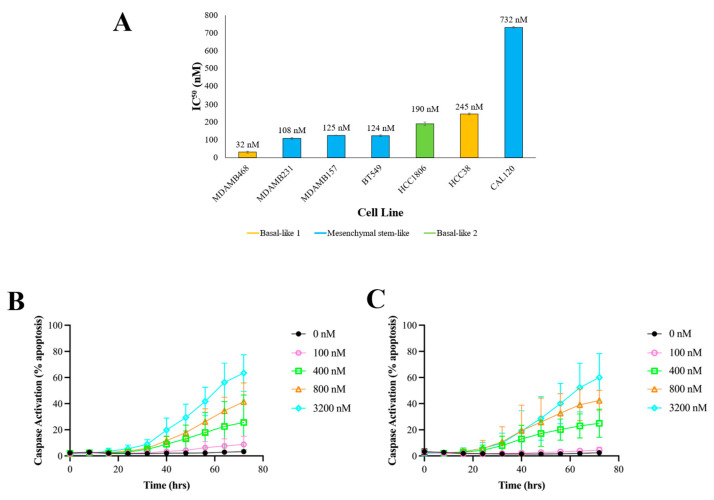
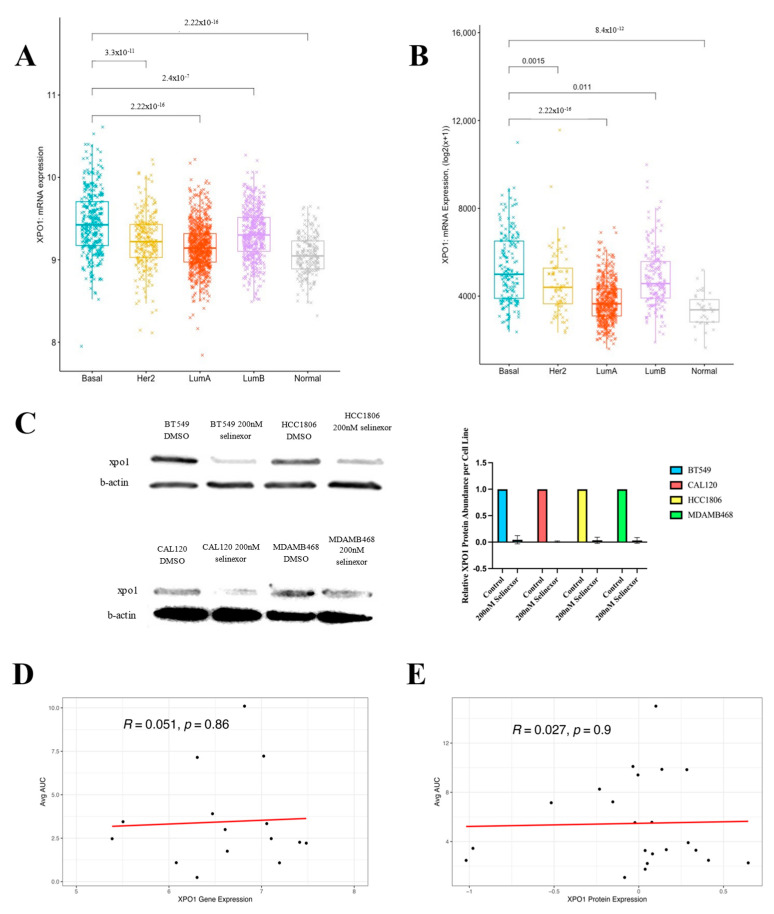
: Triple-negative breast cancer (TNBC) is an aggressive form of breast cancer with limited treatment options. The nuclear export protein XPO1 has emerged as a potential therapeutic target in cancer, but its role in TNBC has not been fully characterized. This study investigates the potential of repurposing selinexor, an FDA-approved XPO1 inhibitor, as a novel therapeutic options for TNBC. : A computational drug repurposing pipeline was used to predict patient tumor responses to hundreds of drugs. We identified XPO1 inhibitors as a candidate drug and validated its efficacy on an independent patient dataset and across various TNBC cell lines. RNA-sequencing after longitudinal XPO1 inhibition and further mechanistic studies were performed to explore and confirm the leading causes of TNBC cell sensitivity to XPO1 inhibition. : Selinexor significantly reduce the viability of a variety of TNBC cell lines. Mechanistically, selinexor induces TNBC cell death by inhibiting the NF-kB pathway through nuclear retention of NFKBIA. This effect was consistent across multiple TNBC cell lines. : XPO1 inhibitors show promise as targeted therapies for TNBC patients. New mechanistic insight into the causes leading to TNBC sensitivity to XPO1-inhibition-mediated cell death warrant further clinical trials to evaluate the safety and efficacy in TNBC.
三阴性乳腺癌(TNBC)是一种侵袭性乳腺癌,治疗选择有限。核输出蛋白XPO1已成为癌症潜在的治疗靶点,但其在TNBC中的作用尚未完全明确。本研究探讨将美国食品药品监督管理局(FDA)批准的XPO1抑制剂塞利尼索重新用作TNBC新治疗选择的潜力。:使用一种药物重新利用计算流程来预测患者肿瘤对数百种药物的反应。我们将XPO1抑制剂确定为候选药物,并在一个独立的患者数据集以及多种TNBC细胞系中验证了其疗效。在长期抑制XPO1后进行了RNA测序以及进一步的机制研究,以探索并确认TNBC细胞对XPO1抑制敏感的主要原因。:塞利尼索显著降低了多种TNBC细胞系的活力。从机制上讲,塞利尼索通过NFKBIA的核内滞留抑制NF-κB途径,从而诱导TNBC细胞死亡。这种效应在多个TNBC细胞系中是一致的。:XPO1抑制剂有望成为TNBC患者的靶向治疗药物。对导致TNBC对XPO1抑制介导的细胞死亡敏感的原因有了新的机制性认识,这值得进一步开展临床试验,以评估其在TNBC中的安全性和疗效。