Yang Ye-Jin, Yeo Donghyeon, Shin Seong-Jin, Lee Jun Hee, Lee Jung-Hwan
Institute of Tissue Regeneration Engineering (ITREN), Dankook University, 119 Dandae-ro, Cheonan 31116, Republic of Korea.
Department of Biomaterials Science, College of Dentistry, Dankook University, 119 Dandae-ro, Cheonan 31116, Republic of Korea.
Cells. 2024 Nov 21;13(23):1932. doi: 10.3390/cells13231932.
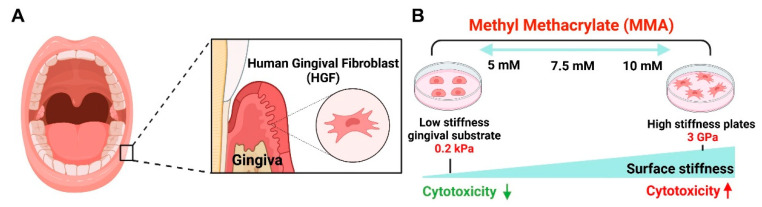
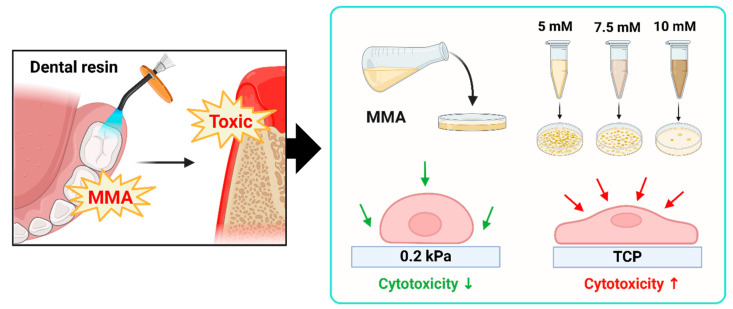
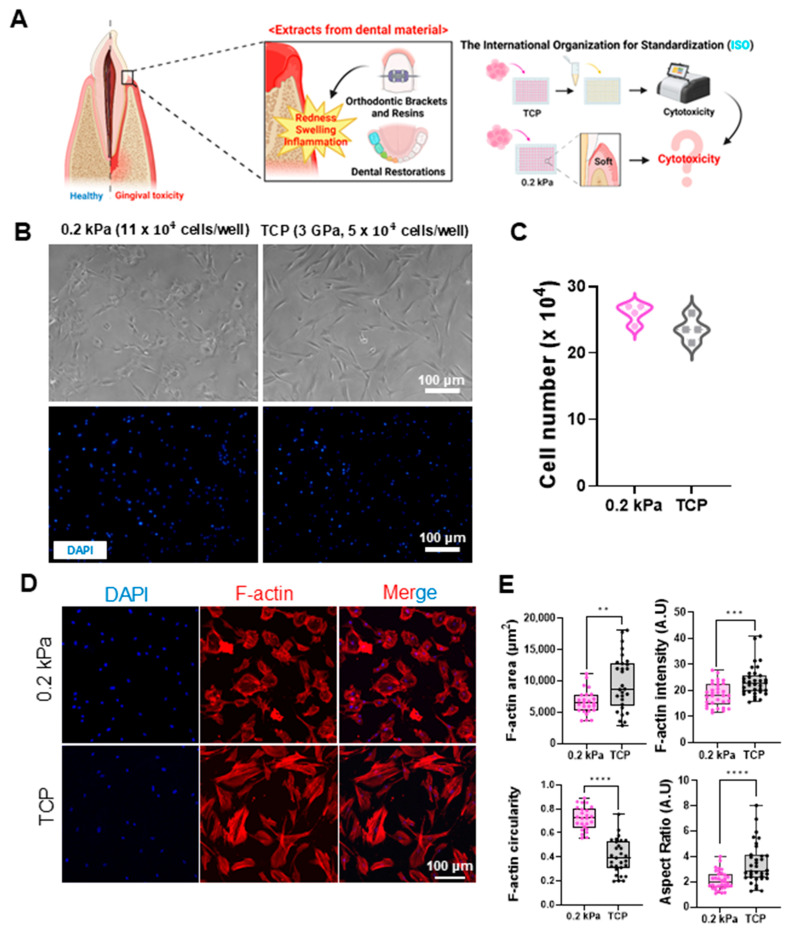
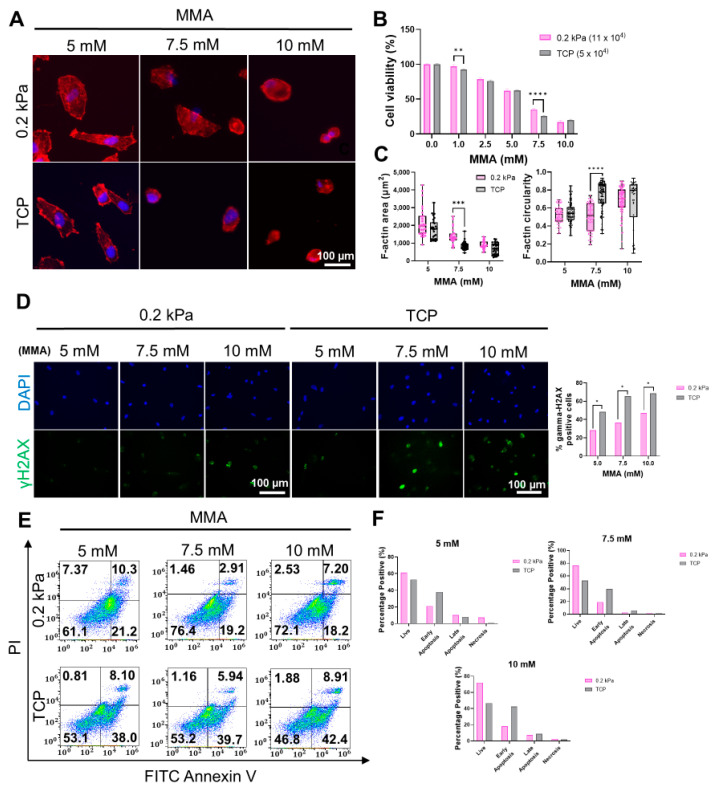
The biocompatibility of dental materials is critical for ensuring safety in clinical applications. However, standard in vitro cytotoxicity assays often rely on stiff tissue culture plastic (TCP), which does not accurately replicate the biomechanical properties of soft oral tissues. In this study, we compared human gingival fibroblasts (HGFs) cultured on soft, gel-based substrates mimicking gingival tissue stiffness (0.2 kPa) with those cultured on conventional TCP (3 GPa) to assess the influence of substrate stiffness on the cytotoxicity of methyl methacrylate (MMA), as well as other cytotoxic agents, including DMSO and HO. The results demonstrated that cells cultured on softer substrates exhibited enhanced resistance to cytotoxic stress, with increased viability and decreased apoptosis and DNA damage following exposure to MMA, DMSO, and HO. Notably, HGFs on soft substrates showed significantly greater resilience to MMA-induced cytotoxicity compared to those cultured on TCP. These findings emphasize the critical role of substrate stiffness in modulating cellular responses to toxic agents and highlight the necessity of using physiologically relevant models for cytotoxicity testing of dental materials. This study provides valuable insights for improving biocompatibility assessment protocols in clinical settings.
牙科材料的生物相容性对于确保临床应用中的安全性至关重要。然而,标准的体外细胞毒性试验通常依赖于坚硬的组织培养塑料(TCP),它不能准确复制口腔软组织的生物力学特性。在本研究中,我们将培养在模拟牙龈组织硬度(0.2 kPa)的柔软凝胶基底物上的人牙龈成纤维细胞(HGFs)与培养在传统TCP(3 GPa)上的细胞进行比较,以评估底物硬度对甲基丙烯酸甲酯(MMA)以及其他细胞毒性剂(包括二甲基亚砜和过氧化氢)细胞毒性的影响。结果表明,在较软底物上培养的细胞对细胞毒性应激表现出更强的抵抗力,在暴露于MMA、二甲基亚砜和过氧化氢后,细胞活力增加,凋亡和DNA损伤减少。值得注意的是,与培养在TCP上的细胞相比,软底物上的HGFs对MMA诱导的细胞毒性表现出明显更强的恢复力。这些发现强调了底物硬度在调节细胞对有毒剂反应中的关键作用,并突出了使用生理相关模型进行牙科材料细胞毒性测试的必要性。本研究为改善临床环境中的生物相容性评估方案提供了有价值的见解。