Gao Yunfei, Wang Le, Cao Shanshan, Chen Liangyu, Li Xueying, Cong Weixuan, Yang Songnan, Zhang Jian, Nie Xiaojun, Zhang Jun
College of Agronomy, Jilin Agricultural University, Changchun 130118, China.
College of Plant Science, Jilin University, Changchun 130062, China.
Plants (Basel). 2024 Nov 25;13(23):3305. doi: 10.3390/plants13233305.
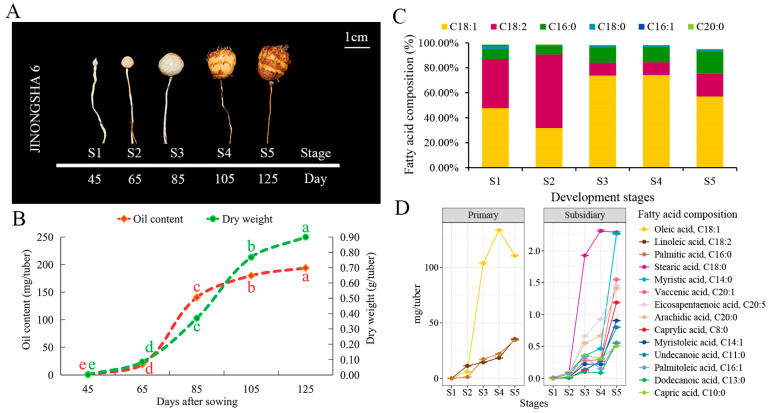
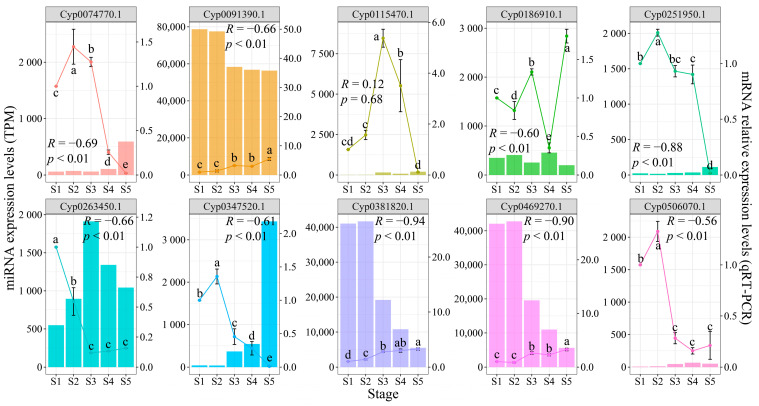
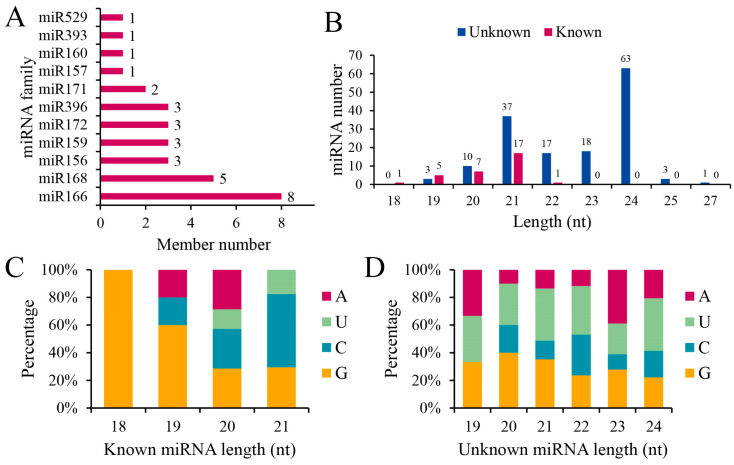
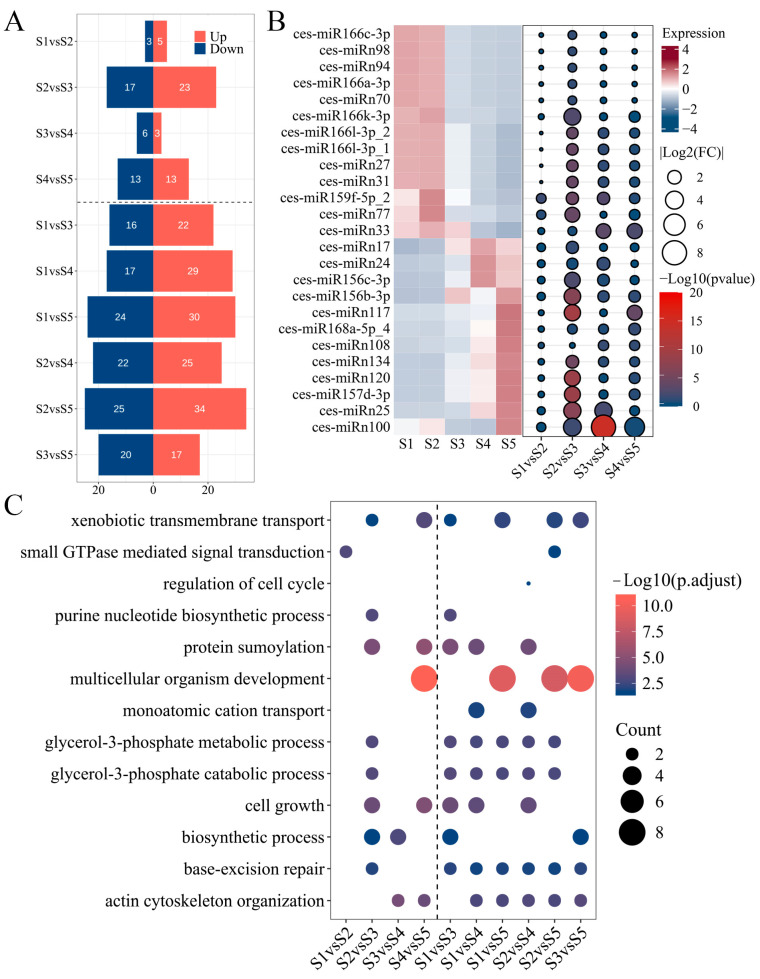
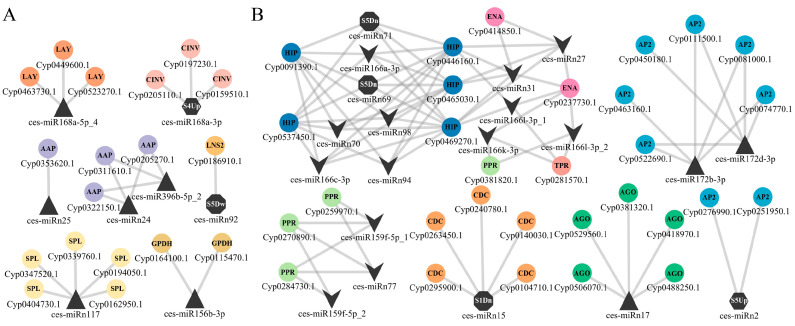
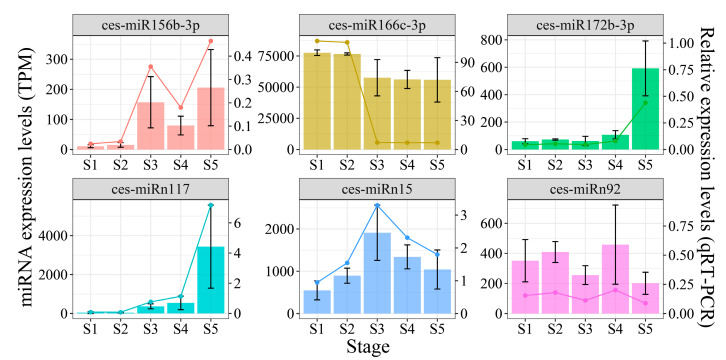
Tiger nut ( L.) is recognized for its high oil and oleic acid content in underground tubers. However, the molecular mechanisms governing growth, development, and fatty acid accumulation in these tubers are not well understood. This study employed gas chromatography-mass spectrometry (GC-MS) and small RNA sequencing on tiger nut tubers across five developmental stages. The findings indicate that the critical period for accumulating dry matter and oils, particularly oleic acid, occurs between 35 and 75 days after tuber formation. A total of 183 microRNAs (miRNAs) were identified, comprising 31 known and 152 novel miRNAs. Approximately half of these miRNAs (such as ces-miR156b-3p and ces-miR166a-3p) exhibited differential expression during and around the key periods of metabolite synthesis. The predicted target genes of these miRNAs were significantly enriched in glycerate 3-phosphate metabolism and cell growth processes. Furthermore, 13 miRNA-mRNA interaction modules related to oil accumulation and tuber growth were identified, and these target genes' expression levels showed significant differences during the tuber developmental stages. These findings advance the understanding of the molecular mechanisms underlying tuber development and oil accumulation in tiger nut.
油莎豆(Cyperus esculentus L.)因其地下块茎中富含油脂和油酸而闻名。然而,这些块茎生长、发育以及脂肪酸积累的分子机制尚未完全明晰。本研究对处于五个发育阶段的油莎豆块茎进行了气相色谱-质谱联用(GC-MS)分析和小RNA测序。研究结果表明,块茎形成后35至75天是积累干物质和油脂(特别是油酸)的关键时期。共鉴定出183个微小RNA(miRNA),其中包括31个已知miRNA和152个新的miRNA。大约一半的这些miRNA(如ces-miR156b-3p和ces-miR166a-3p)在代谢物合成的关键时期及前后表现出差异表达。这些miRNA的预测靶基因在3-磷酸甘油酸代谢和细胞生长过程中显著富集。此外,还鉴定出了13个与油脂积累和块茎生长相关的miRNA- mRNA相互作用模块,并且这些靶基因的表达水平在块茎发育阶段表现出显著差异。这些发现推进了对油莎豆块茎发育和油脂积累潜在分子机制的理解。