Yan Lei, Jiang Xue, Zhang Yuman, Dong Yongwen, Zhao Can, Xu Ke, Huo Zhongyang, Wang Weiling
Jiangsu Key Laboratory of Crop Cultivation and Physiology, Jiangsu Co-Innovation Center for Modern Production Technology of Grain Crops, Yangzhou University, No. 88 Daxue South Road, Yangzhou 225009, China.
Plants (Basel). 2024 Nov 30;13(23):3373. doi: 10.3390/plants13233373.
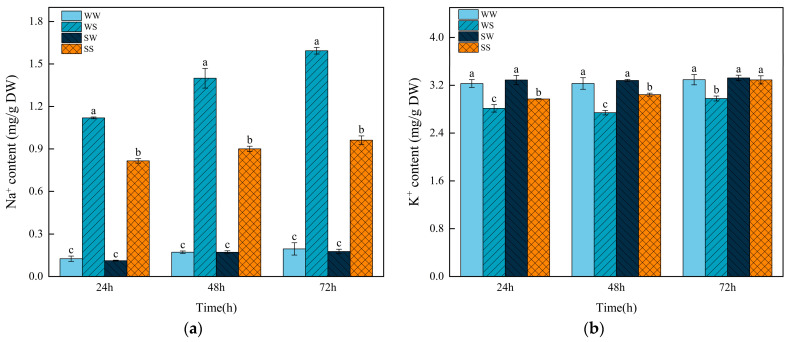
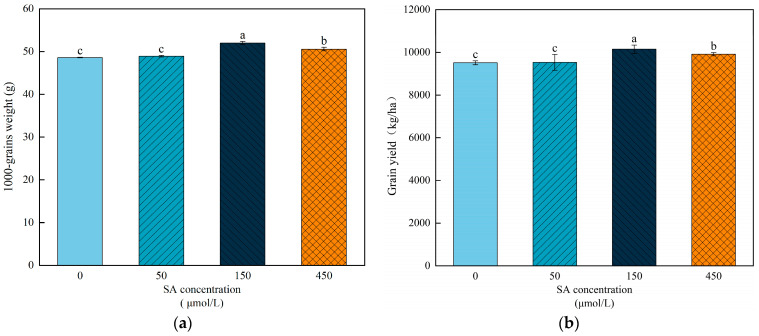
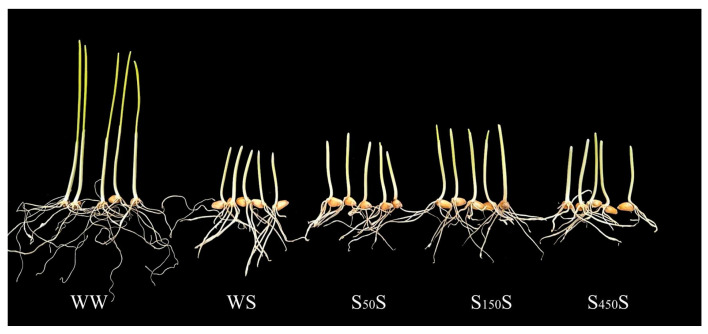
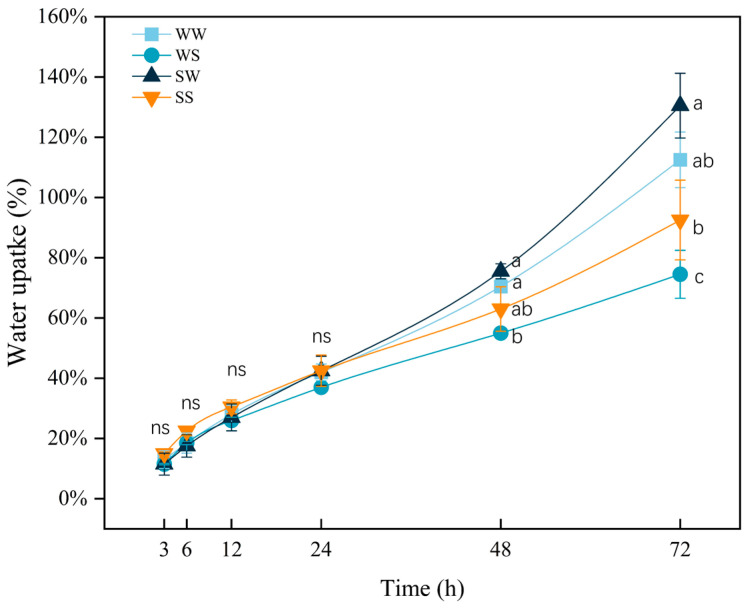
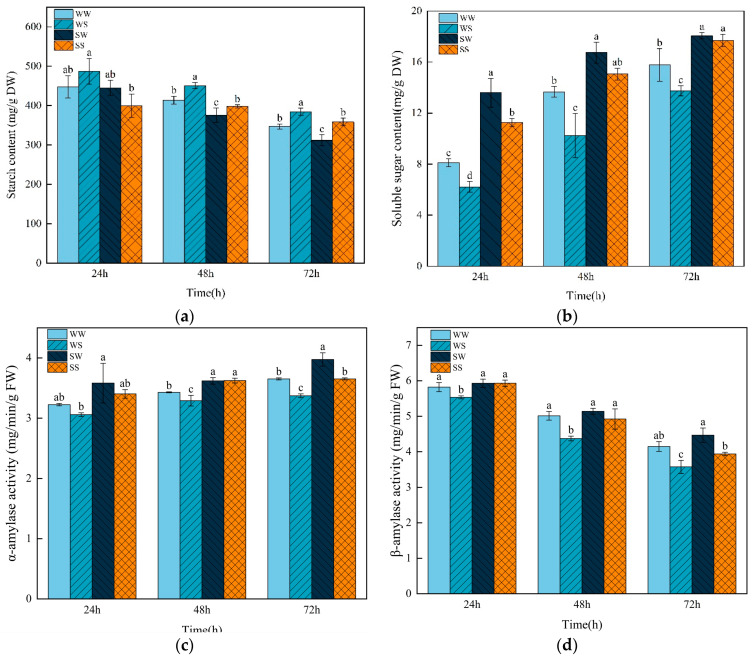
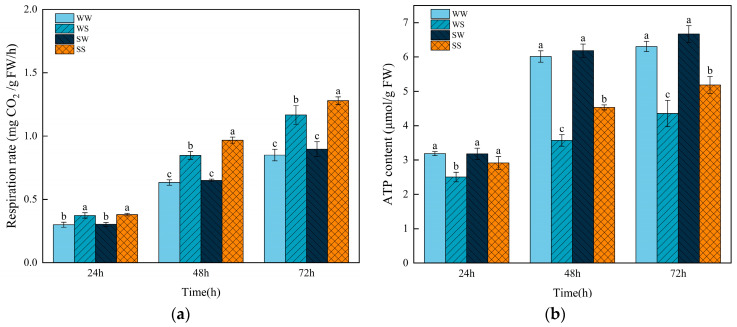
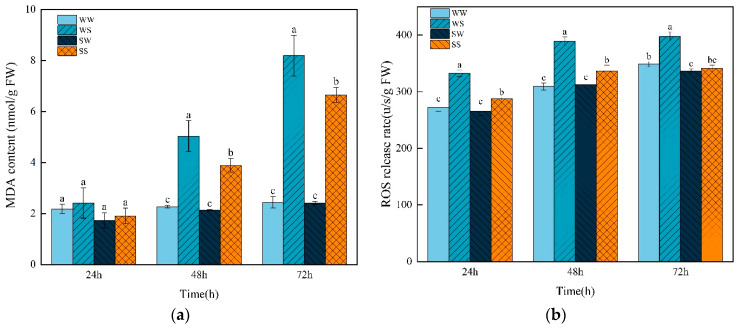
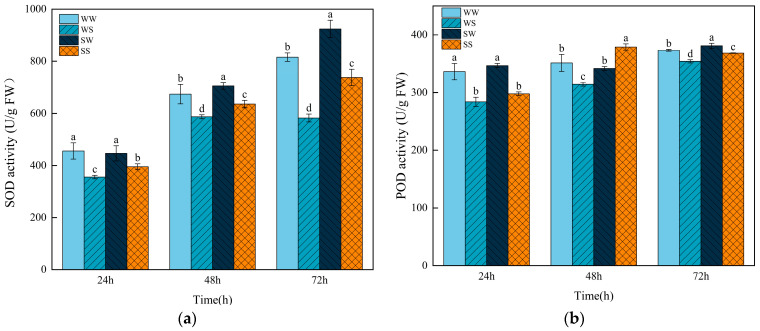
Soil salinization is an important factor that limits crop production. The effects of spraying salicylic acid (SA) during the grain-filling stage on the salt tolerance of progeny seeds in wheat ( L.) were investigated in this study. The results showed that spraying SA during the grain-filling stage significantly increased the grain weight and yield of wheat plants. Meanwhile, the seeds from the SA-treated plants showed a higher germination rate, length and dry mass of the coleoptile and radicle, and a lower mean germination time compared to the seeds of water-treated plants under the salt germination condition, indicating that SA pretreatment during the grain-filling stage could effectively improve the salt tolerance of progeny seeds in wheat. SA pretreatment significantly increased the activities of amylases and the respiration rate, accompanied by a decrease in starch content, and a higher accumulation in the level of soluble sugars and adenosine triphosphate (ATP) in the germinated seedlings compared to the water pretreatment under salt stress. In addition, SA pretreatment obviously alleviated the increase in malondialdehyde (MDA) content and the reactive oxygen species (ROS) release rate in seedlings by activating antioxidant enzymes (superoxide dismutase (SOD) and peroxidase (POD)) under salt stress. Moreover, the seedlings of the SA-treated plants showed lower Na and higher K contents compared to the seeds of water-treated plants under salt stress. The results of this study indicate that spraying SA during the grain-filling stage improves the capacity of offspring seeds to maintain osmotic and ion balance and redox homeostasis under salt stress, thereby conferring salt tolerance to the wheat seeds.
土壤盐渍化是限制作物产量的一个重要因素。本研究调查了在灌浆期喷施水杨酸(SA)对小麦(L.)后代种子耐盐性的影响。结果表明,在灌浆期喷施SA显著提高了小麦植株的粒重和产量。同时,与盐胁迫萌发条件下水处理植株的种子相比,SA处理植株的种子表现出更高的发芽率、胚芽鞘和胚根长度及干质量,以及更短的平均发芽时间,这表明灌浆期SA预处理能有效提高小麦后代种子的耐盐性。与盐胁迫下的水预处理相比,SA预处理显著提高了淀粉酶活性和呼吸速率,同时淀粉含量降低,发芽幼苗中可溶性糖和三磷酸腺苷(ATP)水平积累更高。此外,SA预处理通过在盐胁迫下激活抗氧化酶(超氧化物歧化酶(SOD)和过氧化物酶(POD)),明显缓解了幼苗中丙二醛(MDA)含量的增加和活性氧(ROS)释放速率。而且,与盐胁迫下水处理植株的种子相比,SA处理植株的幼苗Na含量更低,K含量更高。本研究结果表明,在灌浆期喷施SA可提高后代种子在盐胁迫下维持渗透和离子平衡以及氧化还原稳态的能力,从而赋予小麦种子耐盐性。