de Sousa Telma, Ribeiro Miguel, Sabença Carolina, Igrejas Gilberto
Department of Genetics and Biotechnology, University of Trás-os-Montes and Alto Douro, 5000-801 Vila Real, Portugal.
Functional Genomics and Proteomics Unity, University of Trás-os-Montes and Alto Douro, 5000-801 Vila Real, Portugal.
Foods. 2021 Sep 8;10(9):2124. doi: 10.3390/foods10092124.
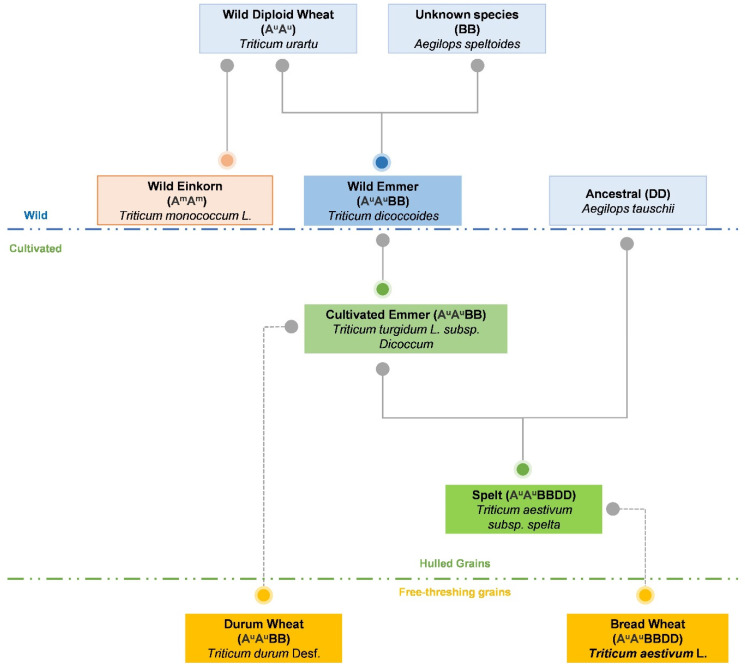
Wheat is one of the most important cereal crops in the world as it is used in the production of a diverse range of traditional and modern processed foods. The ancient varieties einkorn, emmer, and spelt not only played an important role as a source of food but became the ancestors of the modern varieties currently grown worldwide. Hexaploid wheat ( L.) and tetraploid wheat ( Desf.) now account for around 95% and 5% of the world production, respectively. The success of this cereal is inextricably associated with the capacity of its grain proteins, the gluten, to form a viscoelastic dough that allows the transformation of wheat flour into a wide variety of staple forms of food in the human diet. This review aims to give a holistic view of the temporal and proteogenomic evolution of wheat from its domestication to the massively produced high-yield crop of our day.
小麦是世界上最重要的谷类作物之一,因为它被用于生产各种各样的传统和现代加工食品。古老的品种一粒小麦、二粒小麦和斯佩尔特小麦不仅作为食物来源发挥了重要作用,还成为了目前在全球种植的现代品种的祖先。六倍体小麦(L.)和四倍体小麦(Desf.)现在分别占世界产量的约95%和5%。这种谷类作物的成功与它的谷物蛋白(面筋)形成粘弹性面团的能力密切相关,这种能力使小麦粉能够转化为人类饮食中各种各样的主食形式。本综述旨在全面介绍小麦从驯化到如今大规模生产的高产作物的时间和蛋白质基因组进化情况。