Liu Xiaoting, Cai Kewei, Zhang Qinhui, An Weizi, Qu Guanzheng, Jiang Luping, Wang Fusen, Zhao Xiyang
National Key Laboratory of Forest Genetics and Breeding, Northeast Forestry University, Harbin 150040, China.
Jilin Provincial Key Laboratory of Tree and Grass Genetics and Breeding, College of Forestry and Grassland Science, Jilin Agricultural University, Changchun 130118, China.
Plants (Basel). 2024 Dec 3;13(23):3391. doi: 10.3390/plants13233391.
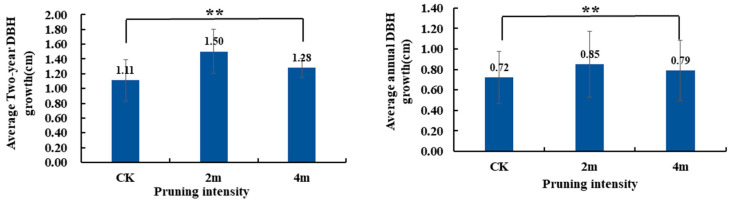
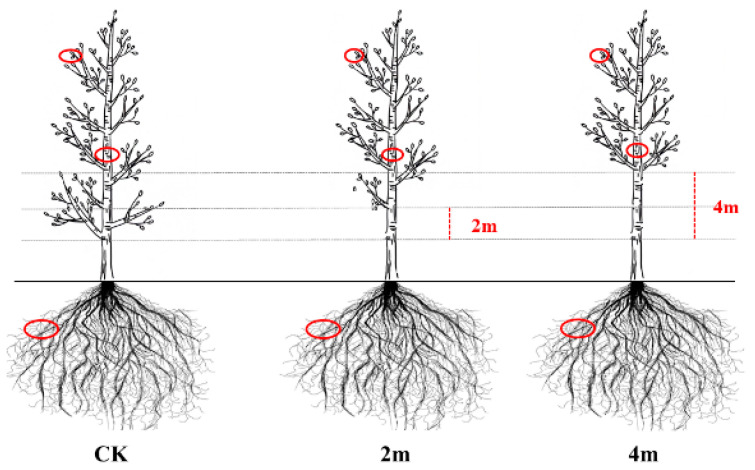
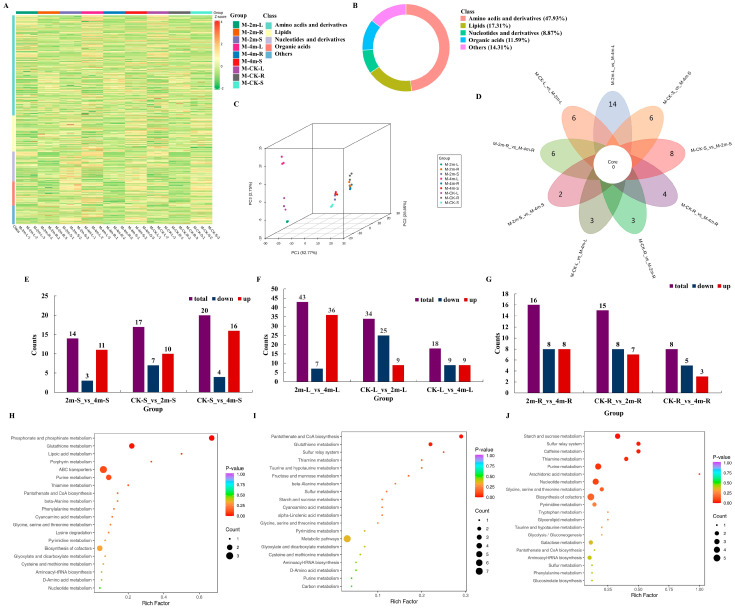
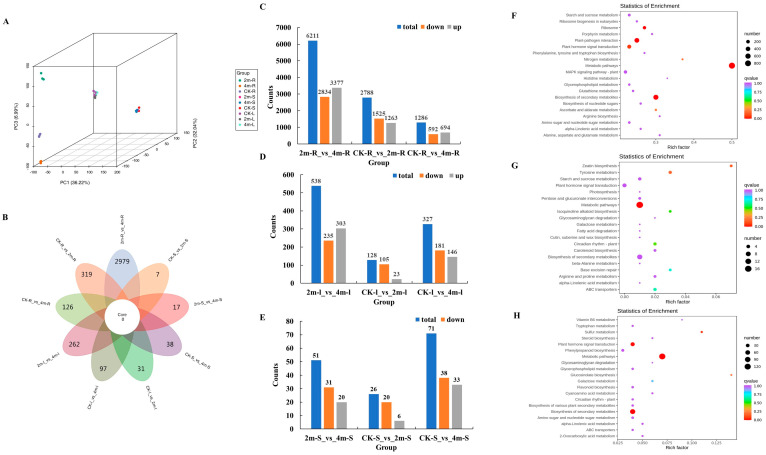
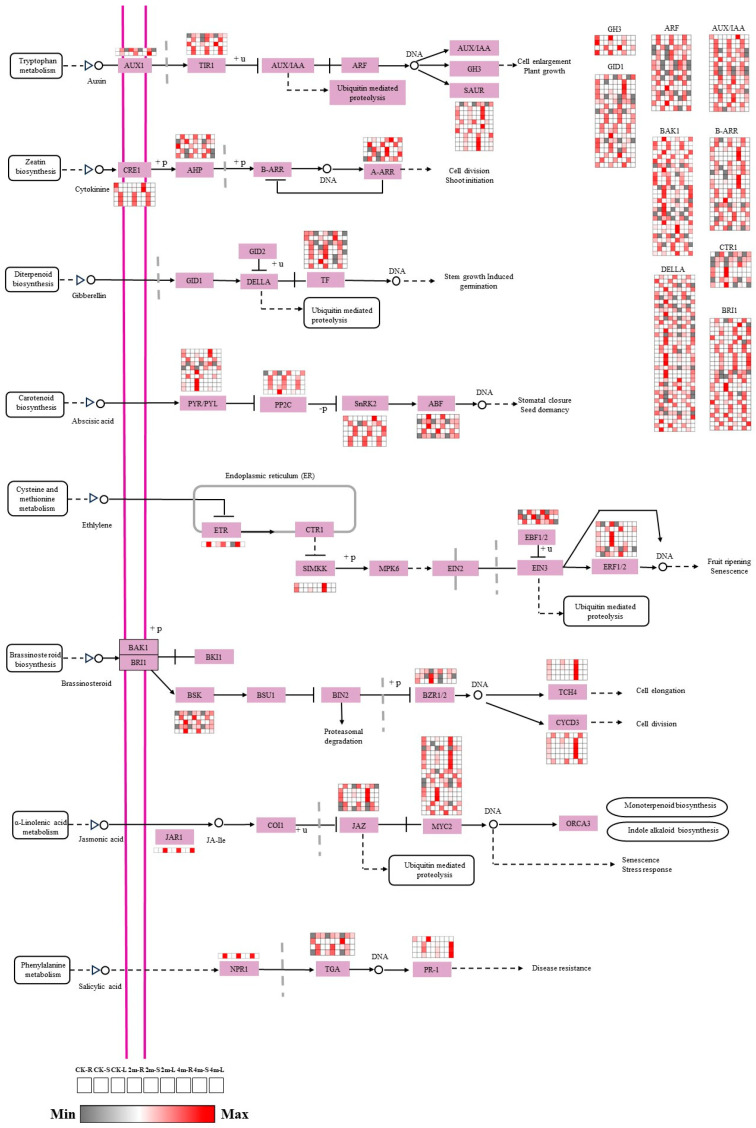
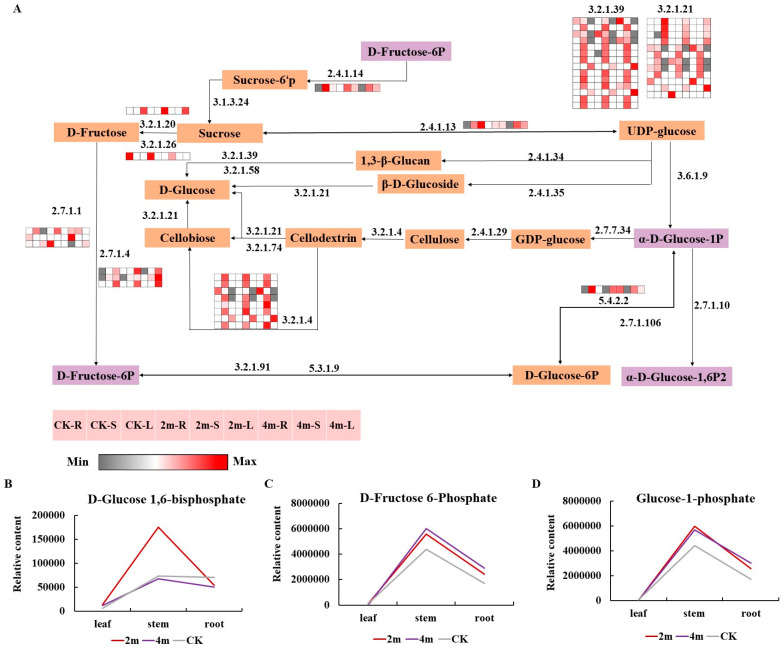
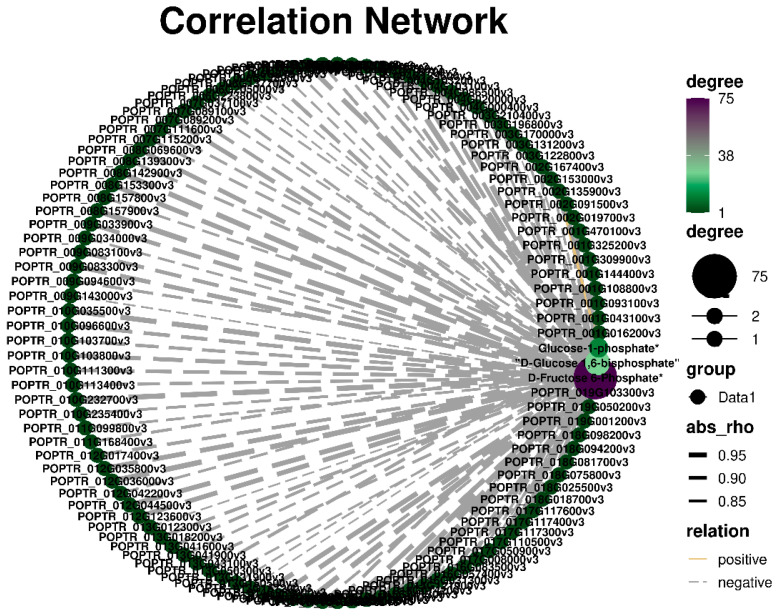
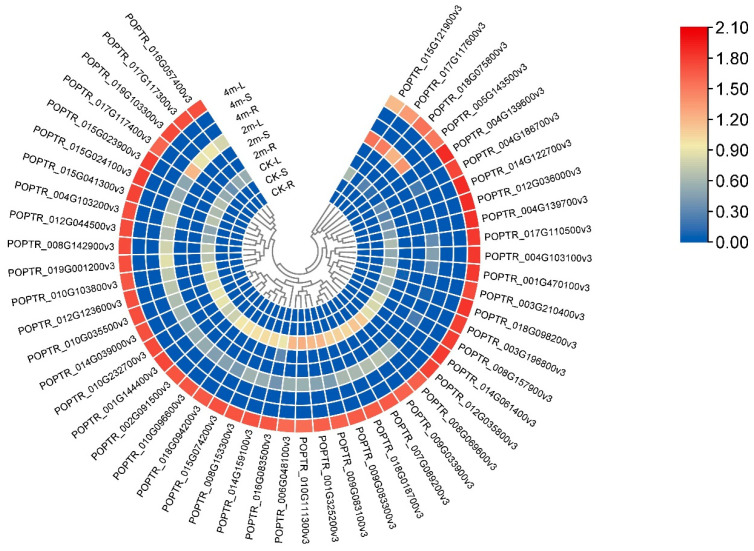
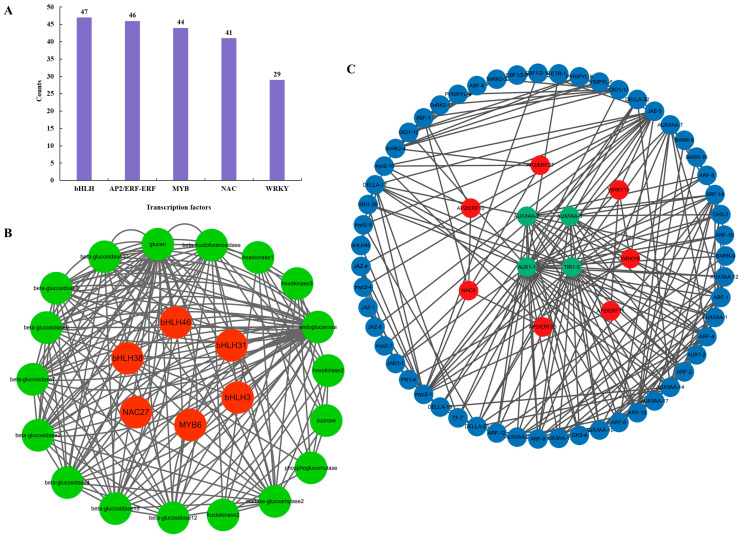
Pruning is a common forest-tending method; its purpose is to promote growth and improve the overall stand quality. Poplar is a fast-growing, broad-leaved tree species with high ecological and economic value. It is a common management method to promote its growth by pruning and adjusting the spatial structure of the stand, but its potential regulatory mechanism remains unclear. In this study, transcriptome and metabolome data of different parts at all pruning intensities were determined and analyzed. The results showed that 7316 differentially expressed genes were identified in this study. In the plant hormone signal transduction pathway, candidate genes were found in eight kinds of plant hormones, among which the main expression was gibberellin, auxin, and brassinosteroid. Some candidate gene structures (beta-glucosidase, endoglucanase, hexokinase, glucan endo-1, 3-beta-D-glucosidase, beta-fructofuranosidase, fructokinase, maltase-glucoamylase, phosphoglucomutase, and sucrose) were specifically associated with starch and sucrose biosynthesis. In the starch and sucrose biosynthesis pathway, D-fructose 6-phosphate, D-glucose 1,6-bisphosphate, and glucose-1-phosphate were the highest in stems and higher in the first round of pruning than in no pruning. The bHLH plays a key role in the starch and sucrose synthetic pathway, and AP2/ERF-ERF is important in the plant hormone signal transduction pathway. These results laid a foundation for understanding the molecular mechanism of starch and sucrose biosynthesis and provided a theoretical basis for promoting tree growth through pruning.
修剪是一种常见的森林抚育方法;其目的是促进生长并提高林分整体质量。杨树是一种生长迅速的阔叶树种,具有较高的生态和经济价值。通过修剪和调整林分空间结构来促进其生长是一种常见的管理方法,但其潜在的调控机制仍不清楚。在本研究中,测定并分析了所有修剪强度下不同部位的转录组和代谢组数据。结果表明,本研究共鉴定出7316个差异表达基因。在植物激素信号转导途径中,在8种植物激素中发现了候选基因,其中主要表达的是赤霉素、生长素和油菜素内酯。一些候选基因结构(β-葡萄糖苷酶、内切葡聚糖酶、己糖激酶、葡聚糖内切-1,3-β-D-葡萄糖苷酶、β-呋喃果糖苷酶、果糖激酶、麦芽糖酶-葡萄糖淀粉酶、磷酸葡萄糖变位酶和蔗糖)与淀粉和蔗糖生物合成特别相关。在淀粉和蔗糖生物合成途径中,D-果糖6-磷酸、D-葡萄糖1,6-二磷酸和葡萄糖-1-磷酸在茎中含量最高,且在第一轮修剪中高于未修剪处理。bHLH在淀粉和蔗糖合成途径中起关键作用,AP2/ERF-ERF在植物激素信号转导途径中很重要。这些结果为理解淀粉和蔗糖生物合成的分子机制奠定了基础,并为通过修剪促进树木生长提供了理论依据。