Filaferro Monica, Avallone Rossella, Rustichelli Cecilia, Vitale Giovanni
Department of Biomedical, Metabolic and Neural Sciences, University of Modena and Reggio Emilia, 41125 Modena, Italy.
Department of Life Sciences, University of Modena and Reggio Emilia, 41125 Modena, Italy.
Molecules. 2024 Dec 4;29(23):5718. doi: 10.3390/molecules29235718.
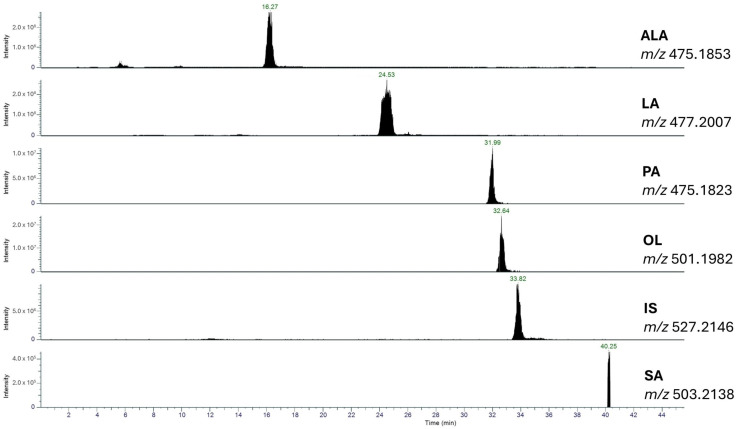
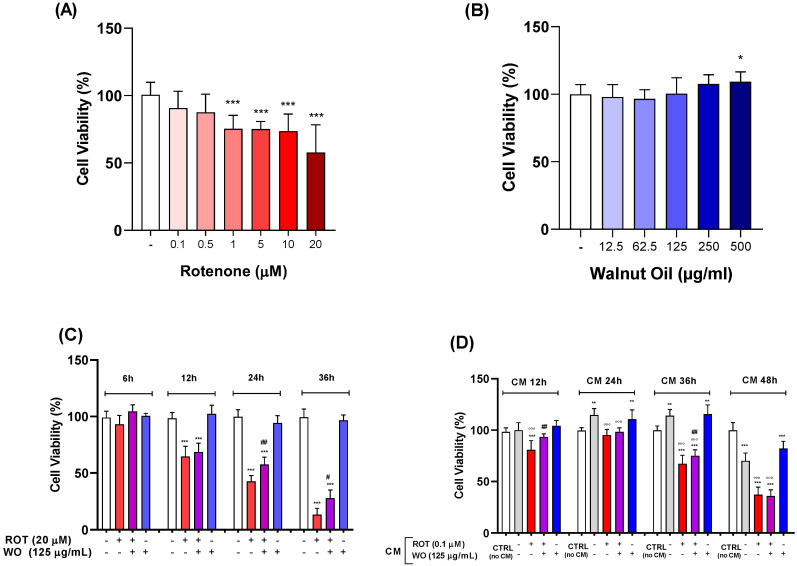
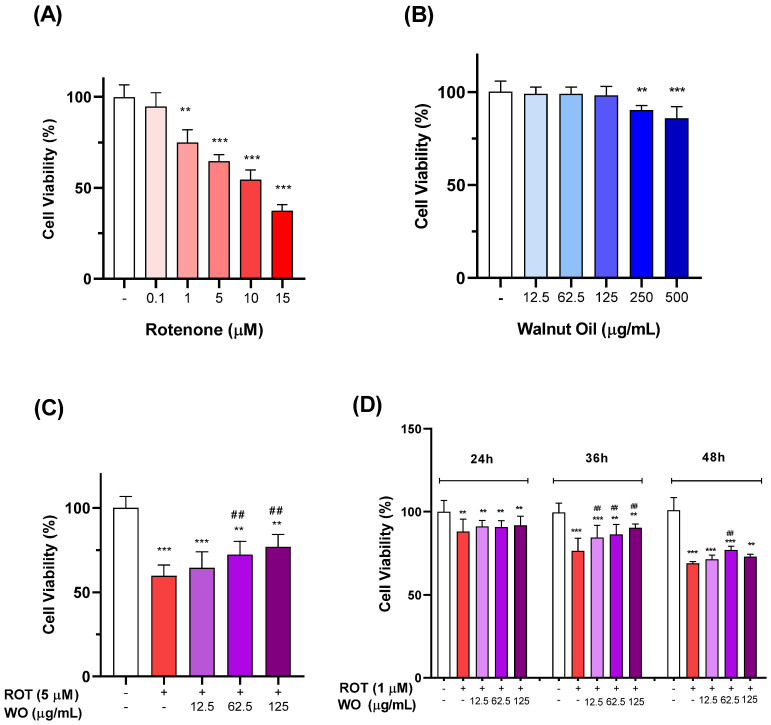
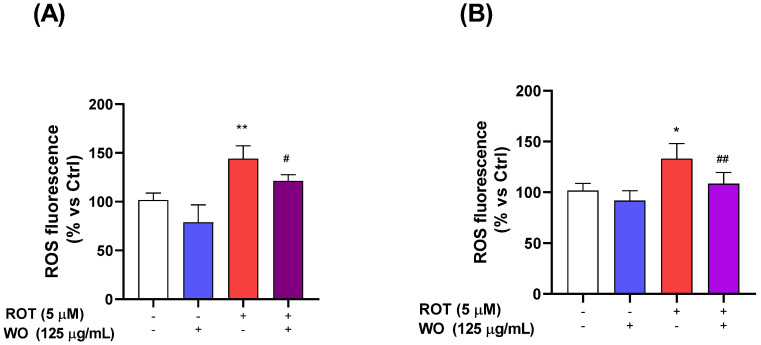
Parkinson's disease (PD) is a common neurodegenerative disorder marked by the degeneration of dopaminergic neurons and the buildup of α-synuclein aggregates. The current treatments focus on symptom relief, with no drugs available to halt disease progression. This has prompted interest in plant-based extracts as alternative therapies. This study examines the neuroprotective and antioxidant effects of walnut oil (WO), extracted from L., in an in vitro PD model using the neurotoxin rotenone (ROT). WO, rich in polyunsaturated fatty acids (PUFAs), including linoleic acid (LA) and α-linolenic acid (ALA), together with minor bioactive components, is known for its neuroprotective properties. Using human HMC3 microglial and SH-SY5Y neuroblastoma cells, we tested WO's effects on ROT-induced toxicity. The experiments were performed at different time points. The results showed that the co-administration of WO with ROT significantly improved cell viability and reduced reactive oxygen species (ROS) levels. Additionally, conditioned media from WO-treated HMC3 cells enhanced SH-SY5Y cell survival, indicating positive microglia-neuron interactions. Cell viability appeared to be concentration- and time-dependent. These findings highlight WO's potential, mainly due to its PUFA content, as a promising candidate for preventing neurodegenerative diseases like PD; they underscore the potential of WO content in food for the prevention of neurodegenerative diseases such as PD.
帕金森病(PD)是一种常见的神经退行性疾病,其特征是多巴胺能神经元变性和α-突触核蛋白聚集体的积累。目前的治疗主要集中在缓解症状,没有药物可以阻止疾病进展。这引发了人们对植物提取物作为替代疗法的兴趣。本研究使用神经毒素鱼藤酮(ROT),在体外帕金森病模型中研究了从胡桃中提取的胡桃油(WO)的神经保护和抗氧化作用。WO富含多不饱和脂肪酸(PUFA),包括亚油酸(LA)和α-亚麻酸(ALA),以及少量生物活性成分,以其神经保护特性而闻名。我们使用人HMC3小胶质细胞和SH-SY5Y神经母细胞瘤细胞,测试了WO对ROT诱导毒性的影响。实验在不同时间点进行。结果表明,WO与ROT共同给药显著提高了细胞活力,降低了活性氧(ROS)水平。此外,WO处理的HMC3细胞的条件培养基增强了SH-SY5Y细胞的存活,表明小胶质细胞与神经元之间存在积极的相互作用。细胞活力似乎呈浓度和时间依赖性。这些发现突出了WO的潜力,主要是由于其PUFA含量,有望成为预防帕金森病等神经退行性疾病的候选物质;它们强调了食物中WO含量在预防帕金森病等神经退行性疾病方面的潜力。